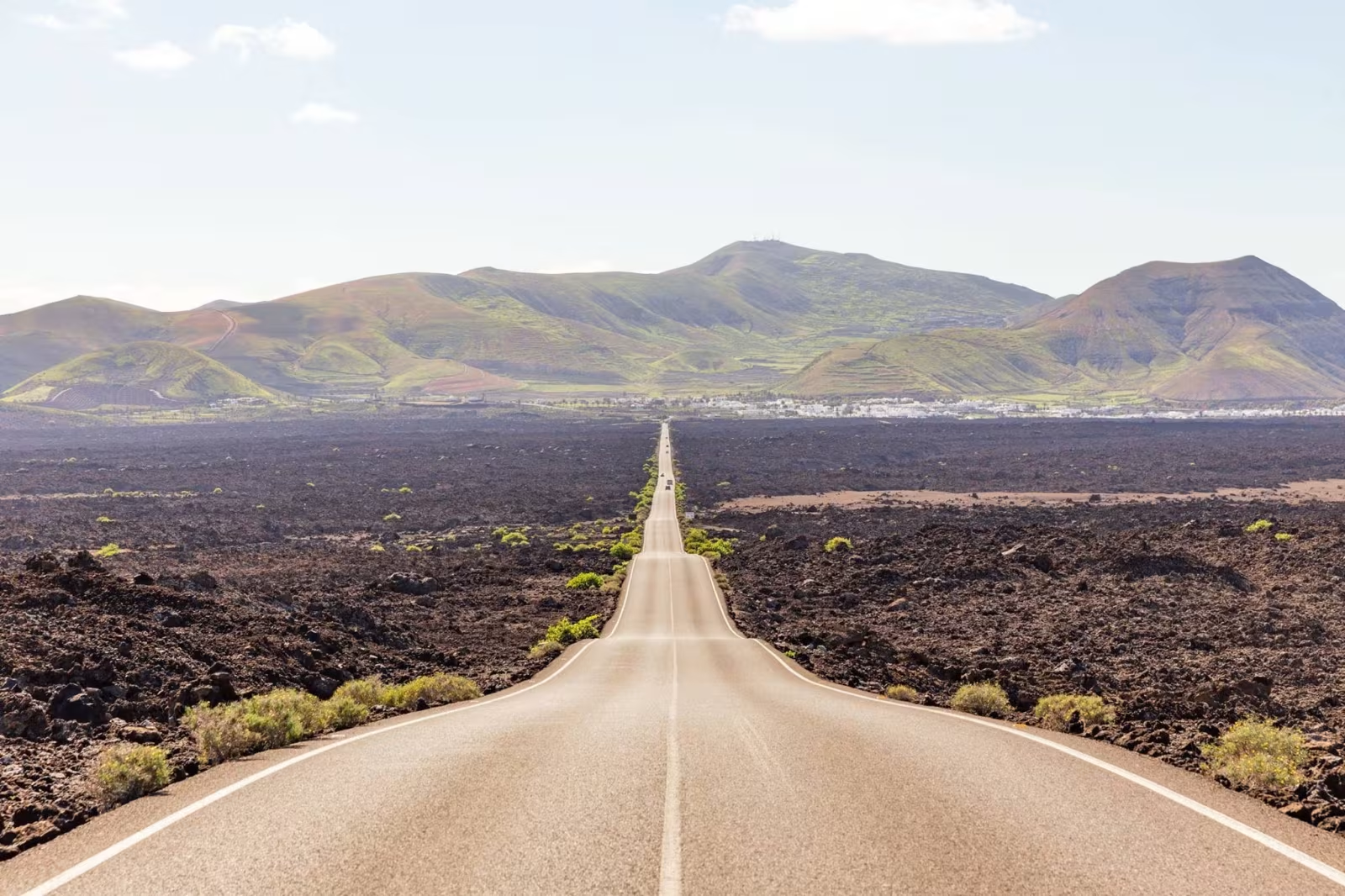
Driving in Lanzarote
Complete guide to driving in Lanzarote. Spanish road rules, speed limits, roundabouts, drink drive limits, police checks, licence requirements and practical tips for UK and European visitors.
If you really want to discover Lanzarote at your own pace, driving is the way to go. Our island is small enough to explore easily, with smooth roads and hardly any traffic once you leave the bustle of Arrecife behind. For those of you used to driving in the UK, there are a few local quirks and rules to be aware of before you collect your hire car and set off. Spanish driving customs can be a little different, and every week I see visitors caught out by things they never expected.
For example, the drink drive limit here is stricter than you might imagine, and the local police do carry out regular roadside checks. There are also fines for things that might surprise you, like driving in flip flops. In this guide, I’ll share everything you need to know to keep safe, stay on the right side of the law, and make the most of the freedom that comes with having your own car on Lanzarote.


Sponsored
Driving on the Right
Here in Spain, we drive on the right, which can feel a little strange at first if you are used to UK roads. Therefore, naturally, cars are left-hand drive. The main things to watch out for are drifting too far left, hugging the kerb, or accidentally setting off on the wrong side after a stop. Roundabouts and junctions do take a bit of extra attention, as your instincts might try to take you the way you are used to at home. The reassuring thing is that Lanzarote is a gentle place to get used to these changes. Our roads are generally wide, the traffic is light once you are outside Arrecife, and most people find that after just half an hour or so, it all starts to feel much more natural.
A handy tip I often share with visitors is to remember that, as the driver, you should be sitting towards the centre of the road. If you notice you are close to the kerb, you are probably a little too far left. Try to keep your right shoulder in line with the white centre line and you will find yourself in just the right spot.
Speed Limits in Lanzarote
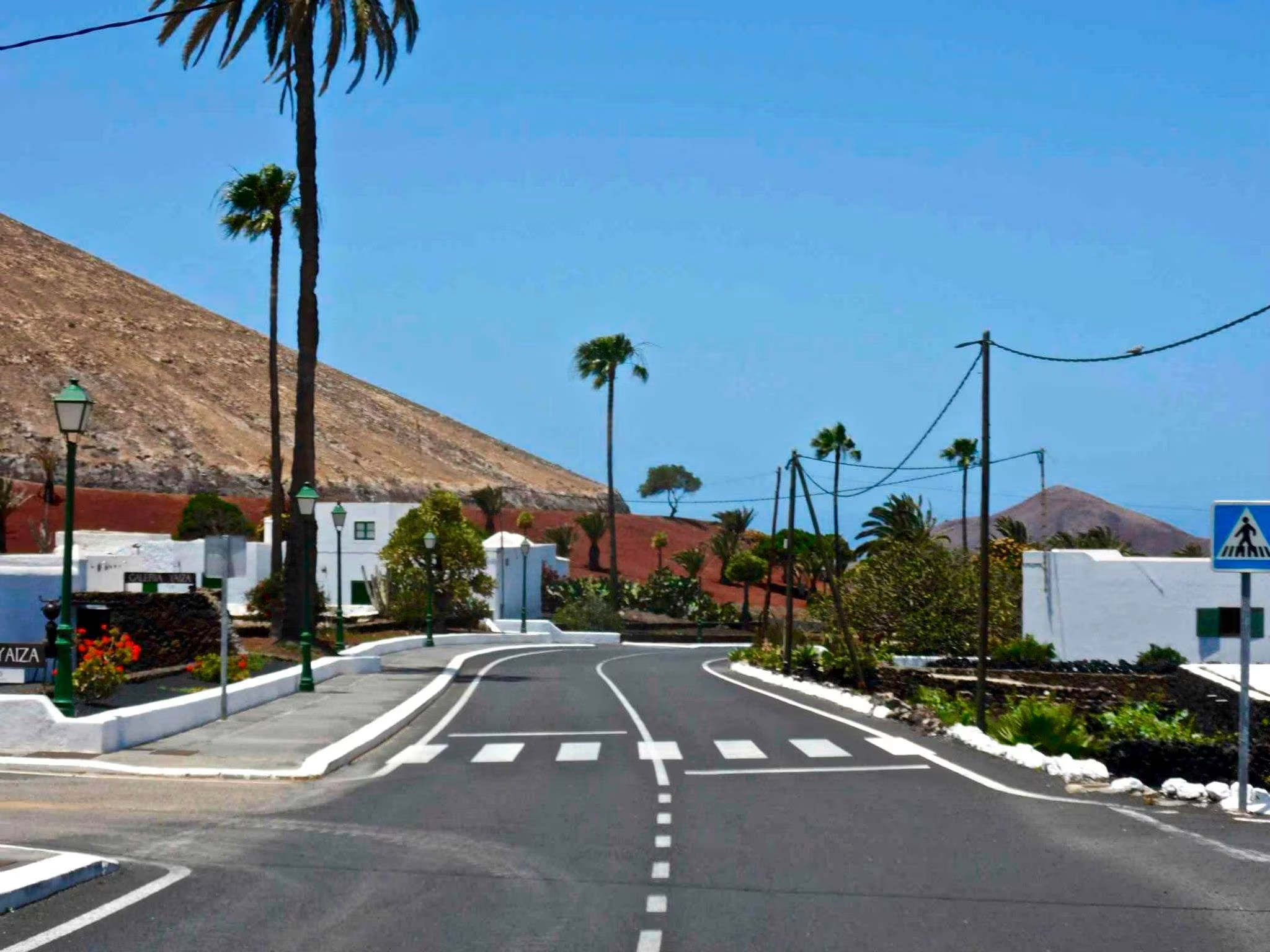
Speed limits here in Lanzarote are much the same as elsewhere in Spain, but it is always worth keeping an eye out for the signs. In towns and villages, you will usually find the limit set at 50 kilometres per hour, though many quieter residential streets drop to 30 or even 20. Out on the open roads between towns, the limit is generally 90 kilometres per hour. If you are driving along the main dual carriageway between Arrecife and the southern resorts, the limit is 100, but do watch for stretches near Playa Honda where it drops to 90. The signs are clear and the rules are enforced, so it pays to take your time and enjoy the drive.
You will notice fixed speed cameras on some of the main roads, especially along the LZ-2 motorway between Arrecife and Playa Blanca. Mobile cameras and police checks also pop up from time to time, often just as you are coming into a village where the speed limit drops. It is always best to ease off the accelerator and take things at a relaxed Lanzarote pace.
The fines for speeding are not to be taken lightly. If you go up to 20 kilometres per hour over the limit, you are looking at a fine of around 100 euros. Go any faster and the penalties increase quickly, with the most serious cases involving points on your licence or even having your car taken away. The cameras do their job, and if you are in a hire car, the fine will find its way to your rental company, who will then charge your card. It is another good reason to take it easy and enjoy the scenery.
It is also worth knowing that any unpaid fines can cause problems if you return to Spain in the future, as the Guardia Civil may stop you at the border. Best to settle up and travel with peace of mind.
Roundabouts in Lanzarote
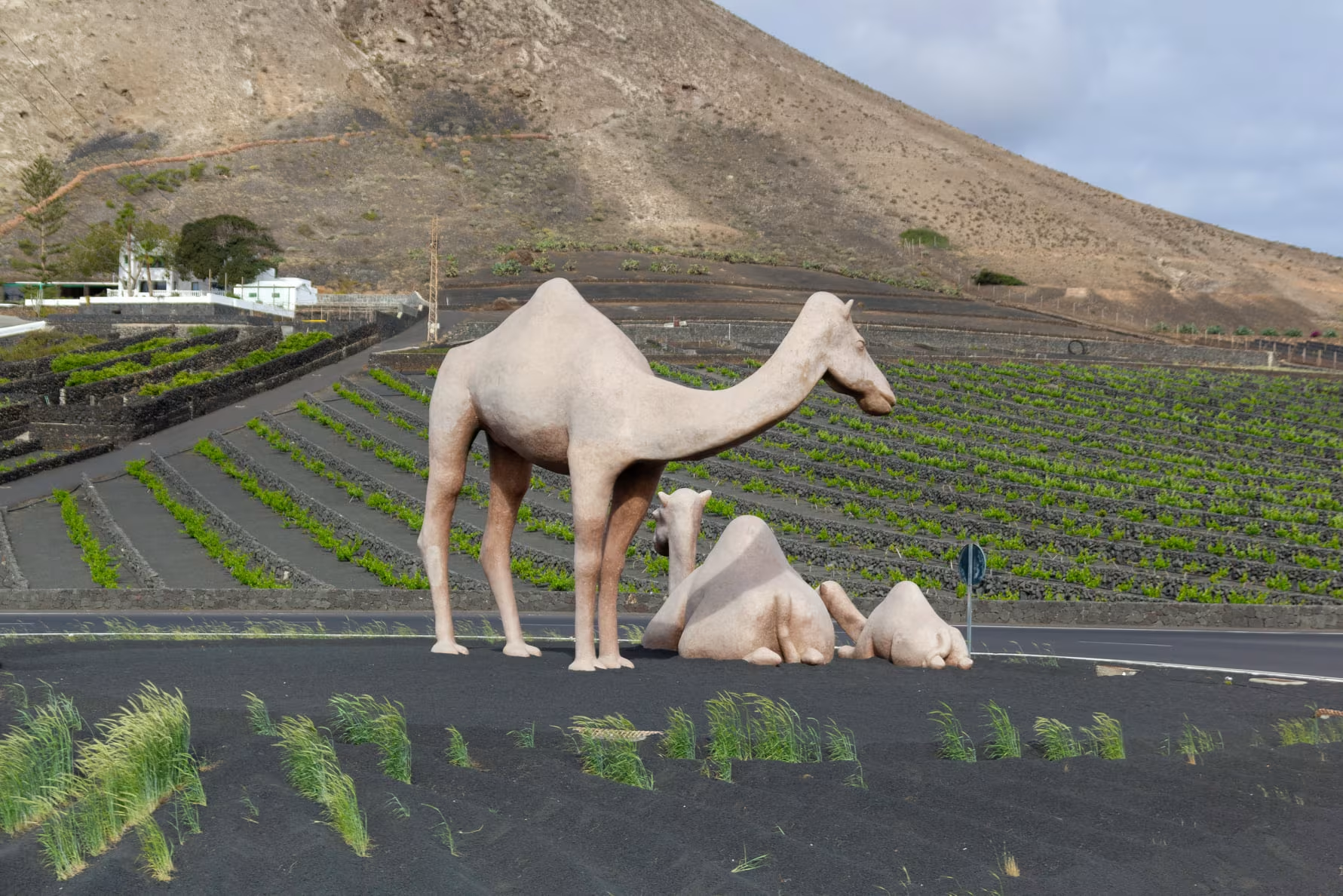
Roundabouts here in Lanzarote are quite similar to those in the UK when it comes to giving way to traffic already on the roundabout. The main difference is that you drive around them anticlockwise, since we drive on the right. It can feel a little odd at first, but you’ll soon find it becomes second nature.
The usual rule in Spain is to use the right lane if you’re taking the first or second exit, and the left lane if you’re heading further around. However, you’ll notice that many local drivers simply stick to the right lane no matter which exit they’re taking. This can be a bit confusing, especially if you’re in the left lane and trying to exit. My advice is to take it steady, use your indicators clearly, and never assume that a car on your right will stay on the roundabout just because it isn’t signalling. It’s quite common here for drivers not to indicate at all.
On the main roads between the resorts, the bigger roundabouts are usually well marked with clear lane arrows. In the towns and residential areas, the smaller roundabouts can feel a bit more unpredictable. My best tip is to take your time and not rush. If you miss your exit, just circle around again – nobody here will bat an eyelid.
Drink and Drug Driving Laws in Lanzarote
This is something that often surprises British visitors, sometimes with serious consequences. Here in Spain, the drink drive limit is 0.5 milligrams of alcohol per millilitre of blood, which is quite a bit lower than the UK’s 0.8. If you have held your licence for less than two years, the limit is even stricter at 0.3. In reality, just a large glass of wine or a couple of beers could easily put you over. The local police always recommend the safest option: if you are driving, it’s best not to drink at all.
The Guardia Civil, Spain’s national police, are a regular sight on the roads between the resorts and in Arrecife, especially on Friday and Saturday nights, during fiestas and over the holidays. These roadside checks are frequent and very visible. Officers set up checkpoints on the main roads and may stop every car, or every other car, to carry out breathalyser tests. If you are over the limit, the penalties are immediate and can be quite severe. Fines start at 500 euros and can go up to 1,000 euros for higher readings. Your car can be immobilised right there and then. For very high readings or repeat offences, you could face criminal charges, a court appearance, and a driving ban in Spain. Hire car companies will also pass on any costs if your car is impounded.
Driving under the influence of drugs is taken just as seriously here. The police use roadside saliva tests, and any trace of illegal drugs in your system is considered an offence. Prescription medication that affects your ability to drive is also included. If your medication says not to drive or operate machinery, the same rule applies in Lanzarote as it does back home. If you are taking strong painkillers, antihistamines, or anything that might make you drowsy, it’s always best to check with your doctor before getting behind the wheel on holiday.
Lanzarote Police Checks and Documents
If you are driving here in Lanzarote, you will probably notice that roadside police checks are quite routine. Both the Guardia Civil and our local Policia Local carry out these stops from time to time. It is all very straightforward. You might be asked to show your driving licence, your rental agreement, some ID such as your passport or national ID card, and proof of insurance. I always recommend keeping your driving licence and a copy of your rental agreement handy in the car. The insurance and registration documents for your hire car will be in the glovebox, placed there by the rental company, and it is best to leave them there.
If you are stopped, there is no need to worry. The officers here are usually friendly and professional, and the process is quick and easy. Just wind down your window, switch off the engine, and have your documents ready to show. Stay in the car unless you are asked to step out. Occasionally, you may be asked to take a breathalyser test. It is important to cooperate, as refusing is treated the same as failing and comes with a hefty fine of 1,000 euros.
If you are visiting from the UK, you can use your driving licence here in Lanzarote without any problems, and there is no need for an International Driving Permit. The same goes for EU and EEA licences. If your licence is from outside the EU, it is a good idea to check in advance whether you will need an IDP for Spain.
What You Cannot Do While Driving in Lanzarote
One thing that often catches visitors out is the rule about footwear when driving here in Spain. You are not allowed to drive in flip flops, sandals without a heel strap, or barefoot. The police want to make sure your shoes are secure and won't slip off the pedals. Fines for getting this wrong can be around 200 euros, so I always recommend keeping a pair of trainers or closed shoes in the car, especially if you are heading to the beach for the day.
Using your mobile phone while driving is not allowed unless you have a proper hands free setup. Even picking up your phone to check a map at the lights can land you with a 200 euro fine and points on your licence. If you need your phone for directions, it is best to set it up in a dashboard holder before you set off, and leave it alone while you are on the move.
Eating or drinking (even just water) while driving can also get you into trouble if the police think it is distracting you from the road. Smoking in the car is not actually banned, but please never throw a cigarette out of the window. Lanzarote is very dry and fire risk is high, so the authorities take this very seriously and fines can be up to 200 euros.
Everyone in the car needs to wear a seatbelt, whether you are in the front or the back. If you are travelling with children under 135 centimetres tall, they must have a suitable child seat. Most car hire companies can supply these for a small extra charge, but it is a good idea to book ahead, especially during the busy holiday periods when they can run out quickly.
Fuel and Petrol Stations in Lanzarote
One of the small pleasures of life here on Lanzarote is that filling up your car is much kinder on the wallet than it is back in the UK or most of mainland Europe. The lower tax rates in the Canary Islands mean that petrol usually sits between 1.10 and 1.30 euros per litre, with diesel coming in a little less. Most hire cars take petrol, but it is always worth a quick look at the fuel cap or your rental agreement, just to be certain.
You will find petrol stations in all the main towns and resorts, and there are plenty along the main roads connecting Arrecife, Puerto del Carmen, Playa Blanca and Costa Teguise. You will also spot them in places like Tias, San Bartolome, Yaiza and Haria. Often, a friendly attendant will fill your car for you, and it is always appreciated if you leave a small tip. Most stations accept card payments either at the pump or inside the shop, though a few unmanned stations are prepay only. If you are planning a drive out to the north coast or towards Timanfaya, it is wise to fill up in advance, as petrol stations become fewer the further you go. Hire car companies usually ask that you return your car with the same amount of fuel as when you picked it up.
Parking your car in Lanzarote
Finding a parking spot in Lanzarote is usually straightforward, especially outside of Arrecife. Most of the resorts offer a good mix of free street parking, car parks and a few pay and display areas. Look out for the kerb markings: blue means pay and display, yellow means no parking, and white marks out the free spaces. In Arrecife itself, parking can be a little more of a challenge, with metered spaces along many of the central streets. There are also several public car parks in the city, and their hourly rates are generally quite reasonable.
It is always best to avoid parking where the kerb is painted yellow, where you see a tow-away sign (retirada grua), or anywhere that might block a driveway. The local police are quite efficient when it comes to issuing tickets and towing cars, particularly in Arrecife and Puerto del Carmen. Also, try not to park against the flow of traffic, especially if there is a solid white line in the centre of the road, as this means you should not cross. Fines for illegal parking usually start at 80 euros and can go up to 200 euros, and if your car is towed, you can expect to pay another 150 to 200 euros plus storage. For beach car parks at places like Papagayo, there is usually a small entrance fee of around 3 euros per vehicle.
Road Conditions and Driving Tips for Lanzarote
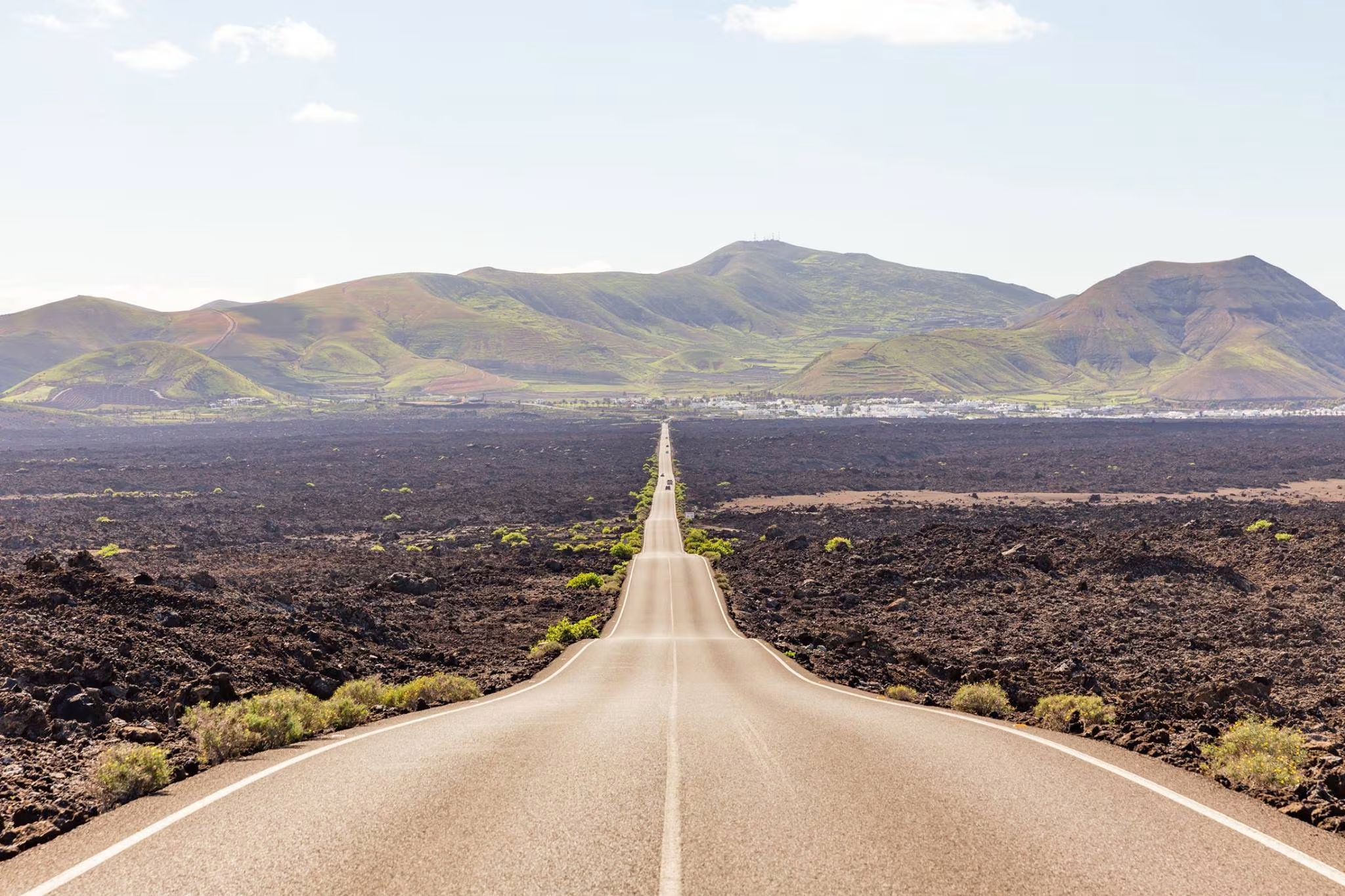
Driving around Lanzarote is a pleasure, thanks to the excellent condition of the main roads. The LZ-2 motorway, which runs from Arrecife down to the south, is a smooth dual carriageway and always well looked after. You will find that the main routes linking the resorts, Arrecife and the island’s main attractions are all paved and clearly signposted, making it easy to get your bearings. If you venture off towards the smaller villages or into the rural north, the roads are still paved but tend to be narrower and a little more winding, especially around Haria and the dramatic Famara cliffs.
A few of Lanzarote’s most beautiful beaches and hidden corners are reached by unpaved tracks. The road down to the Papagayo beaches is probably the best-known example. It’s a bumpy dirt track that you can manage in a regular hire car if you take it slowly, though it can be a bit of a test for both your patience and your suspension. It’s always worth double-checking your hire car agreement before heading off-road, as some companies do not cover damage from driving on dirt tracks.
If you are driving at night outside the main towns and resorts, do take extra care. Street lighting is quite limited in rural areas, and some roads lack markings or reflectors, so it can feel very dark. You will also notice plenty of cyclists on the main roads, especially in the mornings, as Lanzarote is a favourite training ground for both professional and amateur riders. Always give them plenty of space when overtaking; the law here requires at least 1.5 metres, and it’s good practice to be generous with your room.
Wind can be a factor, especially on exposed stretches of road on the west coast and on the higher ground around Famara. Strong crosswinds can catch you off guard, particularly if you are driving a high-sided vehicle. Slow down and grip the wheel firmly if the wind picks up.