Lanzarote César Manrique
César Manrique shaped Lanzarote like no one else. Discover his life, his extraordinary buildings inside volcanic caves, and why the island looks so different from every other holiday destination.
If you spend even a short while on Lanzarote, you will quickly come across the name César Manrique. His influence is part of everyday life here, and as someone who has called this island home for many years, I see his touch everywhere. It’s in the roads we drive, the buildings we admire, and the special places we return to time and again. If you are curious about what makes Lanzarote so different from the other Canary Islands, learning about Manrique is a lovely way to begin.
Manrique was born in Arrecife in 1919, right here on Lanzarote, and from the start he was shaped by the island’s striking volcanic landscape. He grew up between the lively streets of the capital and his family’s house in Haría, a lush and tranquil valley in the north that he often called the most beautiful place on the island. His deep affection for Lanzarote never faded, no matter where his journeys led him.
Your Headline
The Early Years of Manrique and the Art World
From an early age, Manrique’s artistic gifts were clear to everyone around him. After his time volunteering during the Spanish Civil War, he went on to study at the renowned Academia de Bellas Artes de San Fernando in Madrid. Even as a young artist, his work was turning heads, and by the 1950s, he was already exhibiting throughout Spain and collecting national awards.
Everything changed for Manrique when he moved to New York in 1964. He landed right in the heart of the abstract expressionist movement, rubbing shoulders with artists like Andy Warhol and other leading lights of the time. Inspired by the energy of the city, his own work grew bolder and larger, and he enjoyed successful exhibitions in several Manhattan galleries. New York embraced him, and it would have been easy for him to settle there and enjoy a thriving career.
But he chose not to. By the late 1960s, word was reaching him about the changes sweeping through the Canary Islands. The rise of package tourism was transforming the coastlines, with concrete tower blocks springing up where natural beauty once reigned. Manrique saw what was happening in Tenerife and Gran Canaria, and he made up his mind: he would not let Lanzarote lose its unique character.
Manrique's Return to Lanzarote
When Manrique came back to Lanzarote in 1966, he brought with him a vision that would shape the island for generations. He believed deeply that art, architecture and the natural landscape could all blend together in harmony, rather than compete. His hope was to show that Lanzarote could welcome visitors without losing the unique beauty and character that make it so special to those of us who call it home.
What set Manrique apart was that he didn’t just talk about his ideas or express them through his art. He rolled up his sleeves and worked closely with the island’s leaders, especially his friend José Ramírez who wasdá, who was president of tat the time. Together, they introduced a set of building rules that were clear and practical, not just suggestions but real changes that would shape Lanzarote’s future.zarote’s future.
- - No building higher than four storeys (and in most places, no higher than two)
- - All buildings to use traditional Lanzarote colours: white walls with green or blue painted woodwork
- - No advertising billboards anywhere on the island
- - No overhead power lines along main roads where possible
- - Traditional architectural styles to be preserved and encouraged
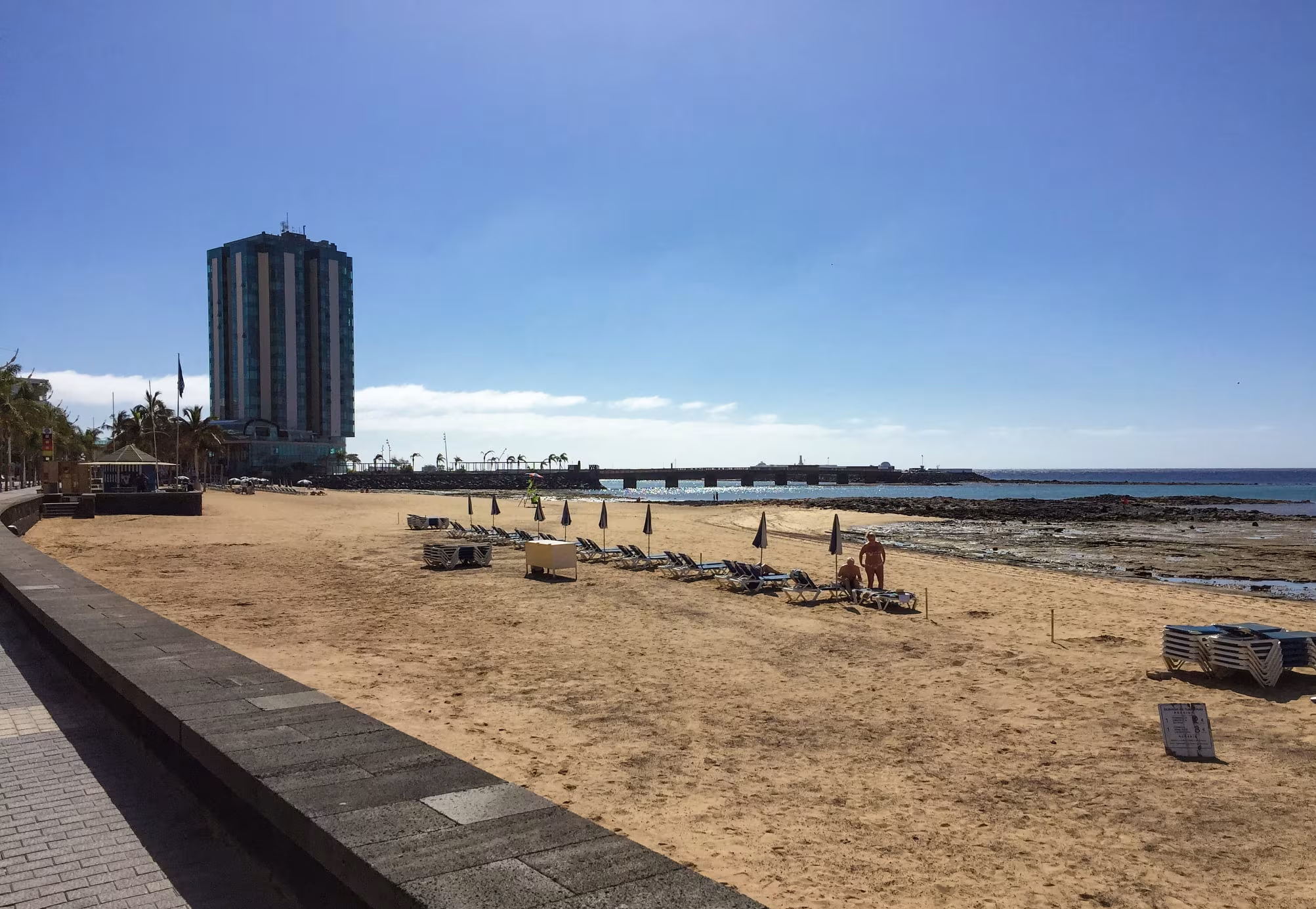
Of course, things didn’t always go to plan. The Gran Hotel in Arrecife, which still towers over the city’s seafront, was built in the early 1970s despite Manrique’s strong objections. Many of us see it as a reminder of what Lanzarote might have become if his vision hadn’t taken hold. It stands alone on the skyline, and most people here agree that one high-rise is more than enough for our island.
If you've visited other Spanish holiday islands and then come to Lanzarote, you'll immediately notice the difference these rules make. There are no towering hotel blocks dominating the skyline (Gran Hotel aside), no garish advertising cluttering the roadsides. It's remarkably restrained, and that's almost entirely down to Manrique.
Jameos del Agua
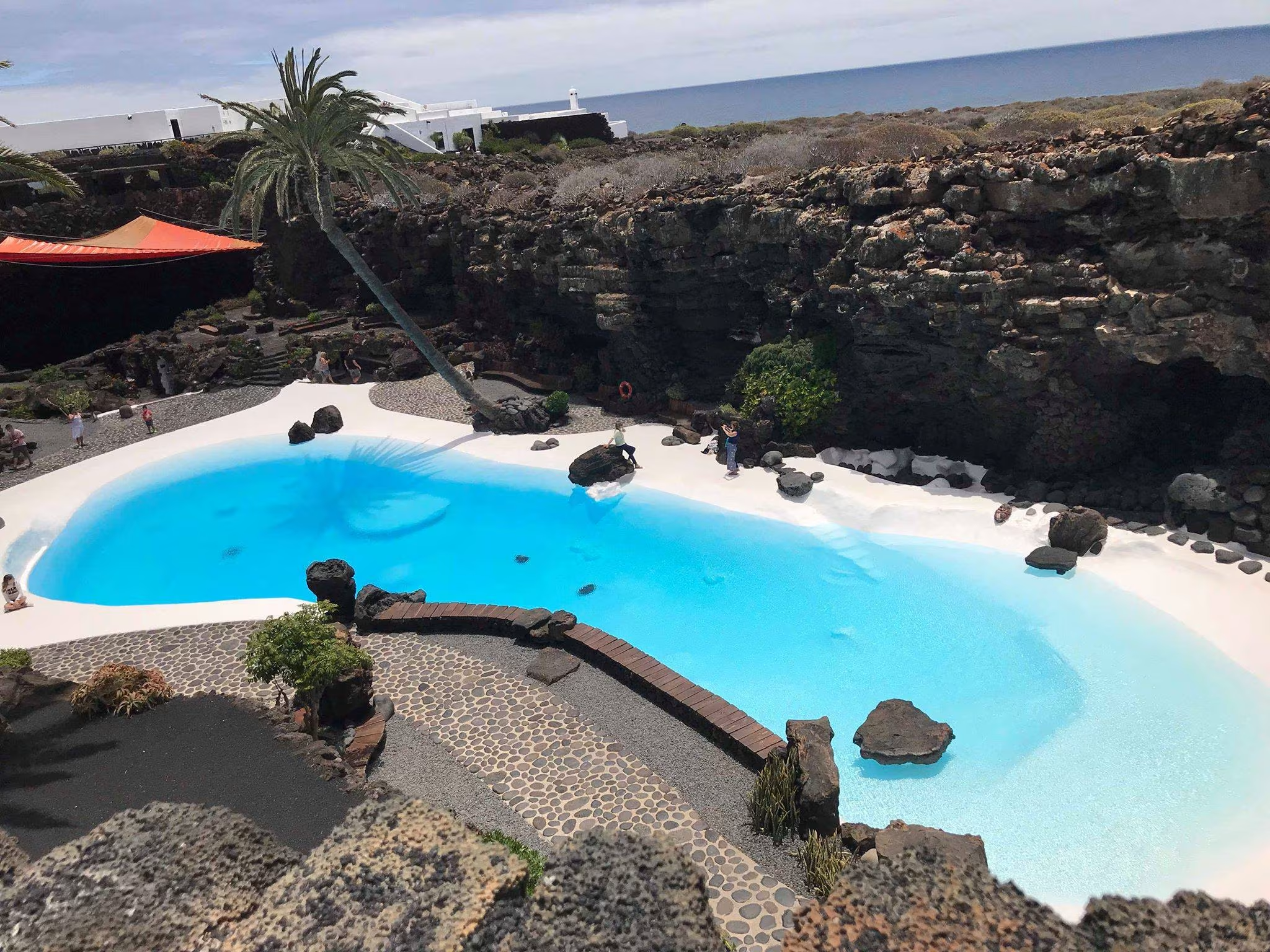
Jameos del Agua was one of Manrique’s earliest projects after he came back to Lanzarote, and even now, it stands out as one of the island’s most remarkable places. Set within a lava tube formed by the eruptions of Monte Corona, Manrique took what nature had left behind and turned the collapsed cave into a space that feels truly magical.
You step in through the upper jameo, where the roof of the lava tube has given way, and make your way down into a cave that now holds a restaurant and bar. The lighting is gentle and atmospheric, and the volcanic rock walls give the whole place a feeling that simply can’t be recreated anywhere else. If you wander further, you’ll find an underground salt lake, home to the tiny, ghostly white jameitos - blind albino crabs that you won’t see anywhere else in the world. Over the years, these little creatures have become a much-loved symbol of Lanzarote.
Beyond the lake, a few steps take you up to an outdoor area where a beautiful swimming pool is framed by tropical plants and bright white walls. At the far end, there’s an auditorium carved right into the rock, famous for its wonderful acoustics. The whole place is a perfect mix of Lanzarote’s wild volcanic landscape and Manrique’s thoughtful design. It’s easy to lose track of time here, and it’s the sort of spot that draws people back again and again.
Many of us who live here love to visit the Jameos for the Saturday night concerts. There’s something truly special about listening to live music inside a volcanic cave, with the stars shining above.
Mirador del Río
Sitting high above the island on the edge of the Famara cliffs, some 475 metres above sea level, the Mirador del Río is perhaps Manrique’s most breathtaking creation. It’s easy to miss as you drive by, as the building is tucked so cleverly into the cliff that only a few gentle curves of white concrete give away its presence. It feels almost as if Lanzarote is keeping a little secret up here.
Step inside and you’re greeted by a space that feels both welcoming and otherworldly, with gentle curves and huge windows that open out onto what I think is one of the most unforgettable views in the Canaries. Far below, the Strait of El Río glimmers, separating Lanzarote from the peaceful little island of La Graciosa. On a clear day, you can pick out every sandy track, the small village, and the golden beaches of La Graciosa, all spread out like a living map. Further out, the tiny shapes of Montaña Clara and Alegranza rest quietly in the Atlantic.
Manrique chose to build the Mirador on the site of the old Batería del Río, a military lookout that has watched over this coastline since the late 1800s. He kept parts of the original structure, weaving his design around it so that the whole place feels like it belongs to the cliffs. There’s a lovely café inside where you can sit with a coffee and soak up those views, and if you climb the spiral staircase to the rooftop terrace, you’ll find yourself right in the path of the fresh Atlantic breeze.
If you can, I’d suggest visiting in the late afternoon. The light at that time gives La Graciosa a golden glow, and it’s usually much quieter once the coaches have gone. It’s a peaceful moment that always reminds me why I love this corner of Lanzarote.
Jardín de Cactus
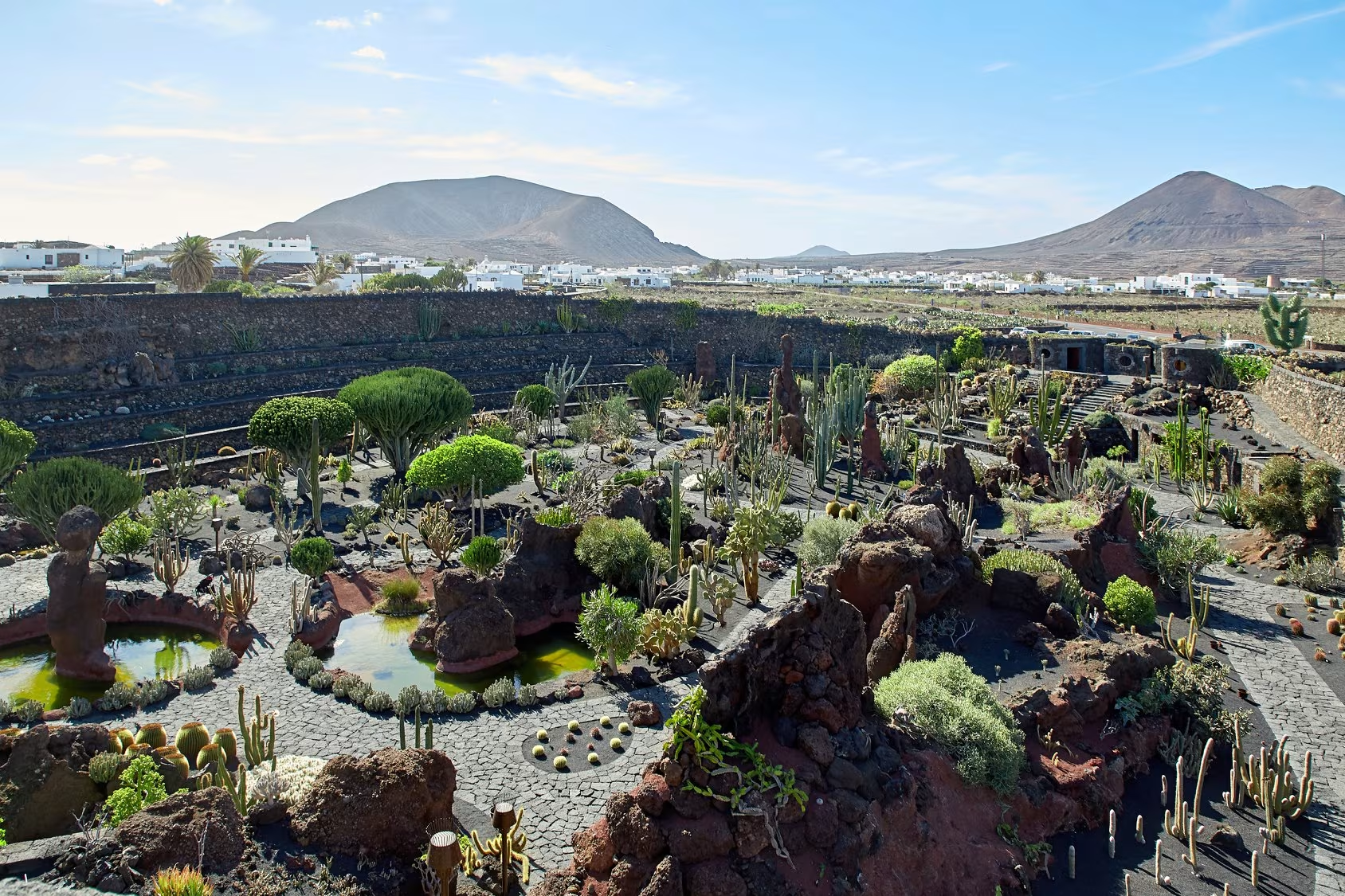
Manrique’s last major creation, finished just before he passed away in 1992, can be found in the quiet village of Guatiza, here in the municipality of Teguise. The Jardín de Cactus was carefully designed within an old rofera, a quarry where local farmers once gathered volcanic gravel for Lanzarote’s distinctive dry farming. It’s a wonderful example of how the island’s history and natural beauty come together.
Here you’ll find around 4,500 cacti, representing more than 450 species from the Americas, Africa, and of course, our own Canary Islands. The plants are set out on terraced levels that follow the gentle curves of the old quarry, with winding paths that invite you to wander past everything from tiny, intricate cacti to towering giants that seem to watch over the garden.
At the heart of the garden stands a beautifully restored windmill, once used for grinding gofio, which Manrique brought back to life as a tribute to the area’s farming traditions. Guatiza has long been known for its cochineal production, and as you approach, you’ll see fields of prickly pear cactus stretching out beside the road. These aren’t just for show – they’re carefully tended for the tiny cochineal beetles that live on them, producing a rich natural red dye that’s still used today in foods, cosmetics, and textiles.
The Jardín de Cactus is a little smaller than some of Lanzarote’s other attractions, and you can easily explore it in under an hour. It’s a peaceful, welcoming place that invites you to slow down and enjoy the surroundings. I always recommend stopping at the café at the top, where you can take in the sweeping views over the terraces with a coffee in hand – it’s a lovely way to round off your visit.
Fundación César Manrique (Tahíche)
For many of us who have lived here a long time, the Fundación César Manrique stands out as perhaps the most remarkable of all Manrique’s creations. Just outside Tahíche, on the main road between Arrecife and Teguise, you’ll find the house where Manrique lived from 1968 to 1988. A place that truly reveals his spirit and vision.
The house itself is built both on top of and within a lava flow left behind by the eruptions of the 1730s. At first glance, from the outside, it appears to be a striking yet fairly simple white modernist building. But step downstairs, and you’ll discover a completely different world.
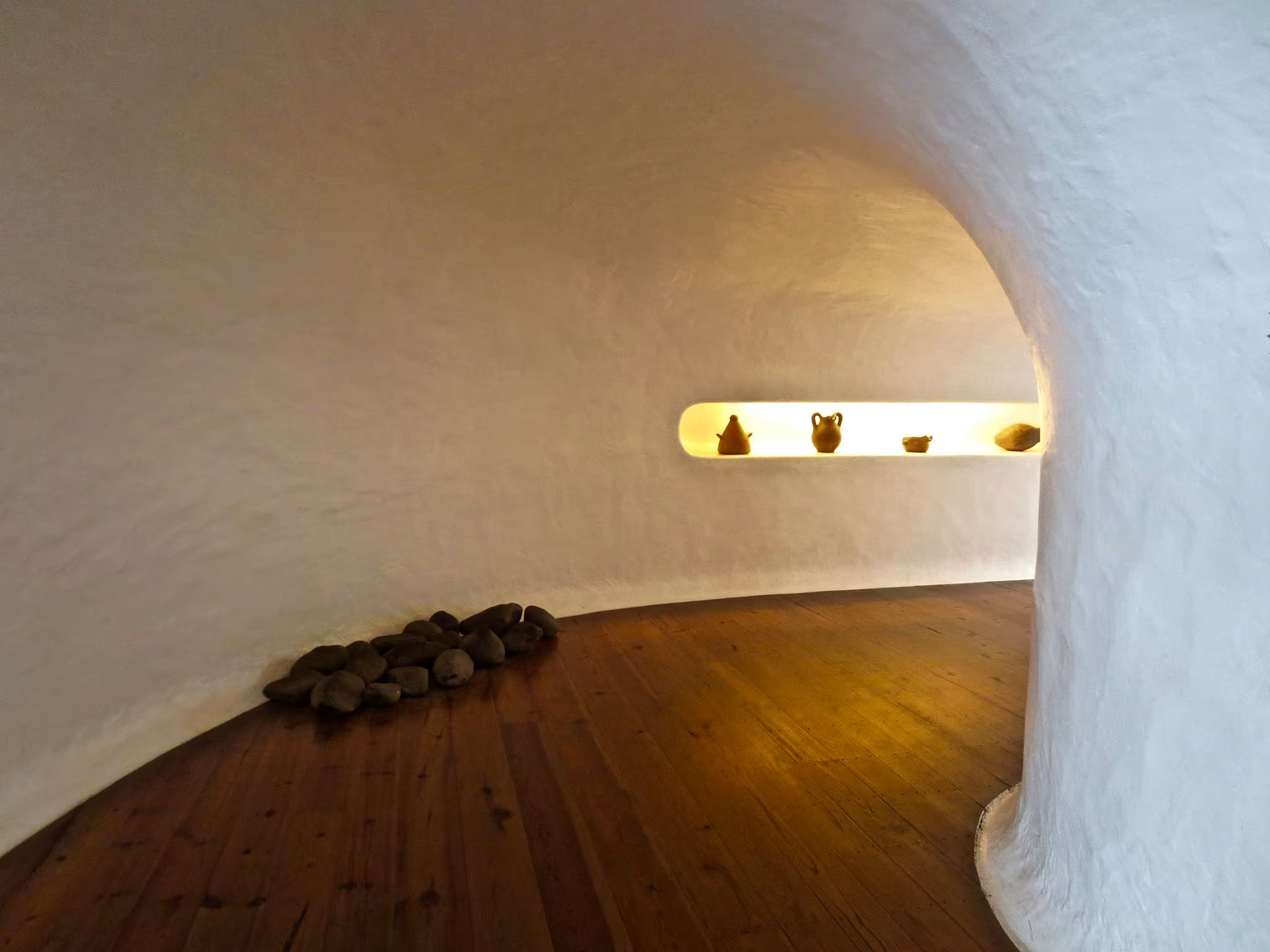
Manrique found five natural volcanic bubbles beneath the lava field and transformed each one into a unique room, linking them with tunnels carved through the rock itself. Each bubble has its own personality; one is home to a peaceful garden with a fountain, another features a swimming pool, and another even has a dance floor. The volcanic walls remain as nature shaped them, black and red, full of dramatic twists, while Manrique brought the spaces to life with touches of colour and lush tropical plants.
It really is breathtaking. As you wander through these underground spaces, it’s almost impossible to imagine that someone once called this place home. One of the bubbles holds a well-known swimming pool, painted white and fed by a natural channel in the rock, with a magnificent fig tree overhead whose roots have found their way right through the lava.
After Manrique moved to his second home in Haría, the Tahíche house became the foundation that bears his name. Today, it functions as both a museum of his life and work and a gallery for contemporary art exhibitions. The upper floor displays many of his paintings and sketches, alongside works by Picasso, Miró, and other artists from his collection.
Casa-Museo César Manrique in Haría
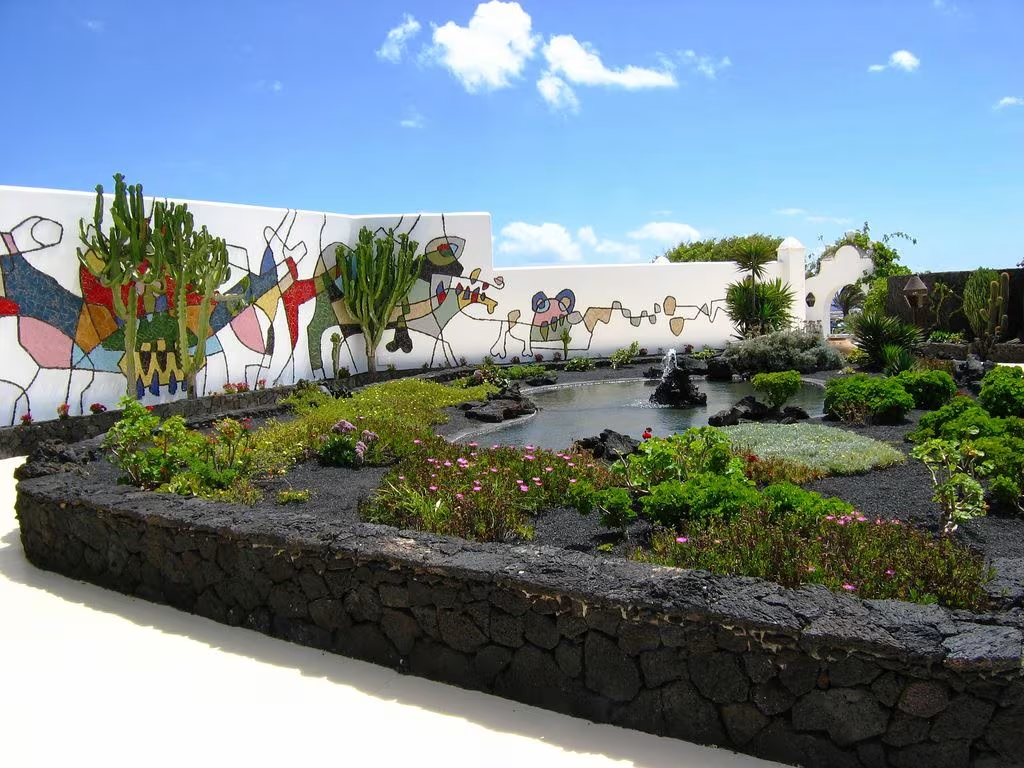
Manrique’s second and final home rests peacefully in the heart of Haría, surrounded by the palms that make this northern village so special. He came back here in 1988, returning to the valley that had captured his heart since childhood. Unlike the bold volcanic forms of his Tahíche house, the Haría home has a gentle, welcoming feel. It is a traditional Canarian farmhouse, carefully transformed with Manrique’s unique touch.
Since 2013, visitors have been able to step inside and see the house much as Manrique left it. His unfinished canvases still rest in the studio, books line the shelves, and the kitchen remains just as it was when he cooked for friends. It is a quietly moving place. While the Fundación in Tahíche impresses with its scale, the Haría house offers a glimpse into the artist’s private world.
The gardens here are a real delight, filled with tropical plants and shaded by the tall palms that have earned Haría its name as the Valley of a Thousand Palms. It is a peaceful spot, far less busy than the Fundación, so you can wander at your own pace and really soak up the atmosphere.
Manrique Made His Mark Across the Island
If you spend any time exploring Lanzarote, you will soon notice that Manrique’s influence is woven into the fabric of the island in all sorts of subtle ways. The playful wind sculptures that catch your eye at roundabouts and crossroads are his creations. So too are the vibrant murals that brighten up some of our public buildings. Even the relaxed, harmonious feel of Costa Teguise owes much to Manrique’s vision in its early days. His touch is everywhere, even if you don’t always realise it at first.
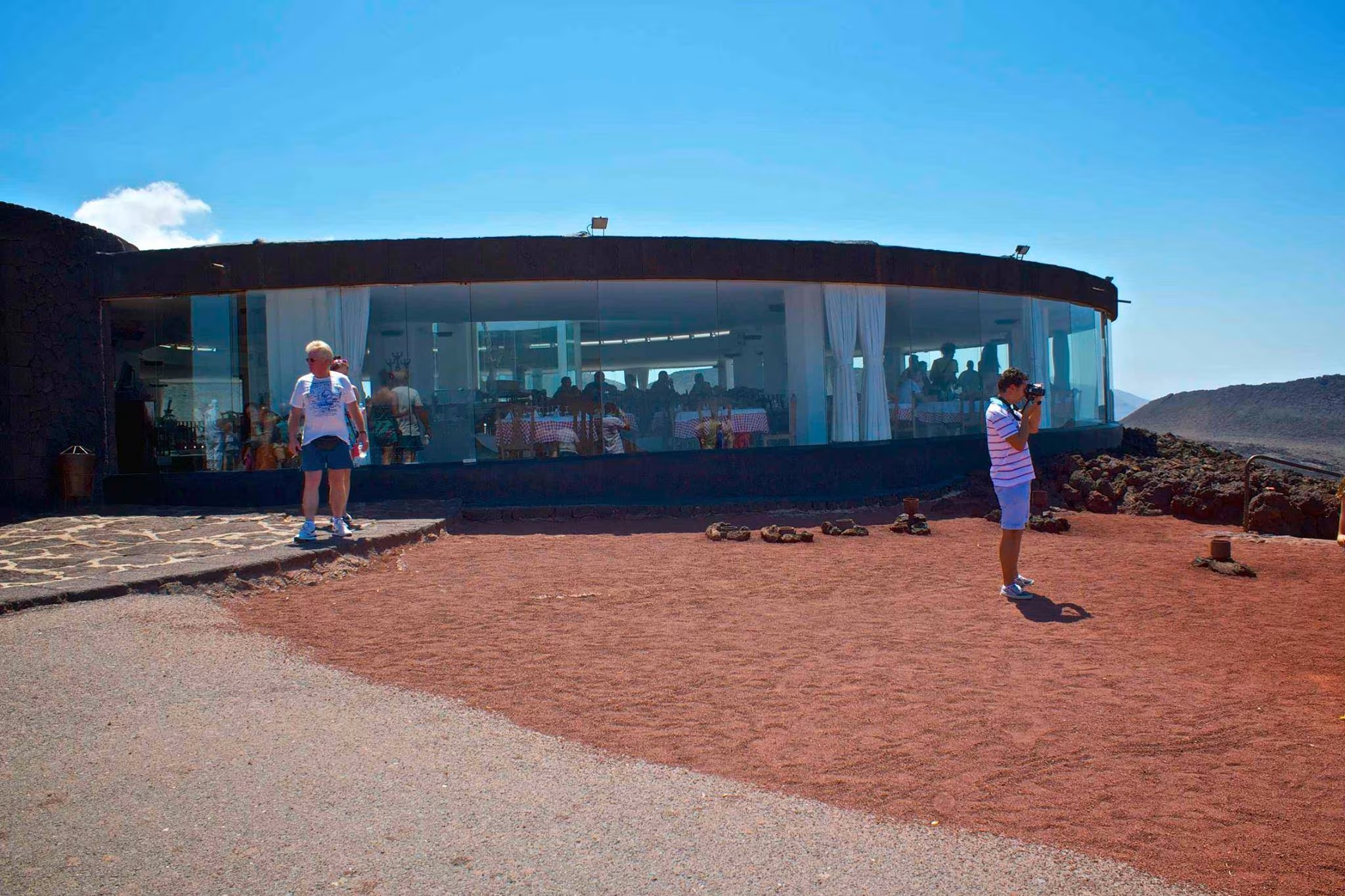
Manrique also played a key part in shaping Timanfaya National Park, helping to find ways for visitors to experience the dramatic volcanic scenery without harming it. The restaurant at Islote de Hilario, where food is cooked using the natural heat from the earth, is another of his inspired designs.
In Arrecife, you’ll find the Castillo de San José, a modest 18th-century fortress that Manrique transformed into the International Museum of Contemporary Art. Downstairs, there is a beautiful glass-fronted restaurant with sweeping views over the harbour, another example of his thoughtful approach to design. Even the roundabouts, road markings and signposts you pass as you travel around Lanzarote reflect his careful attention to detail.
Something that often surprises visitors is how naturally everything seems to fit together here. The attractions are not just scattered about, but are thoughtfully woven into the landscape. Manrique believed that art should work alongside nature, not against it, and as you travel around Lanzarote, you can see that idea brought to life at every turn.
Legacy of César Manrique and the UNESCO Recognition
César Manrique lost his life in a car accident near the Fundación in Tahíche on 25 September 1992, at the age of 73. It was a day that left the whole island in shock and sadness.
Only a year later, in 1993, Lanzarote was named a UNESCO Biosphere Reserve. This honour was a direct result of the environmental and architectural vision that Manrique had worked so passionately to protect. For many of us who call Lanzarote home, it was a proud but bittersweet moment. There was a real sense that he deserved to witness this recognition himself.
Manrique’s legacy is still very much alive on Lanzarote. The building rules he fought for continue to shape the island, even as debates about development come and go, especially in the busier tourist spots. Most of us who live here feel strongly about protecting these regulations, and any suggestion of relaxing them is usually met with passionate resistance. If you spend any time here, you’ll soon discover that everyone has an opinion on the subject.
If you are visiting, you’ll find that Manrique’s seven main attractions, known as the CACT centres, can be explored one by one or with a combined ticket that offers good value. They are dotted all over Lanzarote, so while it is possible to see them all in a single day, it can feel a bit hurried. Most people prefer to take their time, spreading the visits over two or three days and mixing in some time at the beach or wandering through nearby villages.
Visiting the Manrique Attractions
Many of the most iconic Manrique-designed attractions are looked after by the CACT, or Centros de Arte, Cultura y Turismo. You can choose to buy tickets at each site as you go, or opt for a multi-centre pass that covers three, four, or all six of the CACT centres. The passes work out much better value if you plan to visit more than one, and they are valid for two weeks, so you can take your time and enjoy each place at your own pace.
The CACT centres are:
- Jameos del Agua (Haría)
- Cueva de los Verdes (Haría)
- Mirador del Río (Haría)
- Jardín de Cactus (Teguise)
- MIAC Castillo de San José (Arrecife)
- Timanfaya Visitor Centre (Tinajo). Just a note: the Fundación César Manrique in Tahíche and the Casa-Museo in Haría are managed separately from the CACT centres, so you will need to buy separate tickets for those.
Here are a few practical tips I have picked up over the years:
If you are planning to visit Jameos del Agua or Mirador del Río, it is well worth arriving early, especially during the winter months when cruise ships are in port and the sites can get busy.
The Cueva de los Verdes can only be visited on a guided tour, which runs at set times throughout the day. It is a good idea to check the schedule before you set off, to avoid a long wait.
If your time is limited and you can only choose two or three places to visit, I would recommend the Fundación in Tahíche, Jameos del Agua, and Mirador del Río. These are the ones that tend to leave a lasting impression on most people.
Do remember to wear comfortable shoes, as several of the sites have uneven volcanic rock paths and a fair number of steps to navigate.