Lanzarote Camel Rides
Ride a camel across volcanic slopes at Echadero de los Camellos near Timanfaya. A Lanzarote tradition dating back to the 15th century. Around 12 euros per person.
There is something truly special about riding a camel along the volcanic slopes of Lanzarote. For many of us who have called the island home for years, these gentle dromedaries are woven into the fabric of local life, having worked the land here since the fifteenth century. The camel station at Echadero de los Camellos, just before you reach Timanfaya National Park, has welcomed visitors for generations. Whether you are looking for a fun holiday memory or a glimpse into Lanzarote’s rural traditions, a camel ride is a unique way to experience the landscape and spirit of the island.
The History of Camels on Lanzarote
Dromedaries first arrived in the Canary Islands from North Africa back in the fifteenth century, brought over as sturdy working animals. Here on Lanzarote, with our dry landscape and limited water, they quickly became essential helpers. For generations, camels ploughed our fields, carried goods along the island’s rocky paths, and brought water to where it was needed most. In the La Geria wine region, you can still picture them gently carrying baskets of grapes during the harvest, a tradition that lingers in local memory.
There was a time when several hundred camels worked across Lanzarote, a familiar sight in the fields and villages. With the arrival of modern machinery in the twentieth century, their role in farming gradually faded, but the tradition lives on. Today, you can still see their descendants at Echadero de los Camellos, and a handful of local breeders continue to care for small herds. The dromedary has become a much-loved symbol of Lanzarote, appearing on everything from souvenirs to postcards, and always reminding us of the island’s unique history.
How the Lanzarote Camel Ride Works
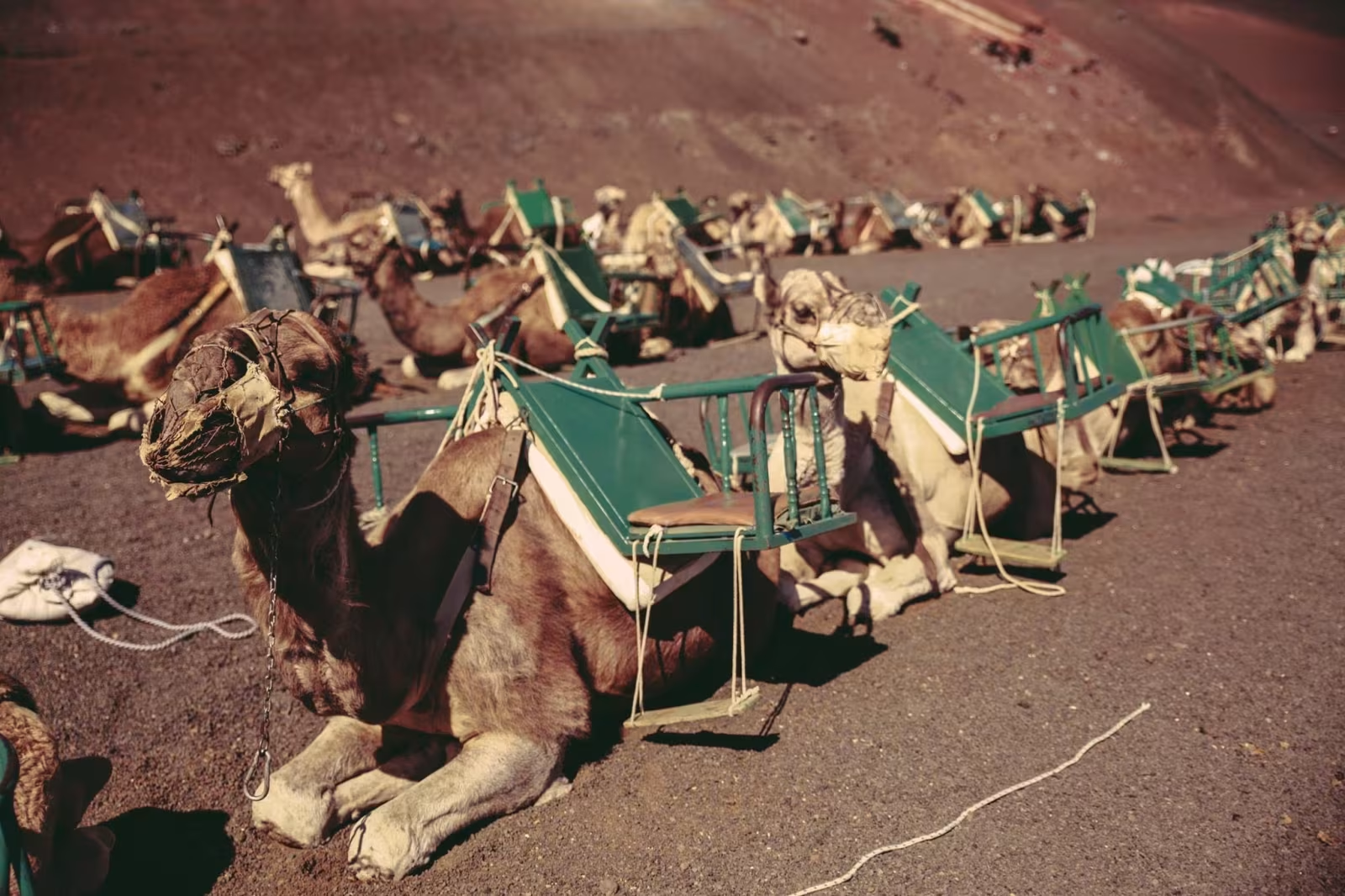
Camel rides set off from Echadero de los Camellos, just along the LZ-67 road on the way to the Timanfaya National Park visitor centre. It is hard to miss the spot, with camels resting patiently on the hillside and a gathering of cars and coaches parked up nearby. The sight is a familiar one to anyone who has spent time here.
Each camel is fitted with a double saddle, a sturdy wooden frame with a padded seat on either side, so two people ride together, one on each side. This is the way camels have carried people and goods here for generations. Once you are settled in, the saddle feels reassuringly secure, though getting on and off is always the trickiest part. When the camel stands, it rises from the back first, tipping you gently forward before settling. It is a slightly surprising motion if you have not tried it before, but it is all part of the fun and perfectly safe.
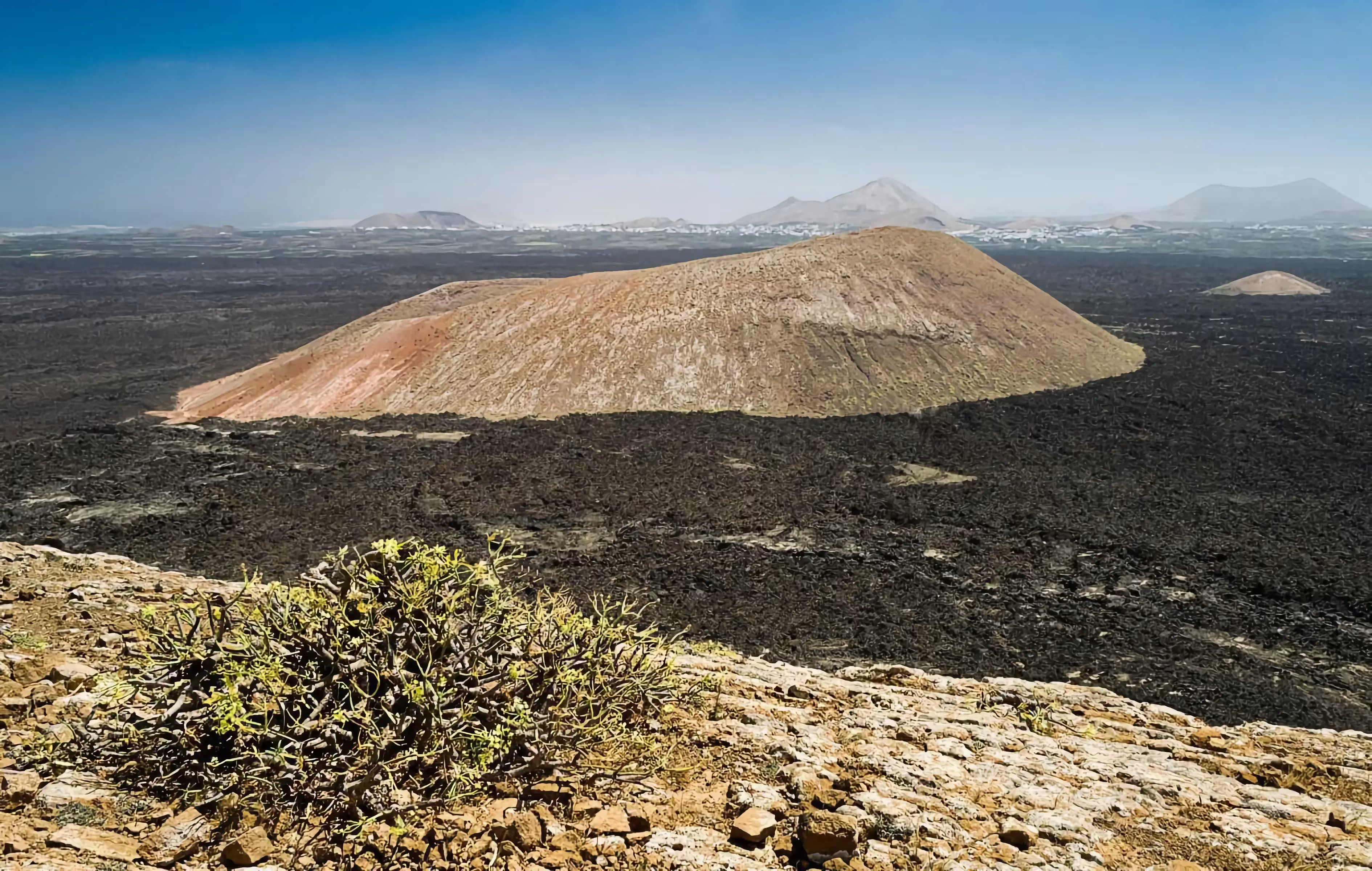
The ride lasts around 20 minutes, following a gentle circuit across the lower volcanic slopes just beside the road. The camels move in a line, nose to tail, guided by their handlers at a calm, steady pace. As you sway along, you are treated to sweeping views of the lava fields and the striking volcanic cones of Timanfaya rising in the distance. It is not a long journey, but the dramatic scenery and the unique experience of riding a camel through this otherworldly landscape make it one to remember.
The best times to visit the Lanzarote Camels
Camel rides are always popular with visitors to Lanzarote, and it is easy to see why. The only challenge is that things can get a little busy at certain times of day. From around 11am to 2pm, especially in the height of the season, you may find yourself waiting for up to an hour as the queue gently snakes its way up the hillside. Most of the coach tours arrive mid-morning, so the area can fill up quickly, and there is little shade along the path.
If you want to make the most of your visit, I always recommend arriving before 10am, or waiting until after 3pm once the coaches have left. Early mornings are especially lovely, with cooler air for both you and the camels. If you are planning to visit Timanfaya as well, it works well to enjoy the camel ride first thing, then head up to the national park, or do it the other way round later in the day.
There is no need to book in advance; you simply turn up, join the queue, and pay at the kiosk when it is your turn. There are plenty of camels working in rotation, so things usually move along at a steady pace, but during the busiest times, you may need a little patience.
Price and What is Included in Lanzarote Camel Rides
The camel ride is 11 euros per person (€22 per camel), which you can pay at the kiosk with cash or card. This includes a gentle 20-minute journey across the landscape, as well as entry to the small camel museum and exhibition area on site. It is well worth taking a few minutes to explore the displays, which share the story of dromedaries here in the Canary Islands, showcase traditional saddle designs, and explain the important part camels have played in Lanzarote’s agricultural past.
You will also find a small shop on site, where you can pick up a souvenir or a cool drink. There are toilet facilities available, but no food is served, so if you are planning your visit around lunchtime, it is a good idea to bring a snack or plan to eat afterwards. The nearby village of Yaiza is just a short drive away and offers a choice of local restaurants.
Lanzarote Camel Rides - Photography Tips
A camel ride here is always a memorable experience, especially with the striking red and black volcanic hills rising behind you. If you are sharing the adventure with a partner, you will find yourselves seated on opposite sides of the same camel, which makes it easy to capture a few photos of each other as you sway along the trail. I always recommend using a phone with a wrist strap, as the gentle rocking of the camels can make it all too easy to lose your grip in the excitement.
Some of the loveliest photos are actually taken from the ground, either before you set off or once your ride is over. Watching the line of camels making their way up the hillside, framed by the volcanic landscape, is a sight you will want to remember. The morning light is soft and golden, while late afternoon brings long shadows that add a touch of drama to the lava fields. If you can, try to avoid the midday hours, when the sun is high and the light is less flattering—not to mention the area is at its busiest.
Animal Welfare Considerations
It is quite natural to wonder about the welfare of the camels at Echadero de los Camellos, and I am often asked about this by visitors. These camels have been part of Lanzarote’s landscape for generations, and their care is taken seriously. Local veterinary authorities carry out regular inspections, and the handlers here are both experienced and attentive. The camels work in rotation, each one doing just a few circuits before being given time to rest, enjoy some water and food, and relax in the shade. Over the years, they have become very familiar with the gentle rhythm of their days.
Of course, everyone has their own feelings about animal rides, and some people prefer not to take part. If you are unsure, you are very welcome to visit the site just to watch the camels and perhaps explore the small museum. Many people simply enjoy seeing the camels from the roadside as they make their way toward Timanfaya, taking in the unique landscape and atmosphere of this part of the island.
There is a weight limit for riders, and the staff do keep an eye on this to ensure the camels’ comfort. Dromedaries are strong and well-suited to their work, but the team always checks that the combined weight of two riders is within a sensible range. This is just one of the ways they look after the animals’ wellbeing.
Combining Lanzarote Camel Rides with a trip to The Timanfaya National
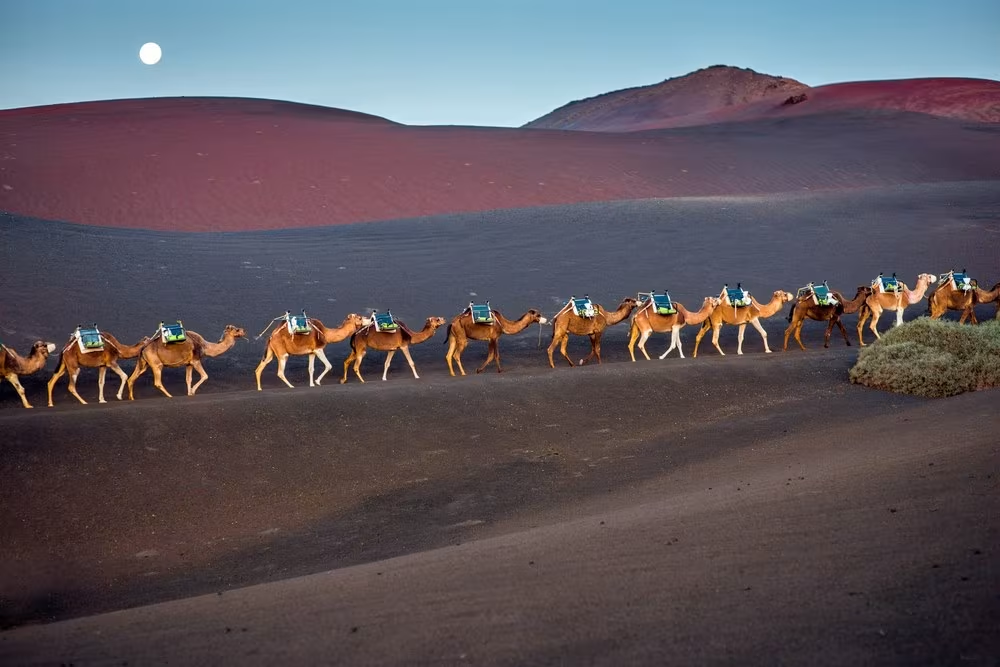
Echadero de los Camellos sits right on the main road leading into Timanfaya National Park, so it fits perfectly into a day exploring this unique part of Lanzarote. The camel station is easy to spot at the lower end of the road, around two kilometres before you reach the park entrance. Many visitors like to start their adventure here with a gentle camel ride across the volcanic landscape, before heading up to the Islote de Hilario visitor centre to watch the famous fire demonstrations and join the Ruta de los Volcanes coach tour through the dramatic lava fields.
It’s worth knowing that the Timanfaya coach tour can get quite busy, especially during peak times, and it’s not unusual to find a queue at the top. I usually recommend arriving at the park entrance before 10am or later in the afternoon, after 3pm, to avoid the longest waits, though in high season you may still need a little patience. Some people like to visit Timanfaya first and save the camel ride for the way back down the hill. Either way works well, so you can choose the order that suits your day best.
Are the Lanzarote Camel Rides worth it?
The camel ride is one of those Lanzarote experiences that people tend to remember, for better or for worse. Many visitors absolutely love it and count it among the highlights of their holiday, while others feel it can be a little brief or busy, and some have concerns about the ethics. From my perspective, it is well worth trying at least once, especially if you time your visit to avoid the busiest periods.
There is something quite special about riding a dromedary across the volcanic landscape here. The scenery is truly unique, and the experience is a nod to Lanzarote’s history as well. Children, in particular, seem to delight in the novelty, and it always makes for memorable holiday photos. My advice is to arrive early, enjoy the ride, pop into the small museum, and then continue on to Timanfaya. That way, you can take it all in at a relaxed pace and avoid the queues.