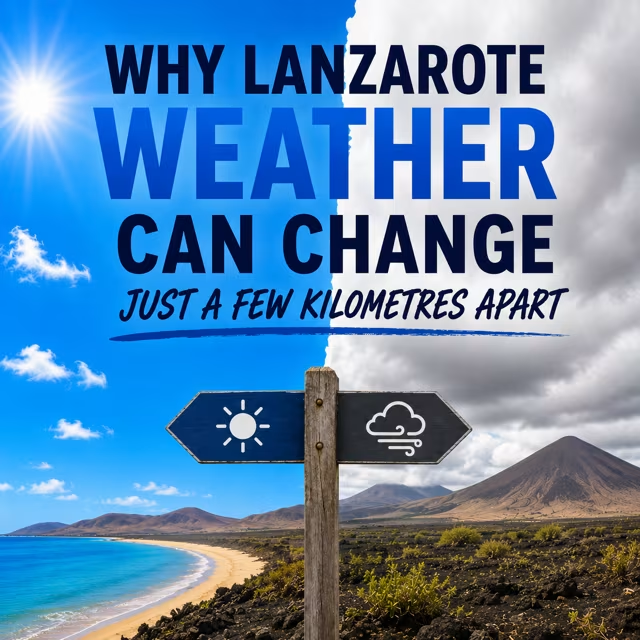
Why Lanzarote’s Weather Can Be Completely Different Just a Few Kilometres Apart
If you’ve spent any time in Lanzarote, you’ve probably experienced it for yourself. Sunny Puerto del Carmen, windy and overcast in La Geria.
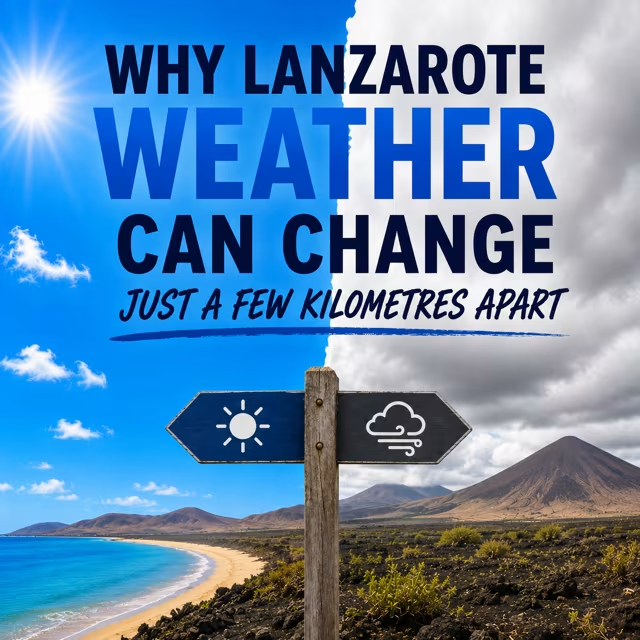
Why Lanzarote’s Weather Can Be Completely Different Just a Few Kilometres Apart
If you’ve spent any time in Lanzarote, you’ve probably experienced it for yourself. One moment you’re relaxing under clear blue skies in Puerto del Carmen, and a short drive later you’re battling strong winds in La Geria or watching low cloud roll over the mountains near Famara.
It’s a phenomenon that often leaves visitors confused, especially when weather alerts are issued while conditions in the tourist resorts appear almost perfect.
So why can the weather in Lanzarote change so dramatically over such short distances?
Does Lanzarote Have Microclimates?
The simple answer is yes.
Lanzarote may be a relatively small island, but it has several distinct microclimates. A microclimate is a localised weather pattern that differs from the surrounding area due to geographical features such as elevation, mountains, valleys, coastlines and wind exposure.
This means that while one part of the island can be sunny, calm and hot, another area just a few kilometres away can be windy, cloudy or noticeably cooler.
The Mountains Play A Major Role
One of the biggest reasons for these weather differences is Lanzarote’s varied landscape.
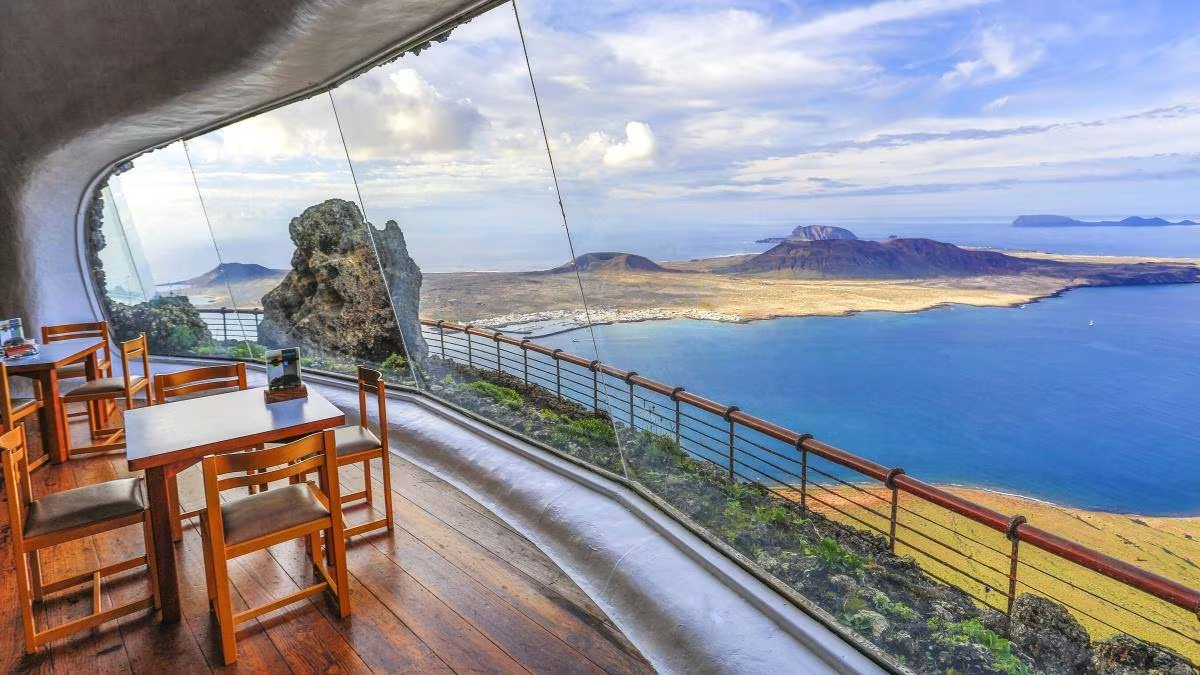
Although Lanzarote is often thought of as a flat volcanic island, there are several elevated areas that significantly influence local weather conditions. Areas including Los Ajaches, Famara, Teguise, Haría and the volcanic landscapes around La Geria sit higher than the coastal resorts and are often far more exposed to the prevailing winds.
The island’s mountains and volcanic terrain act as natural barriers, affecting how air moves across the island.
As the trade winds arrive from the northeast, they are forced upwards by higher ground. This can create stronger gusts, lower temperatures and increased cloud cover in inland and elevated areas, while coastal resorts remain warm and sunny.
Why The Resorts Often Feel Different
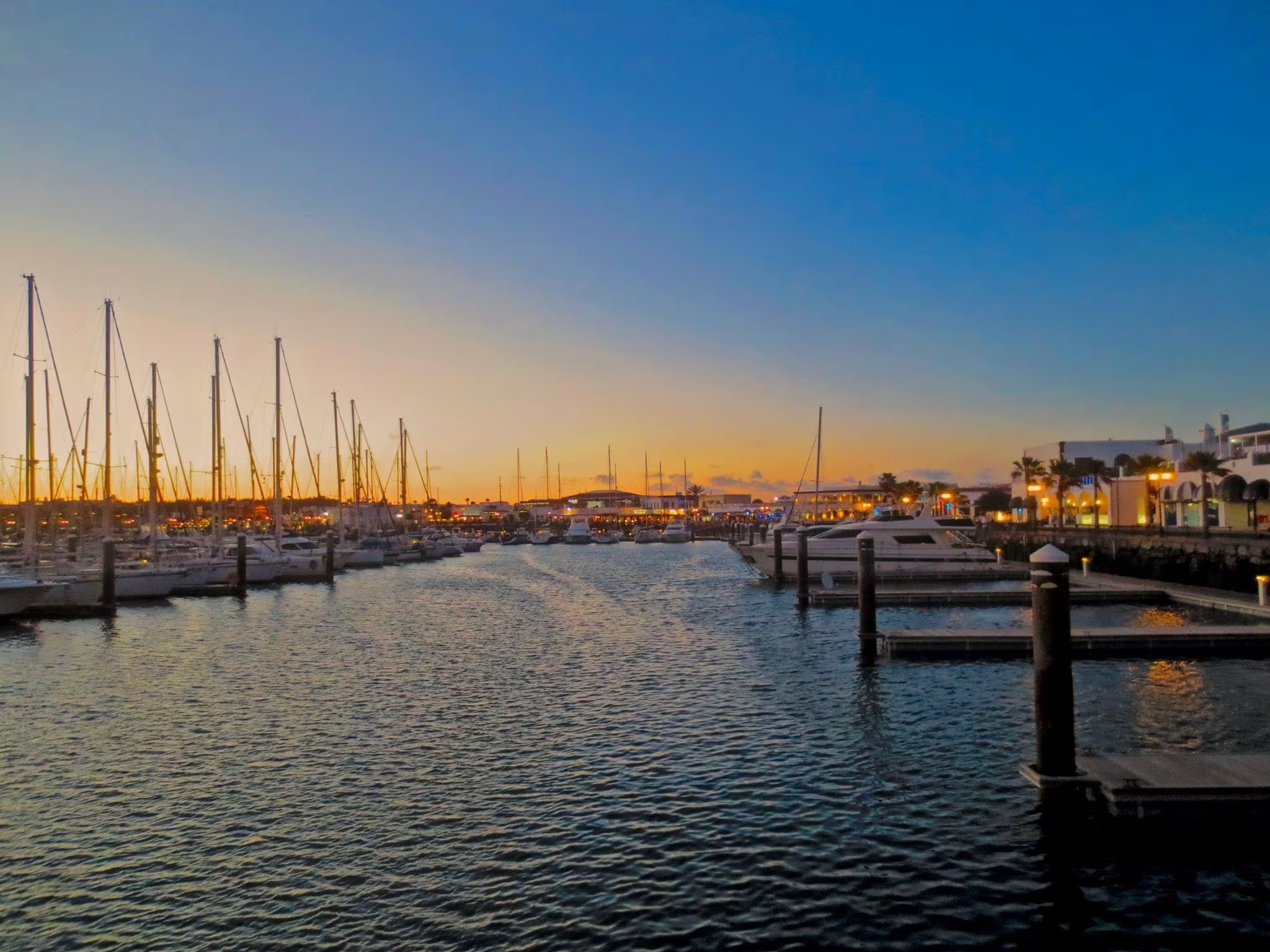
The island’s most popular tourist destinations, including Puerto del Carmen, Playa Blanca and Costa Teguise, benefit from their coastal locations and, in some cases, natural shelter from surrounding terrain.
As a result, these areas often experience calmer conditions than exposed inland locations.
This helps explain why weather alerts can sometimes generate scepticism among visitors. During recent yellow weather warnings, many tourists reported blue skies and temperatures above 30°C in the resorts, leading some to question the forecasts.
However, conditions elsewhere on the island were very different, with stronger winds affecting elevated areas and leading to event cancellations and weather-related incidents.


Sponsored
Why Tourists Usually Experience The Best Of Lanzarote Weather
The good news for visitors is that Lanzarote’s main tourist resorts generally enjoy some of the island’s most reliable weather conditions.
Puerto del Carmen, Playa Blanca and Costa Teguise are all located in coastal areas that benefit from a combination of sunshine, lower rainfall and, in many cases, natural protection from the strongest weather systems affecting other parts of the island.
This is one of the reasons Lanzarote has become such a popular year-round holiday destination. Even when stronger winds, low cloud or occasional rain affect inland areas, the resorts often continue to enjoy warm temperatures, long periods of sunshine and excellent conditions for beaches, swimming pools and outdoor dining.
Of course, there are exceptions. During periods of calima, storms or island-wide weather alerts, the resorts can also experience challenging conditions. However, compared with higher and more exposed locations such as Famara, Haría, Teguise and La Geria, the main tourist areas tend to benefit from the most stable and predictable weather throughout the year.
This difference is often what surprises visitors. Someone enjoying a sunny afternoon in Puerto del Carmen may find it hard to believe that, just 20 minutes away, stronger winds or low cloud are affecting another part of the island. Yet this contrast is a perfect example of the microclimates that make Lanzarote’s weather so unique.
The Influence Of The Atlantic Ocean
The Atlantic Ocean also plays a major role in shaping Lanzarote weather.
Sea temperatures, ocean breezes and humidity levels all influence conditions around the coastline. Areas on the eastern and southern coasts can often feel significantly warmer than exposed western or northern locations.
The ocean helps regulate temperatures, preventing extreme heat but also creating noticeable variations between different parts of the island.
Why Weather Alerts Can Still Be Accurate
One common misconception is that weather warnings apply equally across every corner of Lanzarote.
In reality, meteorological agencies issue alerts based on the areas expected to experience the most severe conditions. This means strong winds in exposed inland regions can trigger a weather warning even if many holidaymakers in the resorts continue enjoying sunshine and warm temperatures.
It’s not unusual for weather conditions in Famara, La Geria or Haría to be completely different from those in Puerto del Carmen on the very same day.
A Unique Feature Of Lanzarote
The variation in weather is actually one of Lanzarote’s most fascinating natural characteristics.
The island’s volcanic landscape, mountainous terrain, Atlantic location and prevailing trade winds combine to create a series of microclimates that can change dramatically over surprisingly short distances.
So next time you hear about strong winds, low cloud or a weather alert affecting Lanzarote, remember that conditions in the tourist resorts may only tell part of the story.
On an island shaped by volcanoes and the Atlantic Ocean, the weather can change far more quickly — and over much shorter distances — than many visitors realise.
For holidaymakers, that’s usually good news. More often than not, the island’s main resorts enjoy some of the best weather Lanzarote has to offer, which is one of the reasons millions of visitors continue to choose the island year after year. But understanding Lanzarote’s microclimates helps explain why weather forecasts and weather alerts can still be entirely accurate, even when the skies above the beach are bright blue.
Yes. Despite being a relatively small island, Lanzarote has several microclimates. Weather conditions can vary significantly between coastal resorts, inland areas and higher elevations due to differences in terrain, altitude and exposure to the trade winds.
Puerto del Carmen, Playa Blanca and Costa Teguise are generally considered to have some of the island’s most reliable weather. These popular tourist resorts often enjoy sunshine and warm temperatures even when other parts of the island experience stronger winds or cloudier conditions.
Absolutely. Higher areas around Famara, Haría, Teguise and Los Ajaches can influence wind patterns, cloud formation and temperature. The mountains help create the microclimates that make Lanzarote weather so varied over short distances.
Lanzarote is one of the driest Canary Islands. Rainfall is generally low throughout the year, although occasional showers and storms can occur, particularly during the winter months.
Lanzarote is a year-round destination. Summer offers the hottest temperatures and longest days, while winter remains pleasantly warm compared to much of Europe, making it popular with visitors seeking winter sunshine.
The combination of trade winds, volcanic terrain, varying elevations and the Atlantic Ocean creates rapidly changing local conditions. As a result, weather can appear very different just a few kilometres apart.