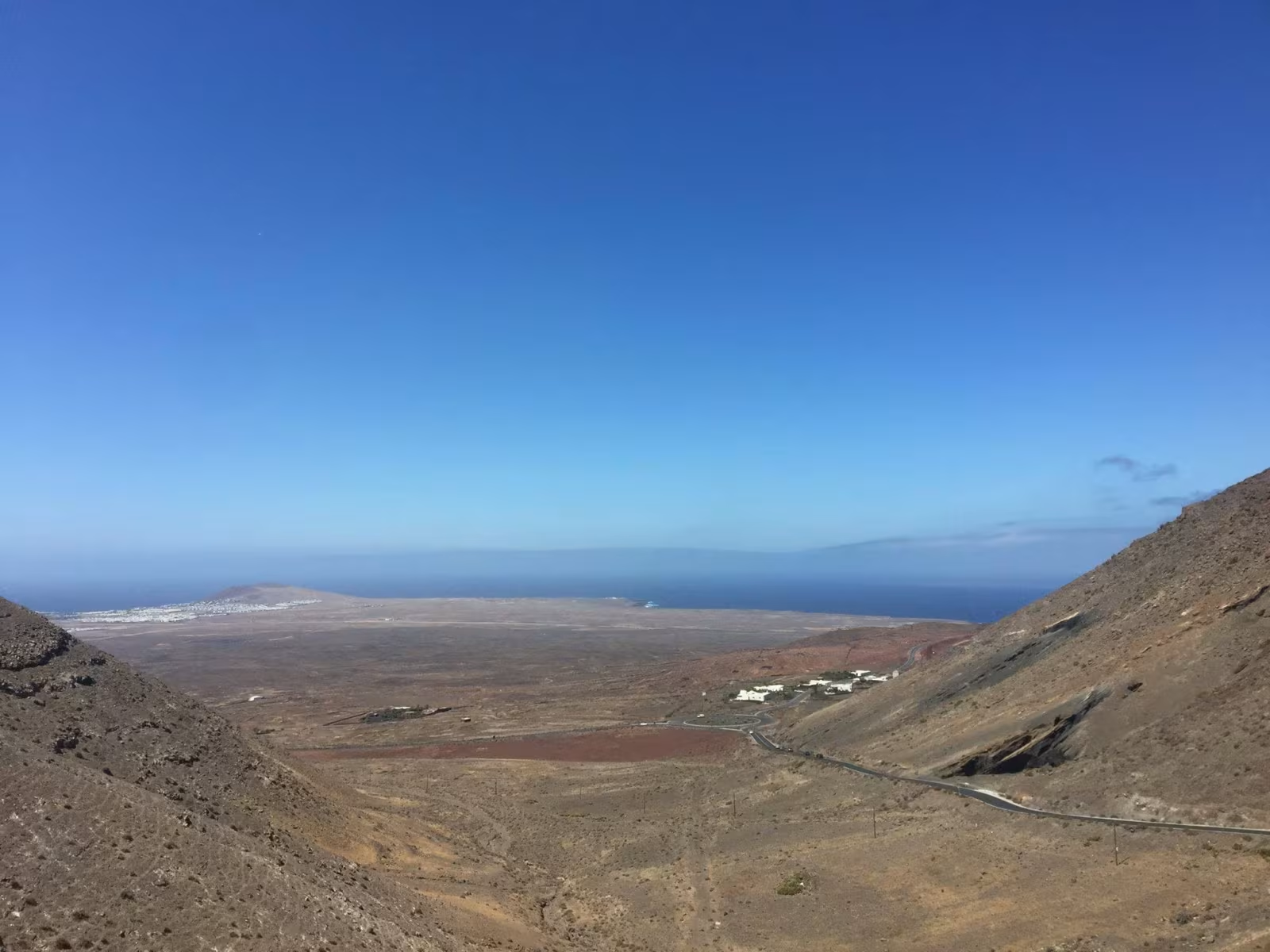
Los Ajaches Walk
Guide to the Los Ajaches walk from Femes village in southern Lanzarote, a 12km circuit through the island's oldest volcanic terrain with ridge views over Papagayo and Fuerteventura.
If you are seeking a peaceful escape into Lanzarote’s wild side, the Los Ajaches walk from Femes is a wonderful choice. While many visitors are drawn to the dramatic volcanoes in the north or the famous Timanfaya fire mountains, those of us who know the island well often find ourselves returning to the south, where the landscape is older, quieter, and every bit as captivating.
The Los Ajaches massif is the most ancient part of Lanzarote, with volcanic rocks that have watched over the island for around 15 million years. Setting out from the peaceful village of Femes, the 12km circular route leads you through dramatic ravines, along open ridges, and past weathered volcanic shapes that whisper the story of Lanzarote’s beginnings. It is not unusual to have the whole landscape to yourself, making this one of the most rewarding walks for those who appreciate the island’s wilder, quieter side.


Sponsored
Starting at Femes Village
Femes is one of those hidden gems that you only discover if you know where to look. Nestled high on a ridge between the dramatic Los Ajaches mountains and the sweeping valley of La Geria, the village sits around 350 metres above sea level and feels wonderfully removed from the bustle of the coastal resorts below. Here, life moves at a gentler pace, centred around a pretty church, a scattering of whitewashed houses, and a welcoming bar-restaurant that has been a favourite stop for walkers and locals alike for as long as I can remember.
Parking in Femes can be a little tricky, especially during the busier months. There are just a handful of spaces near the church and along the main road, so it’s best to arrive early if you can. Please be considerate and avoid blocking any driveways or the narrow village lanes; locals will appreciate it.
Getting to Femes by car is straightforward: from Yaiza, it’s a short five-minute drive along the LZ-702, or you can wind your way up from Playa Blanca through the hills in about fifteen minutes. There is a bus from Playa Blanca, though it doesn’t run very often, so if you’re planning a walk, it’s worth checking the timetable in advance.
Before you set off, I always recommend stopping at the mirador just south of the village. The views from here are truly special: you can gaze out over the Rubicon plain, across to the golden Papagayo coastline, and even catch a glimpse of Fuerteventura shimmering on the horizon. It’s a wonderful way to get a feel for the landscape you’re about to explore.
The Route: Barranco de la Higuera
This walk begins in the peaceful village of Femes and leads you south, down into the Barranco de la Higuera. Despite its name, fig trees are a rare sight here, but the ravine itself is a real Lanzarote gem. The path starts off quite steep and rocky, but soon opens out into a broad valley, with weathered volcanic walls rising on either side. Underfoot, the ground is a mix of sand and stones, making for an easy, if sometimes uneven, stroll.
As you make your way down through the barranco, you can almost read Lanzarote’s story in the rocks around you. The Los Ajaches hills are the island’s oldest, shaped by ancient volcanic forces some 15 million years ago. Over time, wind and the rare rainfall have softened these rocks into gentle, flowing forms that feel a world away from the jagged lava fields you find further north.
The colours range from deep rust and purple to pale cream, with bands of different volcanic materials clearly visible in the cliff faces.
As you continue, the ravine gradually widens, and after a pleasant walk of around three kilometres, you find yourself where the hills meet the Rubicon plain. From here, the path turns east, tracing the southern edge of the massif and offering lovely views down towards the coast.
Los Aaches Ridge and the Views
The real highlight of this walk is the ridge that runs east along the spine of the Los Ajaches massif. I always find this stretch unforgettable. From up here, you can take in the whole island at a glance: the golden beaches of Papagayo to the south, the sandy dunes and dark peaks of Fuerteventura across the water, the volcanic heart of Lanzarote and the distant fire mountains of Timanfaya to the west, and the resorts of Puerto del Carmen with the dramatic Famara cliffs to the north. Standing here, I am always reminded of just how much variety and beauty Lanzarote has to offer.
The ridge does narrow here and there, with steep drops down towards the coast on the southern side. The wind can really make its presence felt up here, and you do get a sense of just how open and wild this part of Lanzarote can be. The path is a bit rocky, so it’s worth watching your step, but it’s not a tough walk. There are a few natural high points along the way where I always like to pause, catch my breath, and just soak up the views—or maybe take a photo to remember the moment.
What always surprises me is just how peaceful and remote it feels up on the ridge, especially considering how close you are to the busy hotels and beaches of Playa Blanca. From above, it’s hard to believe that thousands of visitors are only a short distance away. The Los Ajaches massif is much quieter than the better-known walking routes, and it’s not uncommon to have the whole place to yourself for the entire walk.
The Eastern Loop and Return
After leaving the ridge, the path leads north and winds its way down through another of our island’s barrancos, heading back towards Femes. Here, the landscape becomes noticeably drier and more rugged, with loose stones underfoot and sandy stretches that can shift beneath your boots. The trail is not always obvious, and waymarks are few and far between, so I always recommend bringing a GPS track to help guide you through this section.
The last stretch of the walk brings you back up to the village of Femes, reclaiming the 200 metres or so of height you lost at the start. After a few hours out in the open, this final climb can feel surprisingly challenging, so take your time and make sure you have a little water left for the way up. The views as you approach the village are well worth the effort.
The full circuit covers about 12 kilometres, with a total of 300 metres of climbing along the way. Most people take between four and five hours to complete the walk at a comfortable pace, not counting time for photos, a snack, or simply pausing to enjoy the scenery. It’s always worth allowing a little extra time to soak up the views and take a well-earned break.
Experience The Oldest Rocks on Lanzarote
Los Ajaches is where Lanzarote’s story truly begins. Long before the famous fire mountains of Timanfaya appeared, these ancient hills were already standing watch over the southern tip of the island. The rocks here are around 15 million years old, making them the oldest you’ll find anywhere on Lanzarote.
These hills were shaped during Lanzarote’s earliest days, when the island was beginning to rise from the Atlantic. Over millions of years, wind and rain have worn away the first volcano, leaving behind the rugged ridges and deep barrancos we see now. Walking here, you can spot the bones of the ancient volcano exposed in the cliffs and outcrops.
As you explore the paths through Los Ajaches, you’ll notice striking lines of dark rock running through the hillsides, where harder basalt has resisted the elements. The barranco walls reveal layers upon layers of old eruptions, each one narrating a part of Lanzarote’s long history. In some spots, the rocks glow with deep reds and purples, coloured by iron and the passage of time.
For anyone with an interest in geology, the Los Ajaches walk is If you have even a passing interest in Lanzarote’s natural history, a walk in Los Ajaches is a real treat. From the ridge, you can look out over the young black lava fields of Timanfaya and see for yourself how the island has changed over millions of years. It’s a wonderful indication of just how special this landscape is.
The Los Ajaches Terrain, Navigation and Equipment
The Los Ajaches circuit offers a real taste of Lanzarote’s wild side, with rocky paths, loose gravel, sandy barranco floors and stretches along exposed ridges. It’s a route that rewards sturdy walking boots with good ankle support and grip, as the volcanic rock can be quite unforgiving and some sections are a little slippery underfoot. I always find walking poles helpful, especially on the descents and when the wind picks up along the ridge.
Finding your way is perhaps the biggest challenge on this walk, as the paths aren’t always clearly marked and the barrancos are criss-crossed with tracks that can be confusing, even for those of us who know the area well. I’d recommend bringing a GPS device or a phone with offline maps, and it’s a good idea to download a track from Wikiloc or Komoot before you set off. Mobile signal can be patchy in the barrancos and sometimes disappears altogether up on the ridge.
Be sure to bring plenty of water, at least two litres per person, and in the summer heat, three is even better. There’s no water along the way and very little shade, so it’s important to come prepared. I always pack enough food for the day too, as you won’t find any facilities between leaving and returning to Femes.
Don’t forget your sun protection; a hat, sunscreen and sunglasses are all must-haves here. I also recommend bringing a windproof layer for the ridge, as the breeze can feel surprisingly chilly, even when it’s warm down in the barrancos. Setting out early in the morning is the best way to avoid the midday heat and gives you plenty of daylight for exploring at your own pace.
Femes Village Bar
After a good few hours exploring the trails, there is nothing quite like the sight of the little bar in Femes waiting to welcome you back. This friendly, no-frills spot has long been a favourite with walkers, cyclists and locals alike. Here you can enjoy a cold drink, a coffee, or some classic Canarian fare such as papas arrugadas with mojo sauce and local goat cheese. The terrace is a lovely place to sit and take in the sweeping views north across the valley to the volcanoes.
The bar does keep its own hours, so I would not count on it for your first water stop of the day. But as a reward after your walk, sitting on the terrace with a cold beer and a plate of papas arrugadas is one of those simple pleasures that makes the effort worthwhile.
It is also worth taking a little time to wander around Femes itself. The village church, Iglesia de San Marcial de Rubicon, is a reminder of the island’s early history. This area was the site of Lanzarote’s first European settlement after Jean de Bethencourt arrived in 1402. The original settlement, Rubicon, was on the plain below Femes, and the bishopric here was the very first in the Canary Islands.
Accessibility and Age Suitability
The Los Ajaches circuit is a beautiful but challenging route, and sadly it is not suitable for wheelchair users or those with significant mobility difficulties. The paths here are often rough underfoot, with steep sections, loose stones and stretches of soft sand that can make progress tricky even for experienced walkers.
This is a walk best enjoyed by those who are used to longer hikes and have a reasonable level of fitness. With around 12km to cover, some 300 metres of climbing, and a mix of rocky and sandy ground, it is not one for beginners or those looking for a gentle stroll. There is little shade along the way, no water points, and no facilities, so you do need to come prepared and be comfortable with a bit of adventure.
I would not recommend this route for younger children, as the distance, the rough ground and the need to navigate make it quite a challenge. There are no facilities or easy ways to cut the walk short once you are underway. However, strong teenage walkers who are happy to spend a full day out on the trail should find it rewarding.
For older walkers who are fit and have some hiking experience, this is a route to savour. Walking poles are a real help on the rocky descents and along the ridges. I always suggest taking your time, pausing often to soak up the views and to save some energy for the last climb back up to Femes.
If you are walking alone, do take extra care on this route. It is always wise to let someone know your plans and when you expect to be back, as the area is quite remote, and help could take a while to reach you if needed. Make sure your phone is fully charged, bring offline maps, and carry a few basic first aid items, just in case.