Famara Cliff Walk
Guide to the Famara cliff walk along the Risco de Famara in northern Lanzarote, covering both the full Guinate to Mirador del Rio route and the shorter Ermita option, with views of La Graciosa.
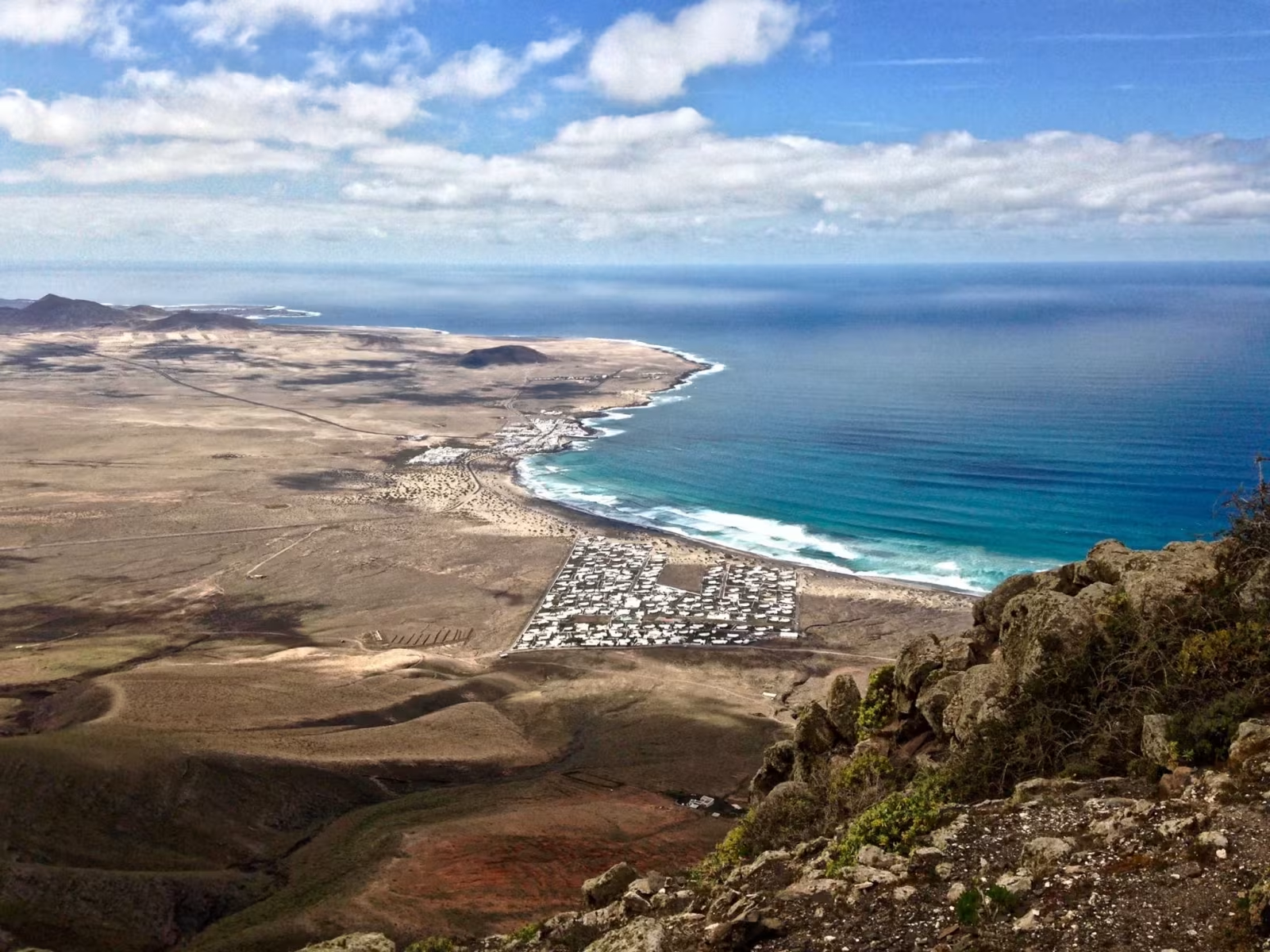
The Risco de Famara forms a striking wall of cliffs along Lanzarote’s north-west coast, climbing more than 600 metres above the Atlantic. For those of us who have called the island home for years, walking along the top of these cliffs is always a breathtaking experience. The views reach out across the water to La Graciosa and the tiny islets beyond, and on a clear day, the sense of space and freedom is unforgettable.
The main path traces the clifftop from the peaceful village of Guinate all the way to the Mirador del Rio, covering about 9 kilometres. If you prefer a shorter walk, you can start from the Ermita de las Nieves, which is around 5 kilometres. Whichever route you choose, you are in for a memorable adventure. The cliffs here are wild and untamed, with no fences along the edge, and the wind can be strong, so it is important to take care and respect the landscape.
The Famara Cliff Walk. Guinate to Mirador del Rio
The walk begins in the peaceful village of Guinate, tucked away on the northern slopes beneath the impressive Famara massif. Parking is limited here, so it’s best to arrive early or consider sharing a lift if you can. From the heart of the village, the path leads you up through old terraced hillsides, climbing steadily towards the dramatic cliff edge. This first stretch is the most challenging, with a steep, rocky ascent of around 200 metres that usually takes half an hour or so. Take your time and enjoy the views opening up behind you as you climb.
When you reach the top, the path becomes gentler and follows the edge of the Risco de Famara as it winds north towards Mirador del Rio. The ground underfoot is rough and rocky, with some loose gravel here and there, and in places the path fades away completely. You simply follow the line of the cliffs and look out for the odd stone cairn left by other walkers. Up here, the landscape feels wild and open, with hardy, wind-shaped shrubs clinging to the exposed moorland.
The cliff edge is always close by, and in some spots the path brings you just a few metres from dramatic drops of several hundred metres down to the Atlantic. There are no fences or barriers here, just the raw beauty of Lanzarote’s coastline, so it’s important to keep a respectful distance from the edge, as the ground can be unstable in places. This walk is best suited to those who are comfortable with heights and is not recommended for young children.
The full route from Guinate to Mirador del Rio is about 9 kilometres and usually takes between three and four hours at a relaxed pace. You’ll gain around 350 metres in elevation, with gentle ups and downs along the clifftop. The path brings you to the Mirador del Rio complex from the hillside behind, where you can either visit the famous viewpoint (there is a small admission fee) or simply pause outside to soak up the breathtaking views over La Graciosa and the northern islets.
The Shorter Route. Ermita de las Nieves
If the full walk from Guinate seems a bit much, or if sorting out transport at both ends is tricky, starting from the Ermita de las Nieves is a wonderful alternative. The little hermitage sits high on the Famara massif, around 500 metres above sea level, and is easily reached by car along a rough track from Los Valles or from the road that links Haria and Guinate.
From the Ermita, you are already up at clifftop level, so the walk north to Mirador del Rio is about 5 kilometres and much gentler on the legs. The path is clearer here than further south, following stretches of an old military road. The views are breathtaking from the start, with La Graciosa spread out below and the Atlantic stretching away to the horizon.
This shorter route usually takes around two hours each way, or just two hours if you have a lift waiting at Mirador del Rio. It is a great choice if you are short on time, if the weather looks changeable, or if you simply want to enjoy those dramatic clifftop views without the steep climb from Guinate.
Incredible views of La Graciosa and Beyond
The Famara cliffs are, in my view, home to the most stunning vistas on Lanzarote, and perhaps anywhere in the Canary Islands. If you find yourself standing at the top, looking out towards the northwest, you will see the narrow ribbon of El Rio, quietly separating Lanzarote from the tranquil island of La Graciosa. From this height, La Graciosa feels almost within reach, its soft golden beaches and gentle volcanic slopes laid out below like a map you could trace with your finger. On clear days, the tiny village of Caleta del Sebo comes into view, and if the sea is calm, you might spot the little ferry making its steady journey between Orzola and the island.
Beyond La Graciosa, you can make out the uninhabited islets of Montana Clara and Alegranza. Montana Clara is a small, steep-sided rock, while Alegranza sits further north, marked by its volcanic cone and a solitary lighthouse. Now and then, when the air is especially clear, you might even catch a glimpse of Lobos and Fuerteventura off to the south-east, though for most of us, it is the view towards La Graciosa that truly captures the imagination.
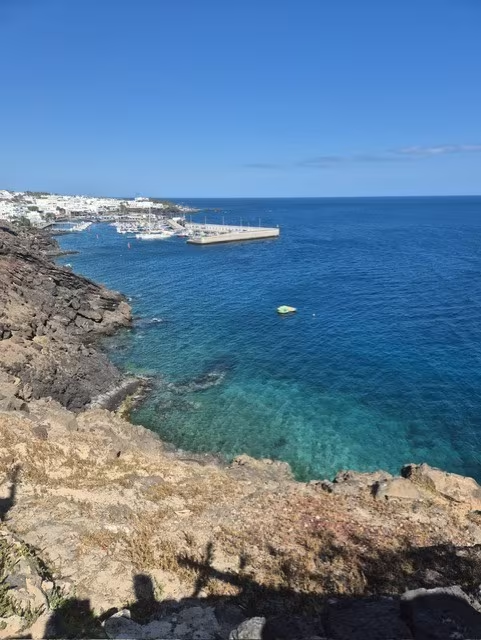
Peering over the edge of the cliffs, you see the sheer face of the Risco dropping straight down to the Atlantic below. The waves crash at the base, and the rock is painted with streaks of colour from centuries of volcanic activity. It is only when you notice a tiny fishing boat far below that you truly appreciate just how high up you are.
The Famara Cliff Walk. Wind, Weather and Safety
If you are planning the Famara cliff walk, it is the wind you need to be most mindful of. The Risco de Famara sits right in the path of the north-east trade winds, making the clifftop one of Lanzarote’s most exposed spots. It is not uncommon to find steady winds of 40 to 50 km/h up here, with even stronger gusts sweeping across the path. On blustery days, walking can become a real challenge, and it is all too easy to lose your balance near the edge.
It is always wise to check the wind forecast before you set off. If the winds are above 40 km/h, it is best to wait for a calmer day. Early mornings tend to be the most sheltered, before the breeze picks up. In my experience, the winter months from November to February can bring gentler days, although the weather can be a little less predictable at that time of year.
Cloud and mist can roll in quickly along the clifftop, reducing visibility to a few metres. If this happens, move well away from the cliff edge and wait for it to clear, or retrace your steps. Navigating in mist on the Famara cliffs is dangerous because the edge is unmarked and the terrain gives few visual cues.
The volcanic rock near the cliff edge can be surprisingly crumbly, so it is best to keep well back and avoid standing on any overhanging sections, even for a quick photo. What looks solid from above may be hollowed out underneath. Sadly, there have been serious accidents here over the years, nearly always involving people who ventured too close to the edge.
It is a good idea to bring a fully charged phone with offline maps, as mobile signal can be patchy along the clifftop. Let someone know your plans and when you expect to be back, just to be on the safe side.
The Famara Cliff Walk. Flora and Birdlife
The clifftop here is a wild and windswept place, where only the hardiest plants manage to survive. Low, wind-shaped shrubs cling to the rocky ground, never growing much taller than your knees, even after many years. In the cracks and crevices, you’ll spot succulents like aeoniums and the Canary Island houseleek, all finding clever ways to shelter from the constant breeze. After a spell of winter rain, the cliffs can surprise you with a sudden burst of tiny flowers, bringing a splash of colour to the usually grey and brown landscape.
The Famara cliffs are a real haven for birds of prey here on Lanzarote. In summer and autumn, you might catch sight of Eleonora’s falcon swooping gracefully above the clifftops, while the Barbary falcon, our local version of the peregrine, often nests on the Risco and can sometimes be seen gliding close by, riding the warm air currents. Kestrels are a familiar sight too, hovering effortlessly as they search for their next meal.
As evening falls, you might hear the haunting calls of Cory’s shearwaters drifting up from the cliffs. These remarkable seabirds nest in hidden burrows and cracks, spending their days far out at sea and only returning after dark during the breeding season, which runs from March to October. Along the clifftop path, keep an eye out for Berthelot’s pipit, a little bird that is unique to these islands and often flits ahead as you walk.
The waters below the cliffs are teeming with life, and if you’re lucky, you might spot an osprey fishing in the strait between Lanzarote and La Graciosa. These magnificent birds have slowly returned to the Canary Islands after coming close to disappearing, and the Famara area is now one of the best places to watch them in action.
Walking the Cliffs of Famara. Transport and Logistics
One thing to keep in mind about the Famara cliff walk is that it is a linear route, so you begin at one end and finish at the other. This means you will need to think ahead about how to get back to your starting point, but there are a few straightforward ways to manage this.
Perhaps the easiest option is to start at Ermita de las Nieves, walk along the clifftop to Mirador del Rio, and then retrace your steps. This makes for a 10km round trip and means you can simply park up and enjoy the most breathtaking stretch of the cliffs without worrying about transport arrangements.
If you would like to experience the full one-way walk from Guinate to Mirador del Rio, one good option is to leave your car at Mirador del Rio and take a taxi to Guinate to begin your walk. Alternatively, you can walk the route and arrange for a taxi to collect you at the end. Taxis do not always wait at Mirador del Rio, so it is wise to book ahead or ask the friendly staff at the viewpoint to call one for you when you arrive.
There is no regular bus service linking the start and finish of the walk, but some local walking companies do offer guided trips with transport included. This can be a relaxing way to enjoy the route without having to worry about the logistics.
If you are walking with friends or family and have two cars and drivers, you can simply leave one vehicle at each end of the route. This is often the most convenient solution for groups.
Combining with Mirador del Rio
Reaching the end of the walk at Mirador del Rio feels like a reward in itself. This well-known viewpoint, created by Lanzarote’s own Cesar Manrique, is cleverly tucked into the cliffside nearly 500 metres above the sea. From here, a huge window frames the island of La Graciosa, offering a view that never fails to impress, no matter how many times you see it.
If you arrive at Mirador del Rio after walking along the cliffs, you will already have enjoyed some of the most breathtaking open views Lanzarote has to offer. Still, it is always worth stepping inside to appreciate Manrique’s unique design, and the café here is a lovely spot to pause, relax, and soak up the atmosphere after your walk.
Famara Cliff Walk. Accessibility and Age Suitability
The Famara cliff walk is, unfortunately, not suitable for wheelchair users or those with significant mobility challenges. The path is quite rough and rocky in places, with some steep stretches, especially if you are starting out from Guinate.
I would not recommend this walk for children under 12, as the unfenced cliff edges can be genuinely dangerous. Even older children, if they are sensible and used to walking, need to be aware of the risks and keep well away from the edge at all times.
Adults will need to be comfortable with heights for this one. If you find looking down from high places unsettling, this walk may not be the best choice, as the clifftop path is exposed throughout and there is no way around it.
The shorter Ermita route is a good option for most reasonably fit adults, whatever your age. If you are feeling adventurous, the full Guinate route is more challenging, with a steep climb at the start and a longer distance overall. I find walking poles helpful for balance on the rocky ground, especially if the wind picks up.