Papagayo Coastal Walk
Guide to the Papagayo coastal walk from Playa Blanca past Castillo de las Coloradas to the Papagayo beaches, covering the route, swimming, snorkelling, history and practical tips.
The walk from Playa Blanca along the coast to the Papagayo beaches is one of the easiest and most rewarding walks on Lanzarote. Starting from the Castillo de las Coloradas at the eastern edge of Playa Blanca, a well-worn coastal path leads roughly 3 kilometres east through the Los Ajaches natural monument to a string of sheltered golden sand coves.
The walk takes 30-40 minutes at a comfortable pace and finishes at some of the finest beaches in the Canary Islands. You can swim, snorkel, eat lunch at the beach bar, and walk back. It suits all ages and fitness levels and is a perfect half-day outing that combines gentle exercise with a genuine sense of discovery as each new cove comes into view.


Sponsored
Starting at the Castillo de las Coloradas
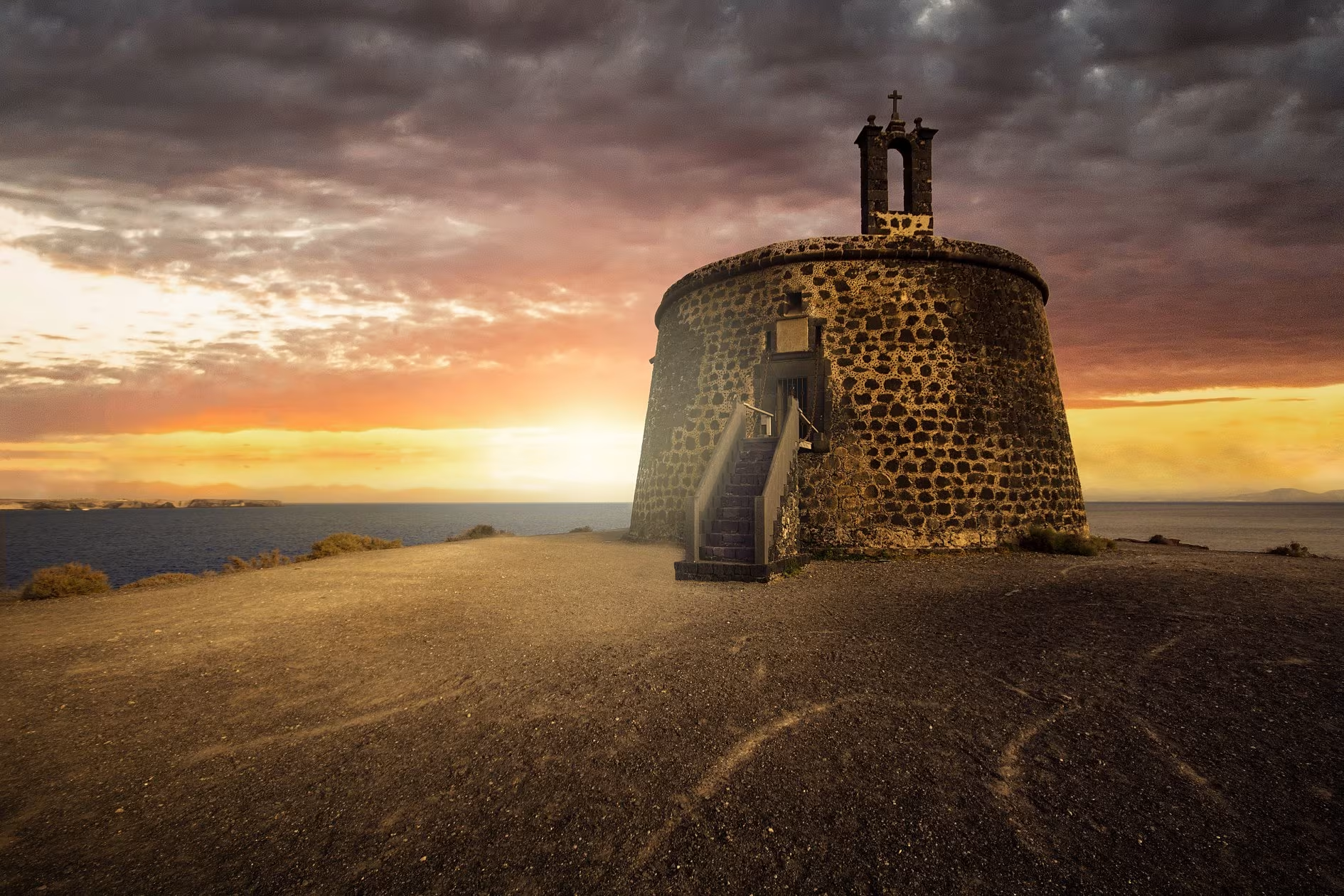
The walk begins at the Castillo de las Coloradas, a small circular watchtower at the eastern end of Playa Blanca's seafront. Built in the late 18th century, the tower was one of a chain of coastal defences constructed to protect Lanzarote from the pirate attacks that plagued the Canary Islands for centuries. The tower is squat, round, and built from local stone in shades of ochre and red, which gives it its name. It is not open to the public but makes a good landmark for the start of the walk.
The pirates that the tower was built to deter were a genuine threat to Lanzarote. The island was raided repeatedly from the 15th to the 18th century by North African corsairs and European pirates. The southern coast, being closest to Africa and furthest from the main settlements, was particularly vulnerable. The Castillo de las Coloradas was one of the last defensive towers built on the island, by which time the threat was diminishing but had not entirely disappeared.
To reach the starting point, walk along the Playa Blanca seafront eastwards past the marina and the hotels until you reach the tower. There is some parking nearby, though it fills up quickly in the morning. Alternatively, most of Playa Blanca is within a 15-20 minute walk of the tower.
The Coastal Path
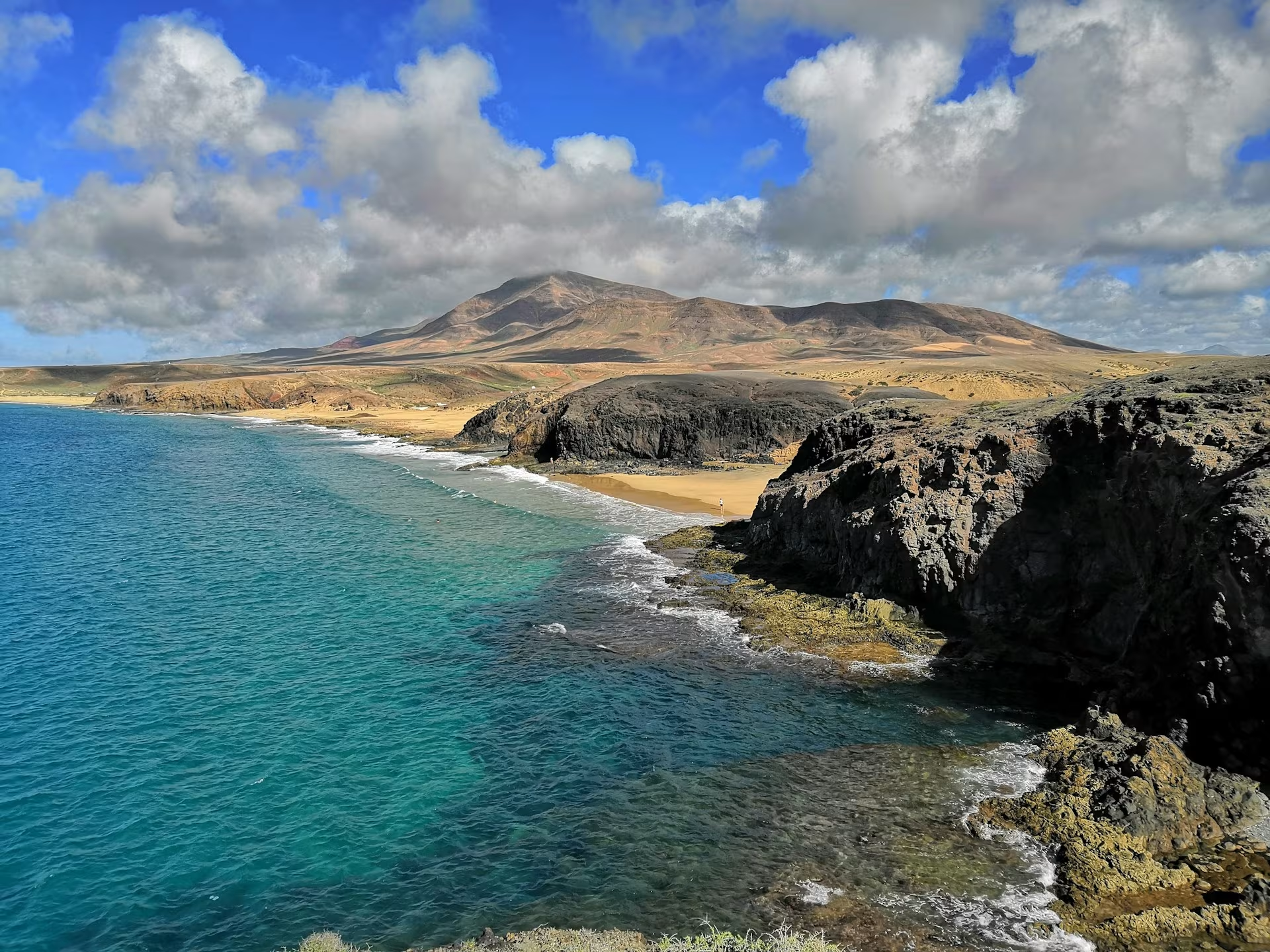
From the Castillo, the path heads east along the coast. The trail is clear and well used, running along the low cliffs above the sea. The terrain is packed earth, sand, and flat rock. It is not paved but it is even and easy to walk on. There are no steep climbs or difficult sections. The gradient is almost flat throughout, with only gentle undulation as the path dips in and out of small bays.
As you walk, you pass a series of small coves and inlets. The first proper beach you come to is Playa de la Cera, a small curve of golden sand tucked between rocky headlands. It is usually quieter than the beaches further along. Beyond this, Playa Mujeres is larger and one of the best swimming beaches on the walk, with calm, clear water and soft sand. It is about 2km from the start and makes a good stopping point if you want a shorter walk.
Continuing east past Playa Mujeres, you pass several more small coves before reaching Playa de Papagayo itself, the largest and most famous of the beaches. The total distance from the Castillo to Papagayo is about 3km, and the walking time is 30-40 minutes without stops.
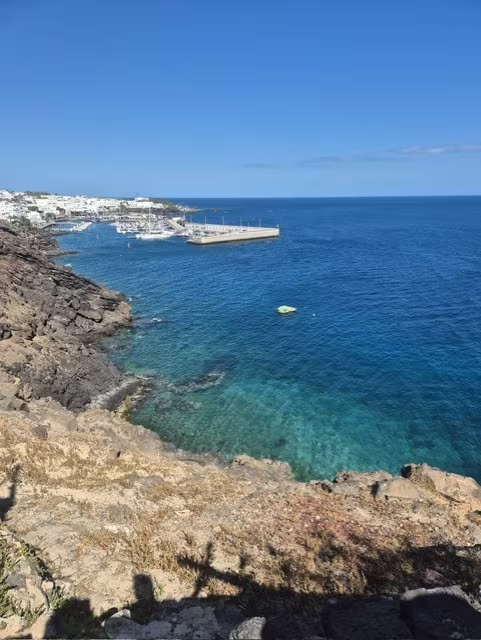
The coastline along this stretch is beautiful. The low cliffs are made of pale volcanic rock and compressed sand in shades of cream, gold, and rust. The sea is a deep clear blue, turning turquoise over the sandy shallows near the beaches. On clear days you can see Fuerteventura across the strait, its sand dunes and dark volcanic hills clearly visible.
The Beaches

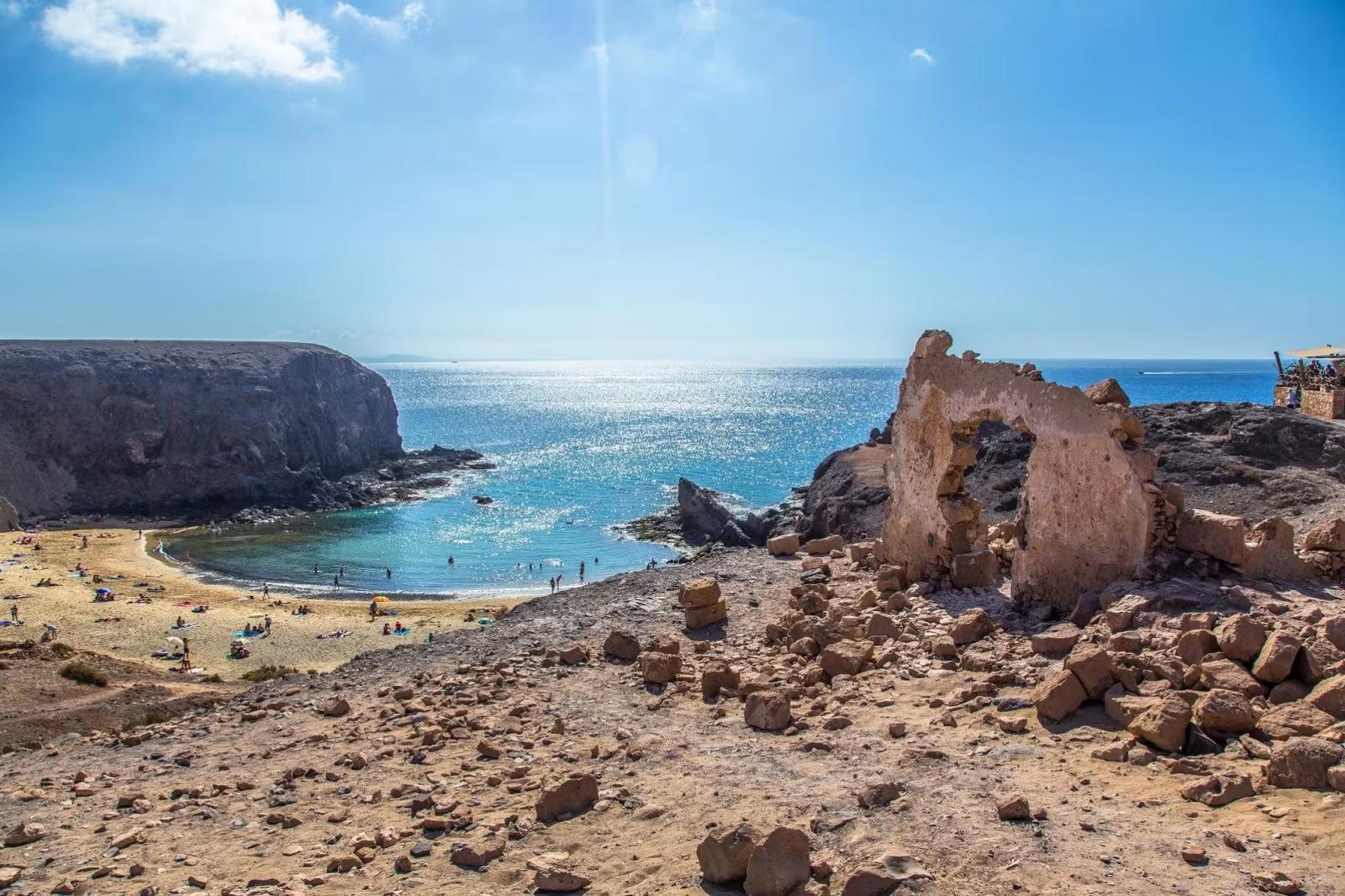
The Papagayo beaches are a group of five or six small coves separated by rocky headlands. They are within the Los Ajaches natural monument, a protected area that covers the oldest volcanic terrain on Lanzarote. The beaches have golden sand, clear water, and are sheltered from the prevailing north-east wind by the hills behind.
Playa de Papagayo is the largest and best known, a sweeping horseshoe of sand about 100 metres long. It faces south and is sheltered on three sides, making it one of the warmest and calmest swimming spots on the island. There is a small chiringuito (beach bar) at Papagayo that serves drinks, sandwiches, and basic meals. Prices are reasonable for a beach bar, and the terrace has a fine view.
The other beaches along the walk are smaller and mostly have no facilities. This is part of their appeal. Playa Mujeres has some natural shade from the cliffs in the afternoon. Playa de la Cera is the quietest and least visited. Each beach has its own character, and part of the pleasure of the walk is discovering them one by one.
All of the Papagayo beaches are free to access on foot. If you drive to the beaches via the dirt track from the main road, there is a vehicle entrance fee of around 3 EUR. Walking from Playa Blanca avoids this charge entirely and is a much more pleasant way to arrive.
Swimming and Snorkelling
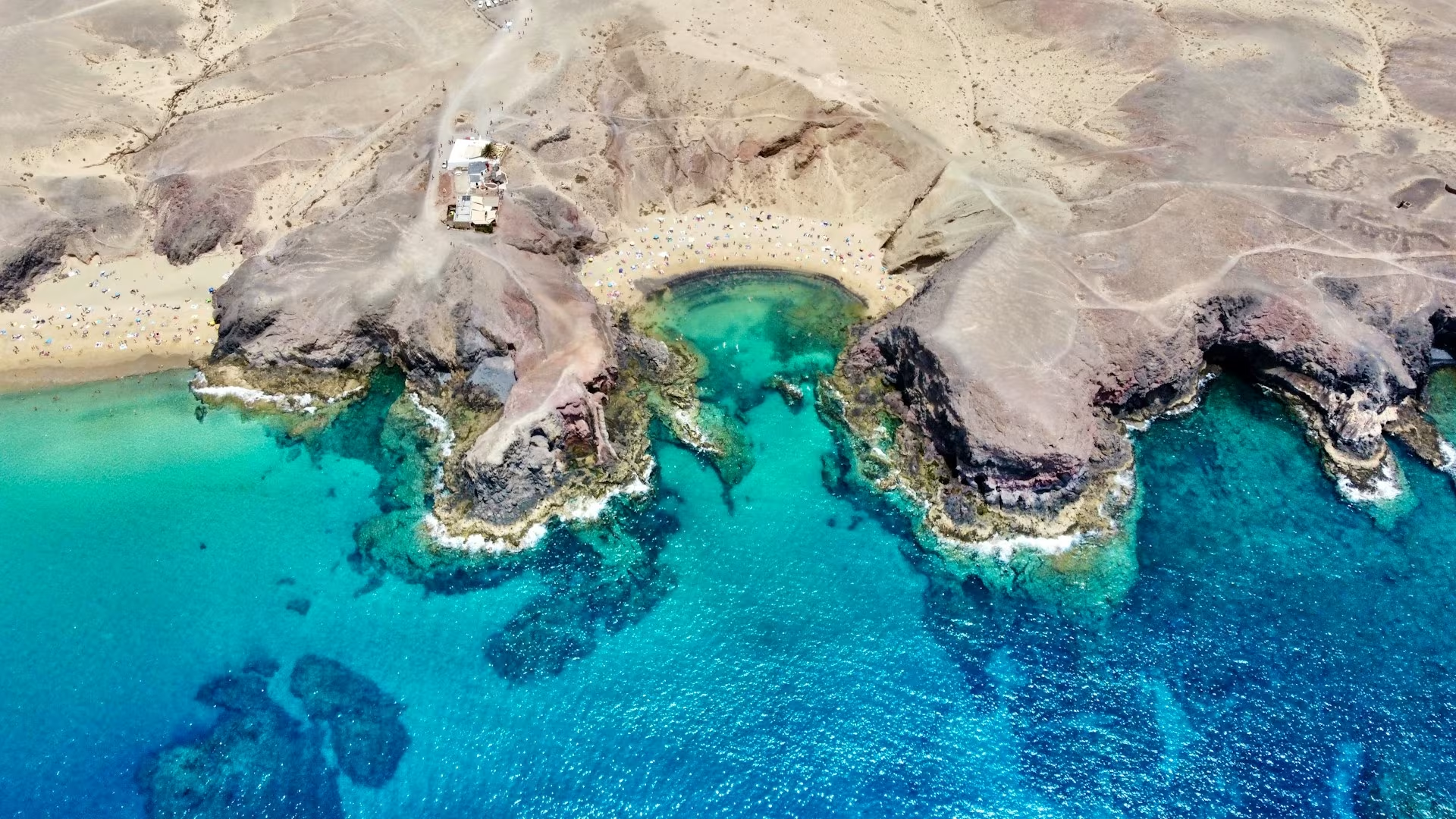
The waters around the Papagayo coves are some of the best for swimming and snorkelling on Lanzarote. The beaches face south and are sheltered from the main swell, so the water is usually calm. The seabed is a mix of sand and volcanic rock, and visibility is excellent, often 10-15 metres or more.
Snorkelling is best around the rocky headlands between the beaches, where the volcanic rock provides habitat for a variety of fish. You can expect to see parrotfish, ornate wrasse, damselfish, and various species of bream. Octopus hide in the rock crevices and are occasionally spotted. The rocks are also home to sea urchins, which have sharp spines, so take care when entering and exiting the water near rocks. Wearing water shoes or reef sandals is a good idea.
The water temperature ranges from about 18 degrees in winter to 23 degrees in summer. Many people swim year-round, though you may want a thin wetsuit or rash vest in winter. The beaches are not lifeguarded, so swim within your ability and be aware of the rocks at the edges of the coves.
Best Time of Day to do the Papagayo Coastal Walk and Practical Tips
The walk is pleasant at any time of day, but morning is best for several reasons. The light is beautiful on the coast in the morning, the beaches are quieter, and you avoid the hottest part of the day in summer. If you want the beaches to yourself, arrive early. By mid-morning in peak season, the Papagayo beaches are busy with both walkers and people who have driven in.
Bring water, sun cream, and a hat. Although the walk is short, the coast is exposed and there is little shade. If you plan to swim, bring a towel and swimwear. Snorkelling gear is worth carrying if you have it, as the underwater scenery is good and there is nowhere to hire equipment at the beaches.
Footwear can be lightweight for this walk. Trainers, sandals with heel straps, or trail shoes are all fine. Walking boots are not necessary as the terrain is flat and easy. Flip-flops are not ideal for the rockier sections between the coves but are manageable on the main path.
There are no toilets on the walk or at the beaches except at the Papagayo chiringuito. The nearest public toilets are in Playa Blanca.
The walk is exposed to the sun but sheltered from the worst of the wind by the hills of Los Ajaches. Even on windy days when the northern beaches are rough, the Papagayo coast is often calm and pleasant.
Papagayo Coastal Walk Accessibility and Age Suitability
This is the most accessible of Lanzarote's main walking routes. The path is mostly flat, the terrain is even packed earth and sand, and the distance is short. People with moderate mobility issues can manage the path comfortably, though it is not paved and not suitable for wheelchairs or pushchairs.
The walk is suitable for all ages. Young children can manage the distance easily, and the promise of a beach and swimming at the end is a powerful motivator. The path is safe, with no cliff edges or significant drop-offs. Families with children of any age regularly do this walk.
Older walkers will find this route comfortable. The flat terrain and short distance make it one of the gentlest walks on the island. The only consideration is the sun exposure, so bring protection and take the walk at a relaxed pace.
For people with limited mobility, the best option may be to drive to the Papagayo car park via the dirt track and walk the short distance down to the beach, rather than doing the full coastal walk from Playa Blanca. The track from the car park to the beach is about 200 metres but is steep and sandy.