Lanzarote Weather & Climate
Your honest guide to Lanzarote's weather and climate. Monthly temperatures, sunshine hours, rainfall, trade winds, Calima, and what to actually expect throughout the year.
Living here on Lanzarote, we are truly spoiled by the climate. The island enjoys some of the most reliable and comfortable weather in Europe. Thanks to our location just 125km from the African coast, on the same latitude as southern Morocco, we benefit from gentle warmth all year round, low humidity, and hardly any rain. Temperatures usually range from 17°C in January to 27°C in August, and with over 2,800 hours of sunshine each year, it is easy to see why so many people fall in love with Lanzarote.
There are a few reasons why our weather is so wonderfully reliable. Lanzarote, like the rest of the Canary Islands, sits in a subtropical zone, and we are lucky to be cooled by the Canary Current and the steady north-easterly trade winds, which we call the Alisios. These natural influences keep our summers pleasantly warm and our winters mild, so we never have to worry about the extremes of heat or cold that you might find just across the water on the African mainland.


Sponsored
The Lanzarote Trade Winds (Alisios)
The Alisios, our faithful north-easterly trade winds, are a constant companion here on Lanzarote. From late spring through to early autumn, they drift across the island, carrying with them a welcome breath of cool Atlantic air. Without these winds, we would be left with the same fierce heat as the Sahara, which sits just across the water, a mere 125 kilometres away.
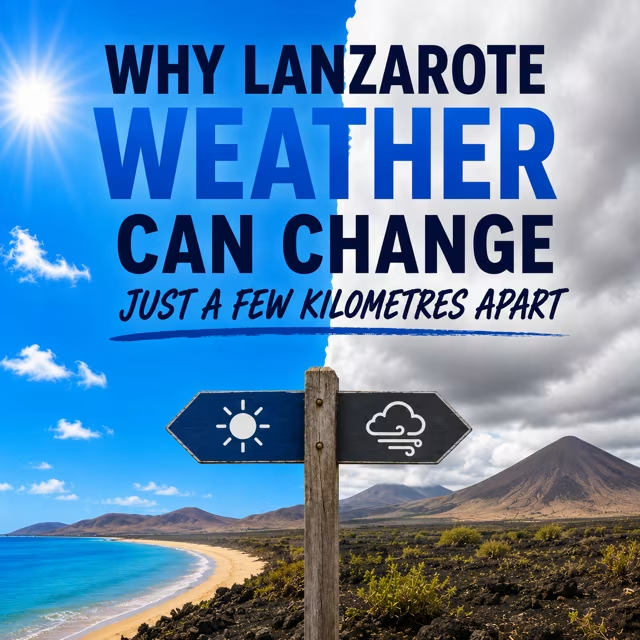
Most visitors quickly come to appreciate the trade winds, as they help keep our summer days comfortably cooler than the African coast just across the sea. The only thing to remember is that the north-facing beaches can feel quite breezy when the Alisios are in full swing. On those days, I always suggest heading south. Playa Blanca, Papagayo, and Playa Dorada tend to offer calm, sheltered places to unwind, even when the wind is making itself known elsewhere.
If you are a fan of water sports, you will soon understand why the Alisios are so valued here. These steady winds have helped make Lanzarote a favourite destination for windsurfers and kitesurfers from all over Europe. Costa Teguise and Famara, especially, offer some of the most reliable conditions from May to September, making them ideal spots for anyone eager to get out on the water.
The Calima. Saharan Heat Waves
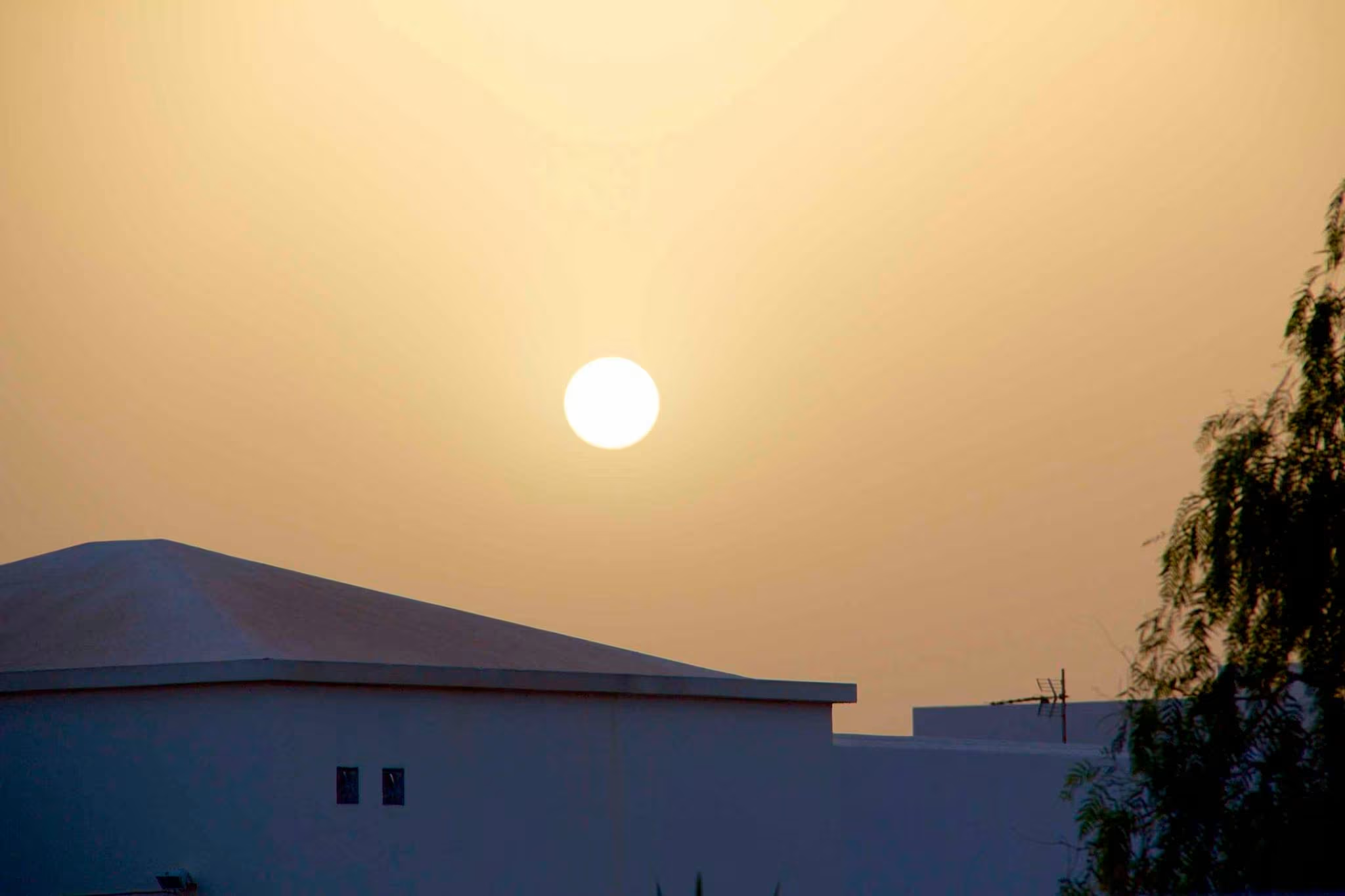
The Lanzarote Calima is something we all get to know well here on Lanzarote. It arrives when the usual trade winds pause, and warm, dry air sweeps in from the Sahara, bringing with it a fine dust that settles over the island. You can often feel the temperature rise quickly, sometimes by as much as 10 to 15 degrees in just a few hours.
When the Calima is with us, it can feel like the island is wrapped in a warm, dusty blanket. Temperatures often soar above 35 degrees, and sometimes even higher, no matter the time of year. The sky takes on a hazy, orange-brown glow, and you’ll notice a fine layer of Saharan sand settling on cars, terraces, and by the pool. The air itself feels dry and heavy, and visibility can drop quite a bit.
The good news is that the Calima never stays for long. Most times, it lasts just a day or two before our familiar trade winds return and sweep the air clear again. These episodes are most common towards the end of summer, especially in August and September, but they can surprise us in winter as well. While the heat and dust can be a bit much, it’s all part of life here, and those of us who call Lanzarote home have learned to take it in our stride.
If you find yourself here during a Calima, my advice is to drink plenty of water, take it easy during the hottest part of the day, and seek out some shade or air conditioning if you can. It’s best to avoid strenuous activity, and keep windows closed to stop the dust from coming inside. And don’t forget, the beach is always a good option; the ocean breeze can make all the difference, even when it’s sweltering inland, but beware of the UV levels in the summer.
Tropical Storms. Rare but Notable
Having lived on Lanzarote for many years, we are often asked whether hurricanes or tropical storms ever reach our island. The truth is, such wild weather is a real rarity in the Canary Islands. Most of the time, we are treated to nothing more than a gentle breeze and endless days of sunshine. There have been a few unusual moments, like Tropical Storm Delta in 2005, Lorenzo in 2019, and more recently Storm Therese in 2026, which brought some localised flooding. But these are the exceptions, and life here is almost always peaceful and bright.
Most years, tropical weather gives us a wide berth. The cool waters of the Canary Current act as a natural shield, so if a storm ever does head our way, it tends to lose its strength before reaching us. For those of us who are lucky enough to call Lanzarote home, the gentle, reliable weather is just one of the many reasons we love this island.
If a storm ever does come close, we always have plenty of notice thanks to modern forecasts, and the local authorities are quick to keep everyone safe and well informed. For visitors, the odds of seeing anything but sunshine are very low. Most people who spend time on Lanzarote enjoy day after day of glorious weather, often with hardly a cloud in the sky.
The Current Weather in Lanzarote
The Winter Transformation
If you have only visited Lanzarote in the height of summer, you have seen the island at its most dramatic, with black volcanic rock, rust-red earth and golden sand stretching out under the sun. It is a striking sight, but it is really only half the story. If you return between November and March, you will discover a very different side to the island.
The autumn rains, gentle compared to those on the mainland, work a quiet magic here. Within just a few weeks, the hillsides that seemed so barren in summer begin to soften with fresh grasses, clover and wildflowers. The valley of Haria, nestled between ancient volcanic peaks, becomes truly lush. Even the fire mountains of Timanfaya take on a delicate green hue, and the roadsides are suddenly alive with yellow and white wildflowers.
This seasonal transformation is one of Lanzarote’s best-kept secrets. If you enjoy photography, walking or simply soaking up nature, you will find that the island in winter has a completely different character. The peaks turn green from December through February, before the spring sunshine gently returns the landscape to its familiar summer colours by April.
The contrast is most striking where the black volcanic rock meets the fresh green growth. The lava fields near Mancha Blanca, the slopes above Orzola, and the ancient caldera of La Corona all take on a new look in winter, and it is a sight that never fails to surprise even those of us who have lived here for years.
Monthly Weather Averages
| Month | Day °C | Night °C | Sun hrs | Rain mm |
|---|---|---|---|---|
| January | 17°C | 13°C | 6 | 17 |
| February | 18°C | 13°C | 7 | 12 |
| March | 19°C | 14°C | 7 | 10 |
| April | 20°C | 15°C | 8 | 4 |
| May | 22°C | 16°C | 9 | 1 |
| June | 24°C | 18°C | 10 | 0 |
| July | 26°C | 20°C | 10 | 0 |
| August | 27°C | 21°C | 10 | 0 |
| September | 26°C | 21°C | 9 | 3 |
| October | 24°C | 19°C | 7 | 10 |
| November | 21°C | 17°C | 6 | 17 |
| December | 18°C | 15°C | 6 | 20 |
Lanzarote Weather Frequently Asked Questions
It depends on what you're after. For beach weather and guaranteed sunshine: June to September. For value and fewer crowds: May, October, or November. For green landscapes and comfortable hiking weather: December to March. September and October hit the sweet spot of summer weather with shoulder-season prices.
Not really, not by European standards. The coldest month (January) averages 17°C during the day and 13°C at night. You'll want a light jacket for winter evenings but never a heavy coat. Locals here will tell you anything below 15°C is cold, but if you're coming from the UK or northern Europe, you'll likely find it comfortable year-round.
Lanzarote gets about 112mm of rain per year. London gets over 600mm. Our rain falls mostly between October and February. Even in the wettest months, showers are usually brief and followed by sunshine. From May to September, it basically doesn't rain at all.
The Atlantic around Lanzarote ranges from 18°C in winter to 23°C in late summer. Most people swim comfortably from May to November without a wetsuit. Even in winter, the sea is warmer than the Mediterranean in spring. Hotel pools are typically heated to 24-26°C year-round.
High to very high, all year. The UV index ranges from 3-5 in winter to 8-10+ in summer. Sunscreen (SPF 30+), sunglasses, and a hat are essential even on overcast days. The breeze and low humidity can trick you into thinking the sun isn't strong. It is. Burns are common among visitors who underestimate it.