Caldera Blanca Walk
Detailed guide to the Caldera Blanca walk in Lanzarote covering the full route from Mancha Blanca, the lava field crossing, crater rim views, difficulty, timing and what to bring.
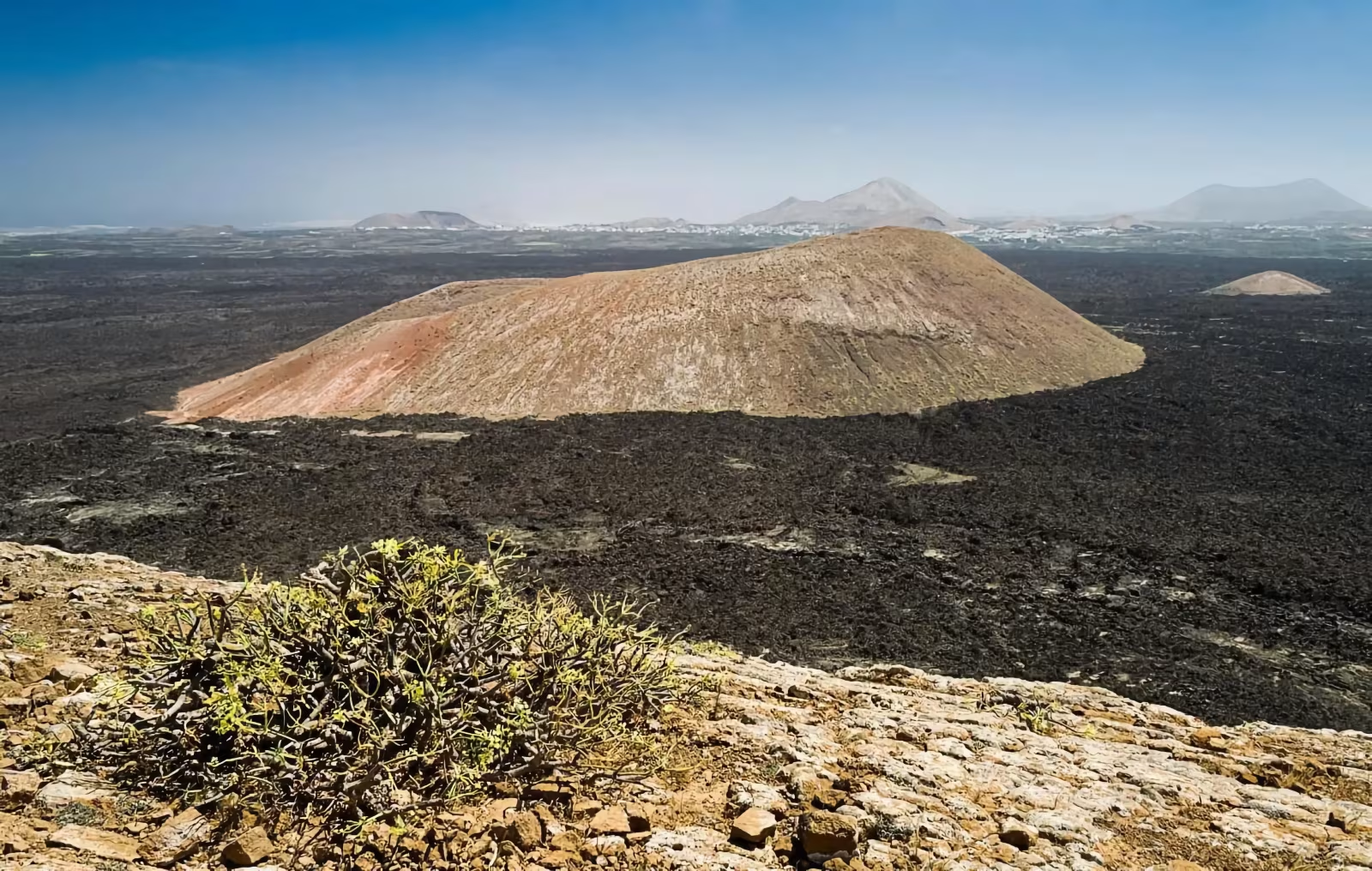
Many people say that the Caldera Blanca walk is the finest hike on Lanzarote, and I would have to agree. This 9km circular route begins on the edge of the peaceful village of Mancha Blanca and leads you out across a dramatic sea of ancient lava, past the smaller Caldera de la Rilla, before gently climbing up to the rim of Caldera Blanca itself, which stands at 458 metres. The views from the top are truly something special.
Allow yourself three to four hours for the walk at a comfortable pace, as you gain around 250 metres in elevation and journey through some of the most striking volcanic landscapes you will find anywhere in Europe. It is an experience you will remember, but do come prepared, as the route is exposed and there is little shade along the way.
Getting to the Start Point of the Caldera Blanca Walk
The walk begins from a small car park just off the LZ-56, a little west of Mancha Blanca and clearly signposted for Caldera Blanca. Mancha Blanca itself is a peaceful village right in the heart of Lanzarote, about 20 minutes from Puerto del Carmen or 15 minutes from Costa Teguise. If you are coming up from the south, the most scenic route is along the LZ-30 through Yaiza, before joining the LZ-56 towards Tinajo. The car park is easy to spot on the left and usually has space for around 20 cars. There are no facilities here, so I always recommend stopping in Mancha Blanca first to use the toilets and pick up some water before you set off.
There is no handy public bus for this walk, so you will need to come by hire car or taxi. If you choose a taxi, it is best to arrange your return pick-up in advance, as there is no phone signal at the car park. Some local walking companies do offer guided trips with transport included from the main resorts, which can be a good option if you prefer not to drive.


Sponsored
Across the Lava Field
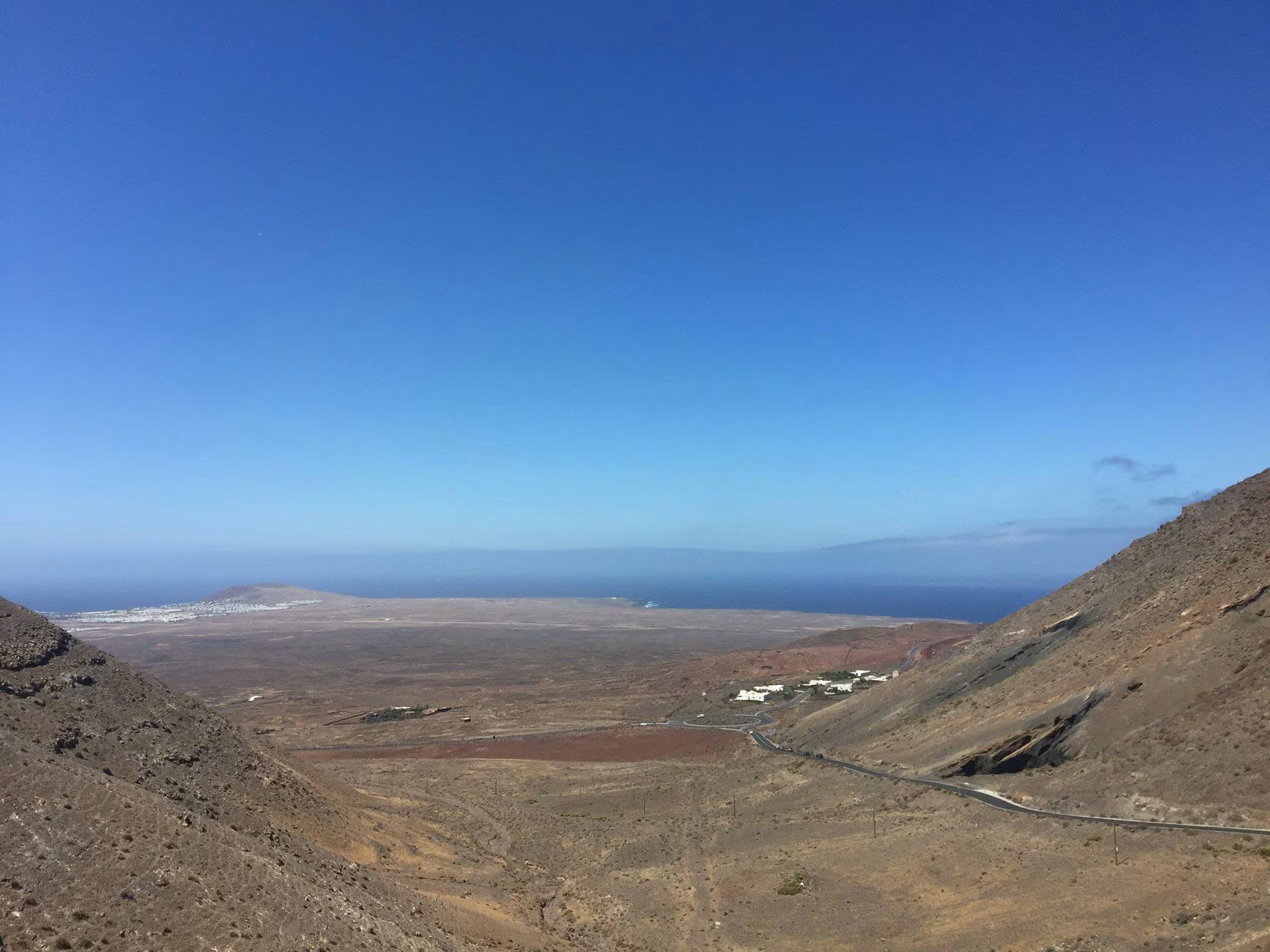
Leaving the car park behind, we set out westward across the lava fields shaped by the great eruptions of 1730 to 1736, the very same events that gave us the fire mountains of Timanfaya. The first part of the walk is gentle and flat, taking us through a sea of dark, contorted lava that seems to go on forever. Small stone cairns guide the way, making the path easy to follow, though you do need to watch your step as the ground is rough and uneven in places.
Crossing the lava field always feels a little otherworldly. The rock here comes in all sorts of shapes and textures. Sometimes it is smooth and rope-like, known as pahoehoe lava, created when the surface cools but the molten rock underneath keeps flowing. In other spots, the lava is jagged and broken, called aa lava, and it can be quite sharp underfoot. On sunny days, the black rock soaks up the heat, so you can really feel the warmth rising from the ground as you walk.
Even though the landscape looks barren at first glance, life has found a foothold here. If you look closely, you will see lichens clinging to the rocks in soft shades of grey, white and pale green. These hardy pioneers are slowly working away at the volcanic stone, beginning the long process of turning it into soil. In the cracks and sheltered spots, you might notice small succulents, like the Canary Island spurge and different types of aeonium, quietly thriving against the odds.
Here, you can really see nature at work. The lava flows are still young, so the landscape is only just beginning its journey towards becoming something greener. Watching this slow transformation unfold is one of the things that makes walking here so special.
Caldera de la Rilla
Roughly two kilometres into the walk, you will spot Caldera de la Rilla off to your right. This little crater is often missed by those eager to reach Caldera Blanca, but I always think it is worth pausing here. Caldera de la Rilla is quieter and more weathered, with a touch more greenery than its larger neighbour. If you have ten minutes to spare, a short climb up to the rim rewards you with a peaceful view into the crater and a taste of the volcanic landscapes that await further along the path.
Caldera de la Rilla has been here longer than the surrounding lava fields. When the great eruptions of 1730 to 1736 swept through this part of Lanzarote, the lava flowed around the crater, leaving it standing like a pale island in a sea of black volcanic rock. As you walk along the path, you can clearly see where the older, lighter stone of the crater meets the newer, darker lava—a striking reminder of the island’s dramatic past.
The Climb to Caldera Blanca
After leaving Caldera de la Rilla behind, the path begins to climb gently, winding its way towards the impressive rim of Caldera Blanca. At first, you make your way across the familiar black lava fields that are so much a part of Lanzarote’s landscape. As you get closer to the crater, the slope becomes noticeably steeper. The final section is the most demanding, with the path zigzagging up loose volcanic gravel and scree. It is a climb of about 150 metres over the course of a kilometre, and the ground can be a little slippery in places, so you may find yourself sliding back a step or two now and then. I always find that walking poles make this last stretch much easier, and it is worth taking your time here – most people allow around 30 to 40 minutes for this final push.
As you make your way up, the views behind you become more and more impressive. The sea of lava stretches out below, and on a clear day you can pick out the fire mountains of Timanfaya along the horizon, the whitewashed villages of Mancha Blanca and Tinajo, and the deep blue of the Atlantic beyond. It is one of those classic Lanzarote moments that makes the effort worthwhile.
The Crater Rim and Views
Arriving at the rim of Caldera Blanca, some 458 metres above sea level, is always a special moment. The first glimpse into the crater never fails to impress, with its vast circle stretching out below and a sandy floor far beneath your feet. The walls inside are marked with bands of red, black, ochre and grey, each one telling a story of the eruptions that shaped this unique mountain.
The rim itself is a narrow ridge, and it is possible to walk around much of it, taking in new views at every turn. It can be quite exposed up here, with the wind sometimes making its presence felt and steep drops on either side in places. If you decide to do the full circuit, be aware that it involves some scrambling over loose rock, so it is best attempted only if you are comfortable with heights and uneven ground.
Standing on the rim, you are treated to what I think is one of the best views on the island. To the south and west, the fire mountains of Timanfaya form a dramatic line of dark volcanic cones. On a clear day, you can spot the green valley of Haria and the Famara cliffs to the north, while to the east, the flat central plain and the distant coastal resorts come into view. All around, the vast lava field you crossed on your way here stretches out towards the sea.
This is the place to sit, eat your packed lunch, drink some water, and absorb one of the most remarkable volcanic landscapes in the Atlantic. There is no shade on the rim, so a hat is essential.
The Caldera Blanca Return Walk
Heading back, you retrace your steps across the lava field, with the familiar landscape stretching out before you. The descent from the crater rim feels a little easier than the climb up, though it is wise to take your time on the loose scree underfoot. I always find walking poles helpful here, especially for easing the strain on your knees. Once you reach the flat lava field again, it is a gentle hour’s walk back to the car park, giving you time to soak in the unique beauty of this part of Lanzarote.
If you are feeling a bit adventurous and have a GPS to hand, there is an alternative way back that takes you on a gentle loop south before turning east towards the car park. This route is about a kilometre longer and lets you discover another side of the lava flows, with new shapes and colours to enjoy. The path is not always obvious, so you will need to keep an eye on your navigation, but it is a lovely way to see a different part of the landscape.
Difficulty, Timing and What to Bring
The Caldera Blanca walk is one of those Lanzarote experiences that rewards a bit of effort. The route covers about 9km in total, with a gentle climb of around 250 metres, and most people take three to four hours to complete it, allowing time to pause and take in the views. The only real challenge comes at the end, where the path climbs up to the crater rim over loose stones, but the rest of the walk is mostly flat or gently rolling across the lava fields.
If you can, set out early, especially during the summer months. The lava fields warm up quickly once the sun is up, and there is not a scrap of shade along the way. A start around 7 or 8 in the morning is perfect. In winter, you will find the temperatures pleasant all day, but the morning light is especially beautiful, with the sun low in the sky and the fire mountains casting long, dramatic shadows.
Be sure to carry at least two litres of water per person; you will need it, as there is no water or shade anywhere along the route, and the sun and wind can be surprisingly dehydrating. Sturdy boots with thick soles and good ankle support are a must, as the volcanic rock is sharp and uneven underfoot. Don’t forget sun cream, a hat, sunglasses, and something to keep the wind off when you reach the crater rim. A packed lunch or a snack to enjoy at the top is always a good idea.
There are no facilities at all on this walk, no toilets, no bins, and no shelter, so you will need to bring everything with you and take all your rubbish home. It is all part of keeping this special place as unspoilt as we found it.
Best Time of Year to do the Caldera Blanca Walk
If you are planning to walk Caldera Blanca, the months from October to April are ideal. The temperatures are pleasant and you can really enjoy the landscape without worrying about the heat. In summer, it is still possible, but I would always recommend setting off early and carrying plenty of water. After rain, the lava field can become a little slippery in places, so it is wise to take extra care during the winter months.
The route is not suitable for wheelchair users or anyone with significant mobility challenges, as the path is rough and uneven underfoot, with volcanic rock all the way and some loose scree near the top. You will need to be reasonably fit and steady on your feet to enjoy this walk safely.
Active adults and children from around eight years old who are used to longer walks will find this route rewarding. For younger children, the distance and the rocky ground can be a bit much, especially near the top where the path is loose underfoot. Many older walkers enjoy the challenge too, particularly if they bring walking poles for the steeper parts.
Dogs are welcome on the walk, as long as they are kept on a lead. Do remember to bring water for them as well, and keep an eye on their paws, as the sharp volcanic rock can sometimes cause cuts.