The Temple Hall Shipwreck Lanzarote
The story of the Temple Hall shipwreck in Arrecife, Lanzarote. History of the stranded cargo ship, how to see it, and why this rusting hulk has become one of the island's most unusual landmarks.
Just off the coast of Arrecife, in the shallow waters where the Atlantic meets Lanzarote, you will find one of the island’s more unusual sights. The Temple Hall, a cargo ship that ran aground back in 1981, has been quietly rusting away ever since. Over the years, it has become part of the landscape here, as familiar as the volcanic rocks that line our shores.
For more than forty years, this old ship has been a familiar sight for anyone arriving in Arrecife, whether you are walking along the seafront, driving into town, or even looking out of the plane window as you come in to land. Locals and visitors alike often find themselves chatting about it, snapping photos, or simply wondering how it came to rest here. The story behind the Temple Hall is one of those uniquely Lanzarote tales that adds to the island’s character, and like so many things here, it has quietly become part of everyday life.


Sponsored
The Story of the Temple Hall
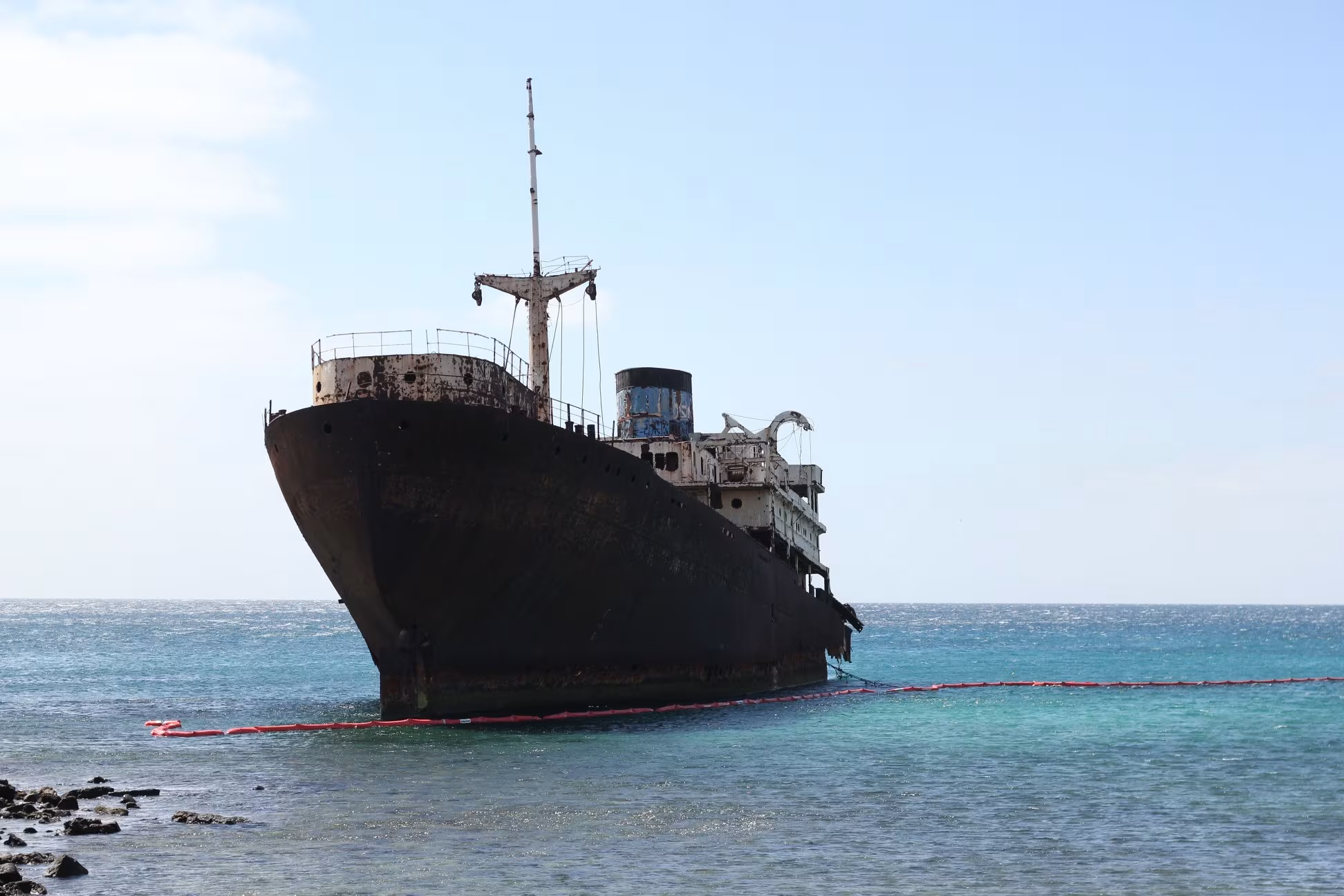
The Temple Hall was a sturdy cargo ship launched in 1954 from Sunderland, England. She wasn’t a glamorous vessel, but she played an important role, quietly carrying all sorts of goods like grain, timber, and machinery across the world’s busy trade routes. For almost thirty years, she worked steadily under different names and owners, helping to keep global trade ticking along. Like so many ships of her kind, she did her job without fuss or fanfare, a true workhorse of the seas.
By the early 1980s, the Temple Hall was showing its age. Newer, bigger ships were taking over, and it was getting harder to keep an old vessel like her running. In November 1981, while she was carrying a load of wood, she ran into trouble just off the coast here in Lanzarote. The details depend on who you ask; some say her engines failed in rough seas, others think she was caught in a storm, and her anchor dragged. What everyone agrees on is that she ended up stranded on the rocky seabed near Arrecife, and from that moment, the Atlantic decided she would stay.
The Aftermath of The Temple Hall
In the days after the Temple Hall ran aground, there were efforts to save her, but she was wedged fast on the volcanic rocks and the Atlantic waves made any work risky and, in the end, impossible. Some of the timber cargo was recovered, but the ship itself was written off as a total loss. The cost of moving her was simply too high, so she was left where she landed, with the idea that someone would soon find a way to break her up or tow her away. That was more than forty years ago now.
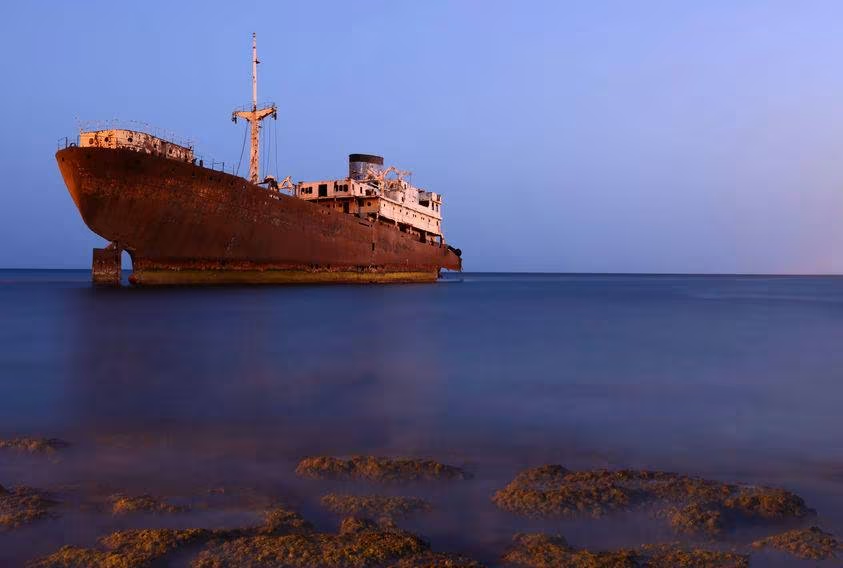
Over the years, the Temple Hall has slowly been claimed by the sea. The superstructure has collapsed and rusted, the hull has grown thinner and more battered, and with each winter storm, another piece is lost to the Atlantic. In the early days, you could still make out her bridge and funnel, and she looked very much like a ship. Now, she is just a low, rusting skeleton rising from the water, almost like the ribs of some giant sea creature. Every year, a little more of her slips away, carried off by the ocean.
Why Is The Temple Hall Shipwreck Still There
It’s a question we hear time and again from visitors when they first catch sight of the wreck: why is it still here? The answer, as is often the case on Lanzarote, comes down to a mix of cost, responsibility and a fair bit of bureaucracy. Lifting a ship of this size from the rocky seabed is no small task, and no one has ever quite agreed on who should foot the bill. The original owners have long since disappeared, the insurers settled up many years ago, and the responsibility has quietly shifted between different branches of government, with no one ever quite taking it on.
Over the years, there have been calls to remove the wreck, especially from those worried about pollution or the way it looks along our coastline. But just as many locals and visitors feel that the Temple Hall has become part of Arrecife’s story and should stay where she is. The wreck has taken on a life of its own, with fish and other marine creatures making their home around the hull, and divers often say it’s one of the more fascinating underwater spots nearby. The conversation goes on, but most of us suspect that the sea will eventually have the final say, slowly wearing the Temple Hall away until only traces remain. For now, she stands as one of Arrecife’s most photographed and talked-about sights.
Where to See the Temple Hall Shipwreck
You will spot the Temple Hall from several places along the Arrecife waterfront, without needing to make a special trip. The easiest way to see it is from the Avenida Maritima, our lovely seafront promenade on the eastern side of the city. Whether you are strolling or driving along here, the wreck stands out in the water just offshore, especially on clear days when the low tide reveals even more of its weathered frame.
If you head towards the commercial port or take the road south in the direction of the airport, you will catch glimpses of the wreck from another angle. For those who want to get a little closer, the shoreline near San Gabriel and the Puente de las Bolas are favourite spots among locals. You do not need binoculars or a camera to enjoy the view, but if you have them, you might enjoy picking out some of the details in the rusting hull. The Temple Hall is close enough to shore that you can easily see it with the naked eye.
You can even spot the wreck from the air. If you are flying into Lanzarote from the north or east, keep an eye out as the plane descends; the dark outline of the Temple Hall is often visible in the shallow water below. Once you know where to look, it becomes a familiar sight every time you arrive or leave the island.
Temple Hall Shipwreck and Photography
The Temple Hall has long been a favourite spot for photographers here in Lanzarote, and it is easy to see why. Its rusting hull stands out boldly against the Arrecife skyline, with the ocean and sky providing a dramatic backdrop. If you visit in the morning, the sunlight from the east really brings out the deep rust colours and the rough textures of the old steel. Later in the day, as the sun drops in the west, the wreck is backlit, and you can capture striking silhouettes and moody scenes with the last light shining through what remains of the superstructure.
Some of my favourite photos of the Temple Hall have actually been taken on overcast days, when the flat grey light brings out the stark beauty of the wreck against a brooding sky. If you are lucky enough to catch a calm day, a long exposure can turn the water around the hull into a soft, milky blur, which really highlights the contrast with the jagged lines of the rusting steel. From the promenade, you will find that a standard zoom lens is usually all you need, but if you want to pick out the details of the hull or the patterns of rust and marine life, a longer lens can be very rewarding.
Visiting as Part of an Arrecife Day
The Temple Hall is one of those sights that fits perfectly into a day spent wandering Arrecife. You can spot the wreck from the same seafront promenade that links so many of the city’s highlights, so there’s no need to go out of your way. I often suggest starting with a gentle stroll along the Avenida Maritima to take in the Temple Hall, then making your way to the Castillo de San Gabriel over the Puente de las Bolas. From there, it’s lovely to wander through the Charco de San Gines for a coffee by the tidal lagoon, before heading on to the Castillo de San Jose for the art museum and the Manrique-designed restaurant with its sweeping harbour views.
If you happen to be travelling to or from the airport, you can catch a glimpse of the Temple Hall from the coast road, and it’s easy to fit in a quick stop at the Arrecife waterfront. With the city just ten minutes from the airport, even a short layover can be enough for a last stroll along the promenade and a final look at the wreck. The Temple Hall is one of those Lanzarote sights that stays with you long after you’ve seen it. There’s something about a shipwreck that stirs the imagination in a way that even our dramatic volcanic scenery sometimes cannot.