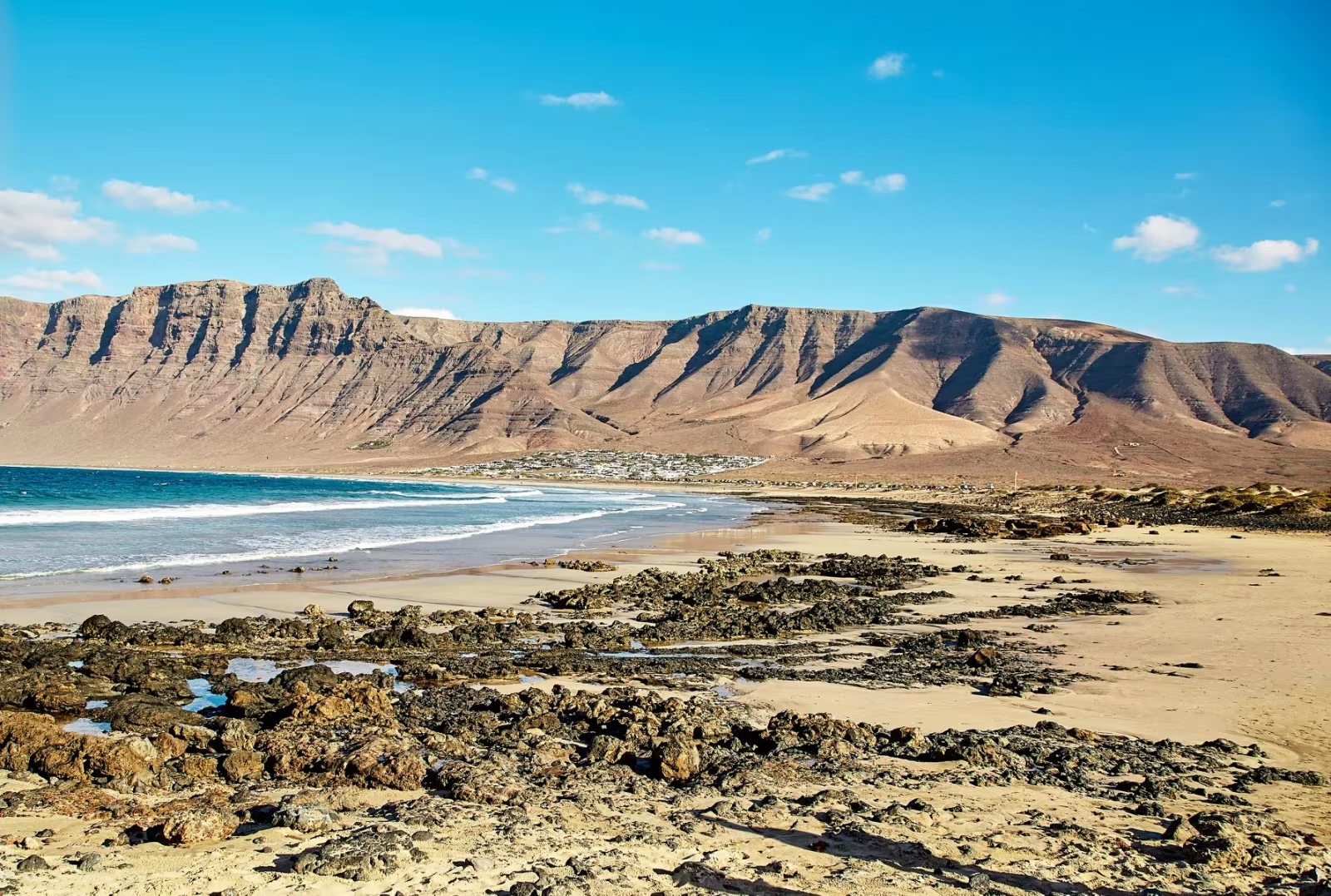
Lanzarote Famara Beach
Famara Beach is Lanzarote's best surf spot with dramatic cliff views. Guide to surfing, bodyboarding, walking, surf schools and visiting Caleta de Famara village.
Famara is a beautiful, sweeping beach on Lanzarote’s northwest coast, with the impressive Risco de Famara cliffs rising up behind. Locals and visitors alike know it as the best spot for surfing, and it’s certainly one of the most striking places on the island.
There’s something about standing on the sand, with the Atlantic rolling in and the cliffs at your back, that feels wonderfully wild and unspoiled. It’s a world away from the resort beaches, and it’s easy to see why so many people fall in love with it.


Sponsored
Famara Beach Surfing and bodyboarding

Famara is known here as the heart of surfing in Lanzarote, and it’s easy to see why. The beach welcomes all levels, from absolute beginners to seasoned bodyboarders, with gentle waves rolling in on most days. Thanks to the sandy bottom, even a tumble in the surf feels forgiving, and the wide stretch of shoreline means you can always find your own quiet spot. In Caleta de Famara village, you’ll find a handful of friendly surf schools, such as Famara Surf, Surf School Lanzarote, Red Star Surf and Calima Surf. Group lessons, including board and wetsuit, usually run between 35 and 45 euros for a couple of hours out on the water.
If you prefer a more personal touch, private lessons are available from 70 to 100 euros. There are also multi-day packages and week-long surf camps, which include comfortable accommodation and daily sessions in the water. Board hire is around 10 to 15 euros for half a day, and wetsuits are usually just 5 euros. Bodyboards are easy to rent and perfect for those starting out or for children who want to enjoy the waves without worrying about standing up. The best surf arrives between October and March, when the north and northwest swells bring lively conditions to the coast. In summer, the waves are gentler and ideal for beginners, but you’ll find something to ride all year round.
Swimming safety
Famara is known for its dramatic waves, strong currents and the ever-present energy of the Atlantic. This is not a beach for swimming, as the sea here can be unpredictable and the red flag is usually flying. Even confident swimmers find the conditions challenging, with waves breaking onto the steep shore and currents that can quickly carry you along the beach.
If you are visiting Famara, it is best to enjoy the water by paddling at the edge, where the waves lap at your ankles or knees. Only experienced surfers with the right equipment venture further out. Families should keep a close eye on little ones near the shoreline. For a safe swim, I always recommend the sheltered beaches on the south or east coast. Famara is all about wild beauty and world-class surf, rather than gentle swimming.
Famara Beach is perfect for walking and photography
This 6km stretch of beach is, in my view, one of Lanzarote’s true treasures. When the tide is low, the wet sand turns into a natural mirror, perfectly reflecting the cliffs and creating a scene that always tempts me to reach for my camera. If you take your time, as most of us do, a gentle walk from one end to the other and back will fill a couple of hours with nothing but sea air and stunning views.
The cliffs here are always changing, shifting from soft gold in the early morning to a rich orange as the sun sets. Because Famara looks out to the west and north, the sunsets are truly something special, especially in summer when the sun slips behind the cliffs. On breezy days, you’ll often spot kite landboarders making the most of the wide, open sands, and now and then, you might see a group out horse riding along the shoreline, organised by local stables.
The beach has also become a favourite gathering place for yoga groups, with a handful of retreat centres in the village making the most of the peaceful setting.
Caleta de Famara village
Tucked just behind the sweeping sands, the village of Famara has a relaxed, bohemian surf vibe that feels quite different from anywhere else on Lanzarote. There is a sense here that you could just as easily be in a laid-back corner of Portugal or Morocco, rather than on a Canary Island. Along the main street, you will find a handful of excellent restaurants. El Risco is a favourite for its fresh fish, while Restaurante Sol offers classic Canarian dishes with wonderful sea views. There are also a few surf cafes where you can enjoy healthy food, a good smoothie or a proper cup of coffee after a morning on the waves.
You will find a few surf shops here, where you can pick up or rent everything you need for a day on the waves, as well as a couple of small supermarkets for the essentials. Over the years, more holiday apartments and surf camps have appeared, but the village still keeps its peaceful character. Outside of mealtimes and the buzz of surf sessions, Famara is wonderfully quiet. There is no real nightlife, and that is very much part of its appeal. Many people who first visit on a day trip find themselves drawn back, wanting to stay a little longer to soak up the slower pace and the breathtaking setting.
Famara Beach Accessibility and suitability
Famara beach is a beautiful, wild stretch of sand, but it is not the easiest spot to reach for those with limited mobility. The path from the village down to the beach is uneven and sloping, and the sand itself is soft and expansive, which makes it difficult for wheelchairs or mobility scooters. There are no adapted facilities here, and while the village has a few paved areas, it remains quite simple in terms of infrastructure. That said, for older visitors who are steady on their feet, a gentle stroll along the firm sand near the water’s edge at low tide can be a real pleasure and well worth the effort.
Famara is not the best choice for little ones who want to swim, as the currents here can be strong and unpredictable. However, older children who are confident in the water and understand the safety rules often enjoy paddling or trying their hand at bodyboarding, always with supervision. Teenagers are usually drawn to Famara for its surf schools and laid-back, alternative vibe. Most of the village restaurants are at ground level and easy to access.