Lanzarote Teguise Market
Everything you need to know about the Teguise Sunday Market in Lanzarote. What to buy, where to eat, parking tips, and what else to see in this beautiful old town.
Every Sunday morning, the sleepy former capital of Lanzarote transforms into the busiest, noisiest, most colourful place on the island. The Teguise Market has been running for decades, and it draws in visitors from every resort on the island alongside plenty of locals doing their weekly shop. It's easily the biggest market in the Canaries and one of those experiences that pretty much everyone does at least once during a trip to Lanzarote.
The market runs from around 9am until 2pm, though stallholders start setting up much earlier and the best stuff tends to go first. By mid-morning the streets are properly packed, especially in the peak winter season when the island is full of northern Europeans escaping the cold.


Sponsored
What You'll Find at the Market
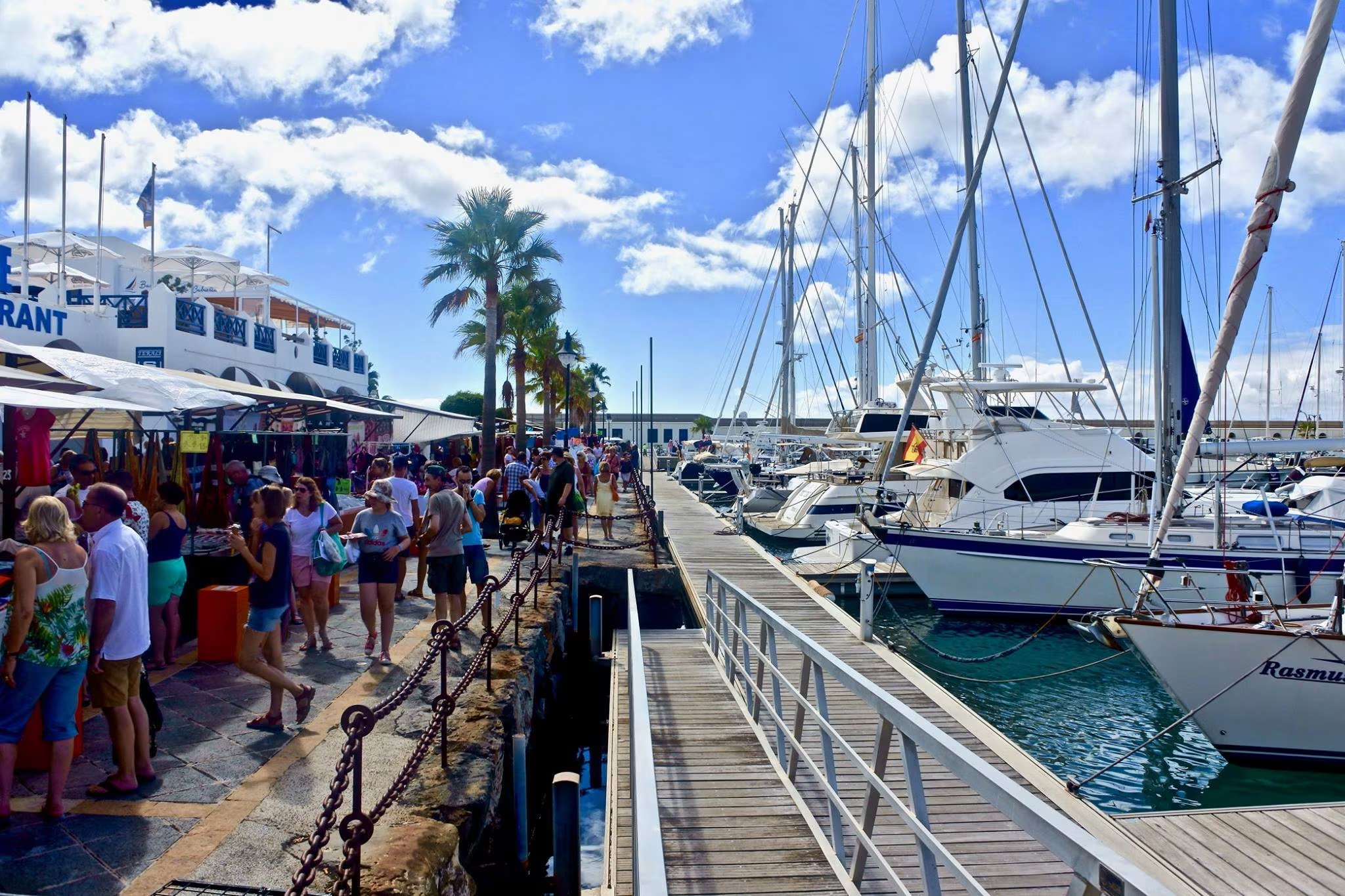
The market sprawls across the main square, Plaza de la Constitución, and spills out into the surrounding streets. There are hundreds of stalls, and while you'll find plenty of the usual tourist fare (fridge magnets, keyrings, "I love Lanzarote" t-shirts), there's genuinely good stuff mixed in if you take your time.
The handmade jewellery stalls are worth a proper look. Several local artisans sell pieces made with olivine, the green semi-precious stone found in Lanzarote's volcanic rock. You'll also find stalls selling leather goods, hand-rolled cigars, locally made ceramics, and Canarian embroidery. The aloe vera products are everywhere and for good reason. Lanzarote has been growing aloe commercially for years, and the creams and gels sold here are usually better quality and much cheaper than what you'll find in the tourist shops.
For food, keep an eye out for the stalls selling local cheese. Lanzarote produces some really good goat's cheese, and you can usually try before you buy. Mojo sauces (both the red pimentón and the green coriander versions) are a staple, and the homemade ones at the market are noticeably better than the bottled versions in the supermarkets. You'll also find local honey, cactus jam, bags of gofio (the toasted grain flour that's a Canarian staple), and dried figs.
The clothing stalls tend to be a mixed bag. Some sell generic market clothing, but there are a few that stock interesting linen pieces and hand-dyed fabrics. The vintage and second-hand stalls can be good for a rummage too.
The Shops Around the Square
The market gets most of the attention, but the permanent shops in Teguise are worth exploring in their own right, and most of them are open on market day. The old town has a handful of really nice independent boutiques selling homeware, ceramics, and art. There are a couple of good galleries tucked into the side streets, and a few antique shops that are genuinely interesting rather than the usual junk.
The old town also has several shops selling traditional Canarian crafts. Timple (the small Canarian guitar) makers sometimes have instruments on display, and you'll find shops selling hand-woven baskets and pottery made using techniques that go back centuries.
Iglesia de Nuestra Señora de Guadalupe
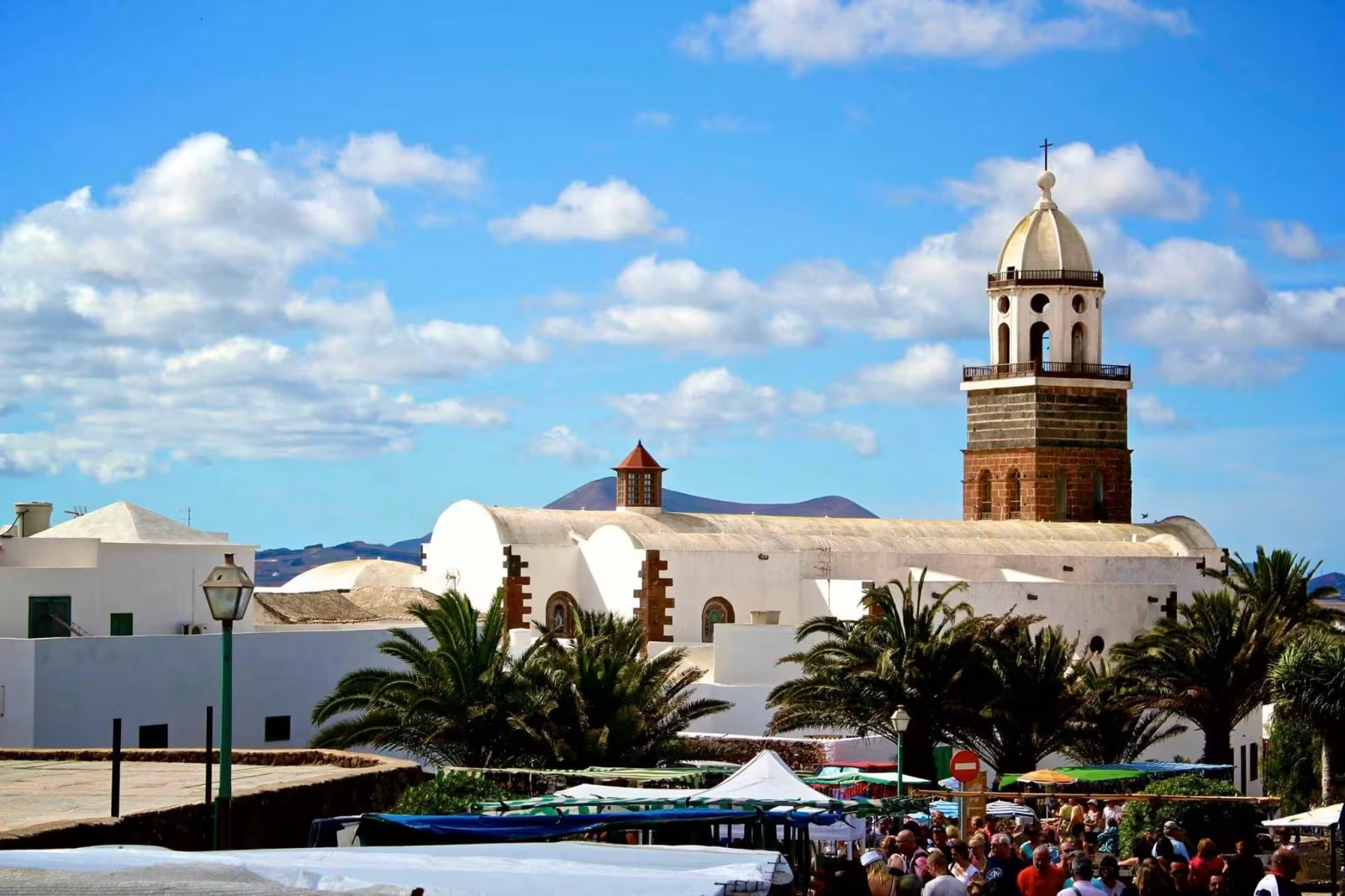
The church of Nuestra Señora de Guadalupe dominates the main square and is one of the oldest churches in the Canary Islands. It dates back to the early 15th century, though it's been rebuilt and restored several times over the years after pirate attacks and fires. The current building is largely 18th century, with a striking white bell tower that's become one of the most recognisable landmarks on the island.
It's worth stepping inside if it's open. The interior is simple but beautiful, with dark wooden ceilings and a quiet atmosphere that's a welcome contrast to the bustle of the market outside. Entry is free.
Where to Eat
Market day brings out food vendors selling everything from paella cooked in enormous pans to grilled chorizo rolls and fresh crepes. The smell of roasting chicken drifts across the square from mid-morning onwards, and there's usually someone selling freshly squeezed orange juice near the main entrance.
For a sit-down meal, the restaurants around the square fill up quickly but are worth the wait. Several serve traditional Canarian food: papas arrugadas with mojo, grilled fish, carne fiesta. La Cantina and Acatife on the main square are popular choices, though you'll need to get there early or be prepared to wait for a table.
Away from the square, the side streets have some quieter spots. There are a couple of good tapas bars, and you'll find places serving everything from Italian to Indian food. The ice cream shop near the church is always busy for good reason.
If you want something quick, the bakeries in the old town sell excellent pastries and sandwiches, and they're much cheaper than the stalls in the market itself.
Getting There and Parking
If you're driving, get there early. The main car parks fill up fast, and by mid-morning you can end up parking quite a distance away and walking in. There's a large free car park on the edge of town near the football pitch, and another along the road leading in from Arrecife. Arriving before 9:30 is the sweet spot: the market is setting up, the car parks are still empty, and you can grab a coffee in the square before it gets busy.
Several tour operators run bus excursions to the market from all the main resorts. These are convenient if you don't have a car, though you'll be on their schedule rather than your own. The public bus service also runs routes to Teguise from Arrecife and Costa Teguise on Sundays, though the timetables can be a bit limited.
If you're coming from Arrecife or Costa Teguise, the drive takes about 15 minutes. From Playa Blanca or Playa de los Pocillos, allow about 30 to 40 minutes. The road up to Teguise climbs through some lovely volcanic countryside, so it's a scenic drive either way.
The House with All the Junk
On the road into Teguise from the Arrecife direction, just before you reach the town, you'll pass a house on the left that stops everyone in their tracks the first time they see it. The entire front garden, if you can call it that, is packed floor to ceiling with old furniture, mannequins, signs, bicycles, religious statues, birdcages, and what looks like the contents of about fifteen car boot sales piled on top of each other.
It's been there for years and it just keeps growing. Nobody seems entirely sure whether it's an art installation, a very ambitious hoarding habit, or some kind of unofficial museum. Either way, it's become a landmark in its own right. You'll see people pulling over to take photos, and the coach drivers always slow down so passengers can get a look. Love it or hate it, it's completely unique and it's one of those things that just wouldn't happen anywhere else.
Beyond the Market
If you've got time after the market winds down (it usually starts packing up around 2pm), Teguise itself is worth a wander. It was the capital of Lanzarote for over 400 years before the government moved to Arrecife in the 19th century, and the old town is full of beautiful colonial architecture, quiet plazas, and crumbling manor houses.
The Castillo de Santa Bárbara sits on the volcanic cone of Guanapay overlooking the town. It's a short drive or a steep walk up, and the views from the top are fantastic. On a clear day you can see right across the island. The castle itself houses the Museo de la Piratería (Piracy Museum), which covers the centuries of pirate raids that plagued Lanzarote and shaped its history.
The town is noticeably quieter on non-market days, and some people actually prefer it that way. The restaurants are less crowded, the shops are still open, and you can appreciate the architecture without dodging crowds. If you're staying for a couple of weeks, it's worth visiting on both a Sunday and a weekday to see the two different sides of the place.