Monumento al Campesino
Visit the Monumento al Campesino in Mozaga, Lanzarote. Free entry to Cesar Manrique's tribute to the island's farmers, with a traditional Casa Museo, craft workshops and authentic Canarian restaurant.
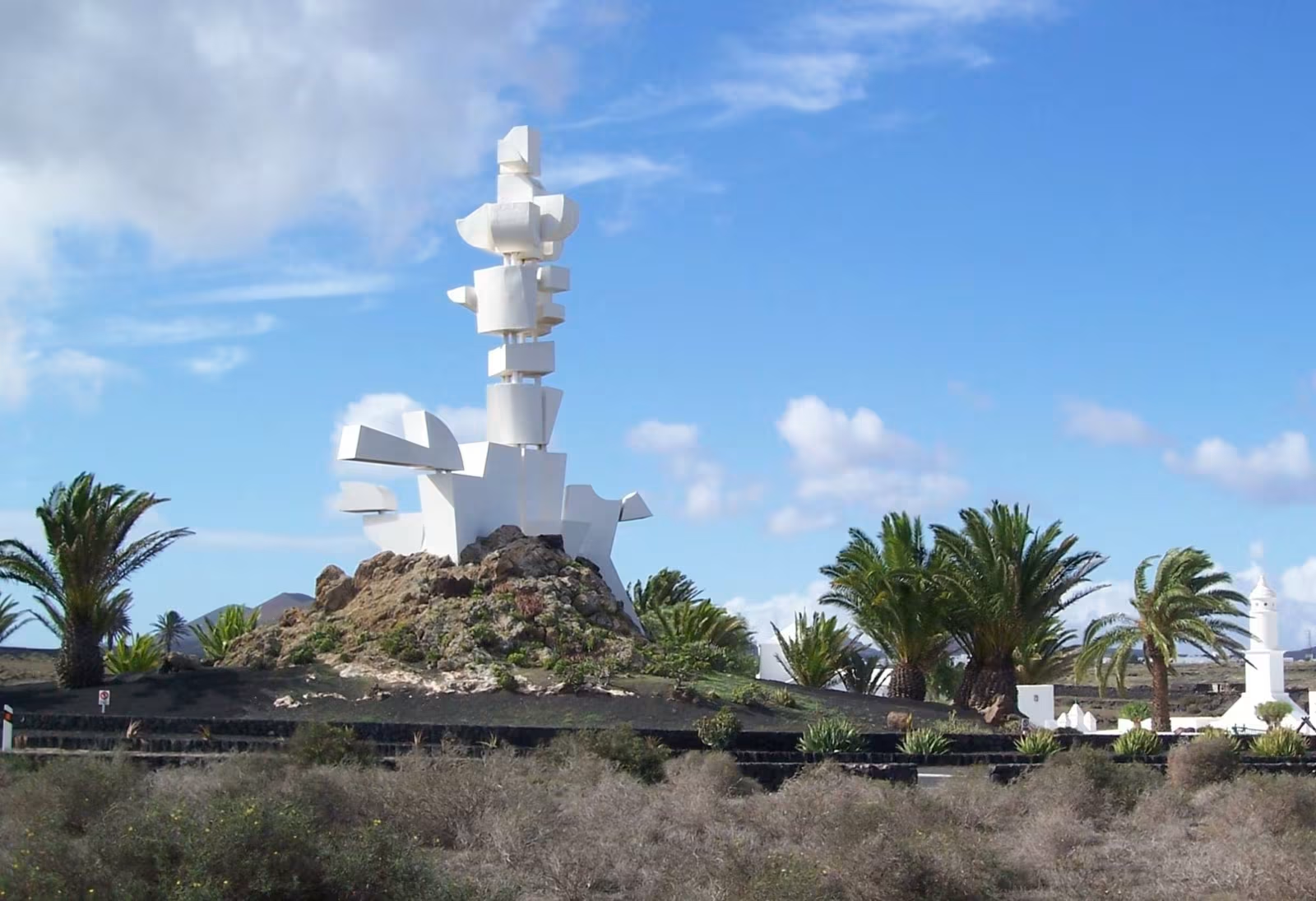
Right at the heart of Lanzarote, you will find the Monumento al Campesino, a heartfelt tribute by Cesar Manrique to the island’s hardworking farmers who helped shape the unique landscape we know and love today. The tall white sculpture stands proudly in Mozaga, in San Bartolome, and you can spot it from quite a distance as you drive through the centre of the island.
Next to it, there is a beautifully restored Canarian farmhouse, home to a free museum, craft workshops where you can watch local artisans at work, and one of the most authentic restaurants you will find here. It is a simple and rewarding stop that brings together art, culture, good food and a real glimpse into the rural traditions that have defined Lanzarote for generations.


Sponsored
The Monumento al Campesino Sculpture
The Monumento al Campesino, or Monument to Fertility as it is officially known, is one of those Lanzarote landmarks that always catches the eye, no matter how many times you pass by. Designed by Cesar Manrique and brought to life in 1968 by the skilled hands of Jesus Soto, it stands tall at the heart of the island, gleaming white against the open sky. What I love most is how it’s made from old water tanks once used on fishing and sailing boats, along with iron and cement, all painted in that signature Lanzarote white. It’s a wonderful example of Manrique’s gift for turning everyday, discarded things into something beautiful and lasting.
At first glance, the sculpture seems completely abstract, all bold shapes and clean lines reaching up into the sky. But if you pause for a moment and take a closer look, you’ll start to see familiar figures emerge. The forms come together to show a farmer riding a camel, with a donkey and a dog by his side—animals that have been part of daily life here for generations. The camel, especially, has always played a vital role in Lanzarote’s fields, helping to plough the volcanic soil and carry crops. Even now, you can spot camels at Timanfaya and on farms across the island, a living link to our agricultural past.
Soto designed the base of the monument to stand firm against the strong trade winds that often sweep through the centre of Lanzarote. More than fifty years on, it still stands just as it always has, a real tribute to the skill and care that went into its creation. You can see the sculpture clearly from the road, and it’s easy to walk right up to it for a closer look or to take a few photos; something I always recommend if you’re passing by.
Why Manrique Built El Monumento al Campesino
The monument stands as Manrique’s heartfelt tribute to the generations of Lanzarote farmers who shaped this island with their hard work and determination. After the devastating volcanic eruptions of the 1730s, which covered so much of our farmland in lava and ash, the people here were faced with a stark choice: leave their home or find a way to survive in a landscape of black volcanic rock. They chose to stay, and what they managed to achieve is nothing short of remarkable.
Lanzarote’s farmers responded with real ingenuity, developing the enarenado system that you can still see across the island today. They dug hollows in the volcanic ash and planted their crops in picon, the small volcanic stones that are so much a part of our landscape. These stones soak up moisture from the air at night and slowly release it to the roots during the day, creating a natural irrigation system in a place where rain is a rare visitor. Thanks to this clever technique, grapes, onions, potatoes, tomatoes and more have flourished here for generations. The vine pits of La Geria, the onion fields in the centre of the island and the little walled gardens dotted about are all living reminders of this tradition.
Manrique recognised that it was these farmers who truly shaped the Lanzarote landscape. The sculpted fields, the stone walls and the carefully formed vine pits are every bit as much works of art as anything you’ll find in a gallery. This monument celebrates their resilience and creativity, standing at the very heart of the island as a lasting reminder that the beauty visitors enjoy today was created by the hands of ordinary people doing something extraordinary.
The Casa Museo
Right next to the monument, you will find the Casa Museo del Campesino, a lovely collection of traditional Canarian farmhouse buildings created by Manrique in the late 1960s, working closely with local people. The whitewashed walls and green woodwork surround a quiet courtyard, capturing the simple beauty of the rural architecture that once shaped much of Lanzarote. Today, CACT Lanzarote cares for the complex, as they do with many of the island’s cultural treasures.
Inside, you can explore the traditional architecture, farming, crafts and rural heritage that have shaped Lanzarote over the years. The displays bring to life the tools, skills and customs that helped islanders thrive, from clever ways of farming the volcanic soil to the everyday crafts that made use of whatever the land provided. It is not a large museum, but it is carefully put together and helps you understand the patchwork of fields and villages you pass as you travel around the island.
There is no charge to visit the museum or wander through the whole complex. You do not need a ticket or a reservation, and there is never a queue. Just step inside and take your time exploring. The doors are open every day from 10 in the morning until 5.45 in the evening.
Craft Workshops at Monumento al Campesino
A real favourite at the Casa Museo is the Plaza de los Artesanos. Here, you can wander among working craft workshops and see local artisans keeping Lanzarote’s traditional skills alive. You might find someone shaping clay on a potter’s wheel, weaving colourful yarns on a wooden loom, or crafting leather goods by hand. There is also hat making and even soap making to discover. It costs nothing to watch, and it is always a pleasure to see the care and patience that goes into each piece.
If you fancy getting involved yourself, you are welcome to join in with the workshops. For about 3 euros, you can spend a relaxed fifteen minutes learning a new skill and take home whatever you create. Families especially enjoy this, as children love the chance to try their hand at pottery or weaving, and the little treasures they make are always more special than anything you could buy in a shop. Of course, if you prefer to browse, the craft shop is full of beautiful pieces made by local hands, from pottery and woven textiles to leatherwork.
The Restaurant at Monumento al Campesino
Tucked away behind the striking white walls of the Casa Museo del Campesino, you will find one of Lanzarote’s true hidden gems. It’s easy to miss if you are just stopping for a quick photo of the monument, but those who linger a little longer are rewarded with some of the most authentic Canarian food you’ll find anywhere on the island. This is the real thing: traditional recipes, local ingredients, and a peaceful courtyard setting that invites you to slow down and savour the moment.
The menu here is a celebration of Lanzarote’s culinary traditions. You’ll find all the classics: papas arrugadas with both red and green mojo, gofio escaldado, sancocho with cherne, and a hearty goat stew with local vegetables. There are also grilled cherne fillets, octopus with green mojo, and a comforting millet broth. For dessert, I always recommend the bienmesabe or the frangollo, both made with the flavours that remind me of old Lanzarote kitchens. Prices are refreshingly reasonable, especially considering the quality and the setting, with main dishes usually between 15 and 20 euros.
To accompany your meal, you can enjoy a glass of Lanzarote wine from the volcanic vineyards of La Geria. Tapas are served throughout the day, whether you prefer to sit inside or soak up the sunshine on the terrace. The restaurant is open from midday until 4pm, and you usually won’t need to book ahead, though it does tend to fill up around lunchtime when the coach tours arrive.
Visiting Monumento al Campesino
You will find the Monumento al Campesino right in the heart of Lanzarote, at Mozaga, where the LZ-20 and LZ-30 meet. The striking white sculpture rises 15 metres above the landscape and is one of those landmarks you simply cannot miss as you drive through the centre of the island. There is plenty of free parking on site, making it an easy stop whether you are coming from Arrecife, Puerto del Carmen, Costa Teguise or Playa Blanca. From Arrecife, it is just a 10 minute drive, and from Playa Blanca, you can expect to arrive in about half an hour.
The museum and craft workshops welcome visitors every day from 10 in the morning until 5.45 in the afternoon, while the restaurant serves lunch from midday until 4pm. There is no charge to enter, so you are free to wander and explore at your own pace. If you are just popping in for a look around, you will need about 50 minutes, but if you fancy a leisurely meal or want to try your hand at one of the craft workshops, it is easy to spend a couple of hours here. The Monumento al Campesino makes a lovely stop if you are travelling between the resorts and the north of the island, and it pairs beautifully with a visit to the vineyards of La Geria or the charming town of San Bartolomé.
The site is thoughtfully designed for accessibility, with level ground throughout the courtyard and museum areas. If you prefer not to walk far, you can enjoy a clear view of the monument right from the car park.