
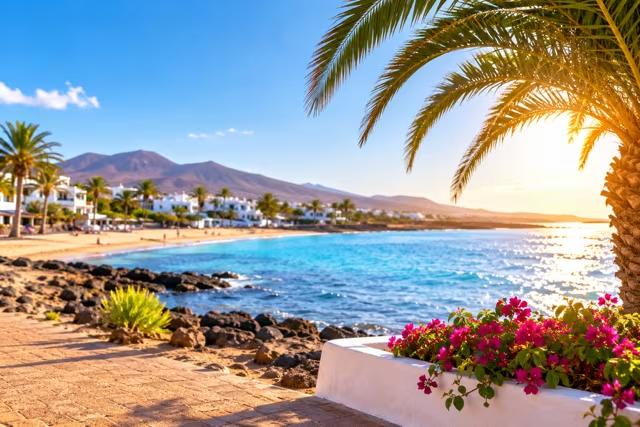

Canary Islands Tourist Spending Falls in July – What Does It Mean for Lanzarote?
The Canary Islands welcomed more than 1.2 million international tourists in July 2026, but the latest figures show an interesting change in visitor spending.
According to Spain’s National Statistics Institute (INE), 1,222,895 international visitors arrived in the Canary Islands during July. That was a 0.7% decrease compared with July 2025.
However, the biggest talking point is tourist spending. International visitors spent around €2.188 billion during the month, down 1.3% year-on-year.
Visitors are spending more each day
The headline figure doesn’t tell the whole story.
While overall spending declined, the average daily expenditure increased by 7.8% to around €236 per tourist. The average holiday was also slightly shorter, at approximately 7.6 days.
This suggests that the reduction in total spending is partly linked to visitors staying for fewer days, rather than simply spending less while they’re on holiday.
For Lanzarote, that’s an important distinction.
Lanzarote continues to attract strong demand
Lanzarote accounted for around 20% of tourist arrivals across the Canary Islands in July, according to the Canary Islands Statistics Institute (ISTAC).
The island also recorded the highest accommodation occupancy rate in the Canary Islands during the month, demonstrating that demand for holidays in Lanzarote remains strong.
For local businesses, from restaurants and cafés to excursion operators, car hire companies and shops, visitor spending remains a vital part of the island’s economy.
The UK remains a key market
British holidaymakers continue to play a particularly important role in Canary Islands tourism.
The UK was the largest international source market in July, accounting for around 37% of tourist arrivals, with more than 576,000 visitors.
This is especially significant for Lanzarote, which has long been one of the Canary Islands’ favourite destinations for British tourists.
What does this mean for Lanzarote?
The latest figures don’t suggest that Lanzarote tourism is suddenly in trouble. Visitor numbers remain exceptionally high, accommodation demand is strong and tourists are actually spending more per day.
Instead, the figures may indicate a changing tourism market following several years of very strong growth.
For Lanzarote, encouraging visitors to stay longer and explore more of the island could become increasingly important. Restaurants, attractions, markets, excursions, local shops and independent businesses all benefit when tourists spend more time experiencing what the island has to offer.
The bottom line
Canary Islands tourism remains strong, but July’s figures reveal a shift in visitor behaviour.
International arrivals and overall spending were slightly lower than last year, while daily spending increased considerably. Lanzarote’s strong accommodation occupancy also highlights the continued popularity of the island as a holiday destination.
For residents and tourism businesses, the coming months will show whether this is simply a temporary fluctuation or the beginning of a longer-term change in Lanzarote tourism in 2026.
