
DID YOU KNOW? LANZAROTE'S JANUBIO SALTWORKS WERE BUILT ON A LAGOON CREATED BY VOLCANOES
Did You Know? The Volcanic Origins of Lanzarote's Janubio Saltworks
The next time you see the bright white salt mounds and colourful shallow pools at the Salinas de Janubio, remember that the landscape began with a very different kind of industry: volcanic activity.
The saltworks on Lanzarote's south-west coast occupy a natural lagoon whose shape was created by the lava and changes to the coastline during the great Timanfaya eruptions of 1730–1736. More than a century later, people recognised that the sheltered water and strong sunshine offered the right conditions for producing sea salt.
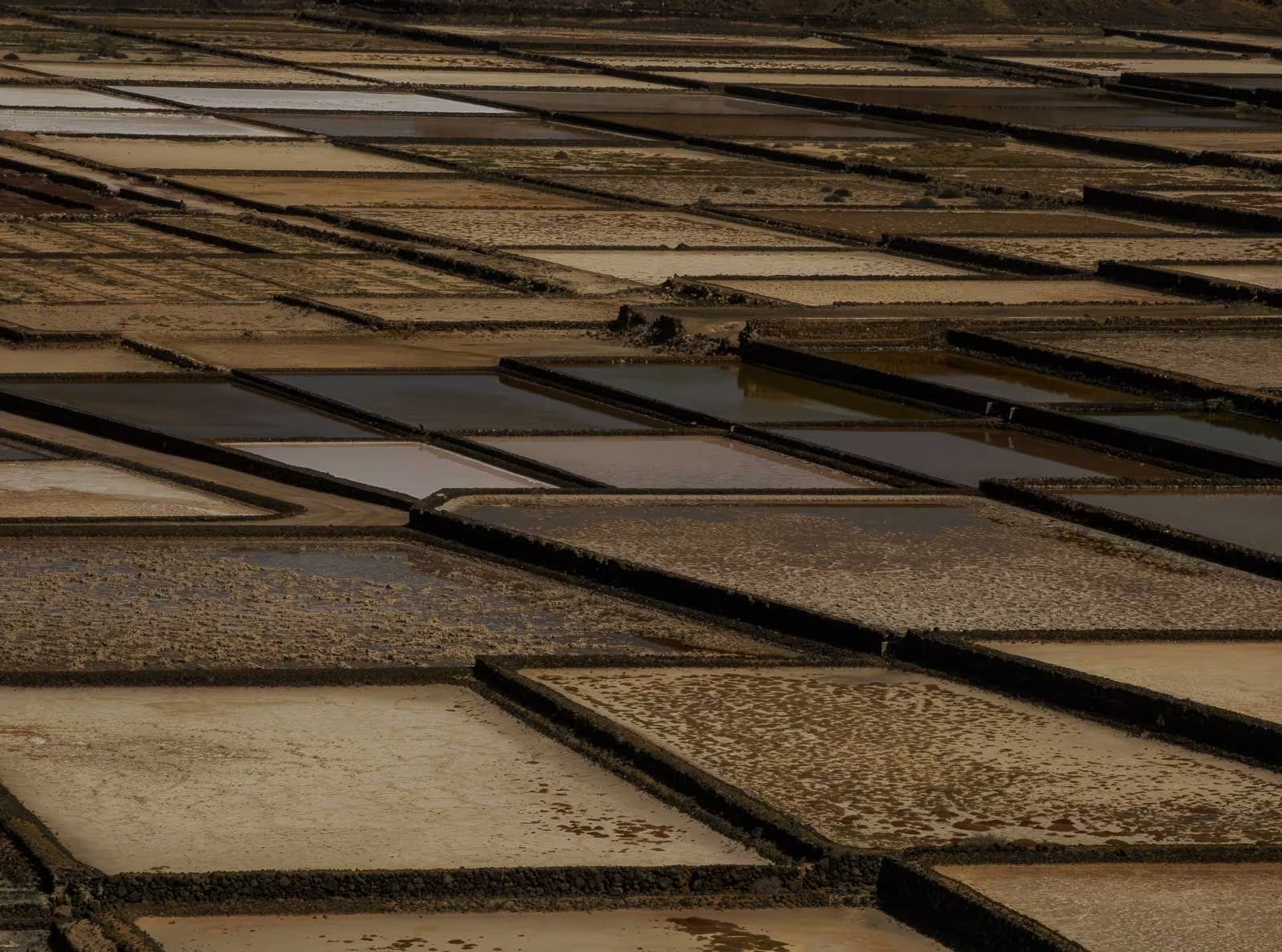
The result is one of the island's most distinctive working landscapes: a patchwork of shallow pools, stone walls, channels and small structures set between the Atlantic and the volcanic terrain of Yaiza.
From a former harbour to a salt-making landscape
Before the saltworks existed, the area was associated with Puerto Real de Janubio, an important harbour for the south of Lanzarote. The Salinas de Janubio family history explains that the volcanic eruptions of the eighteenth century altered the coastline and closed off the old bay, creating the lagoon that later made salt production possible.
Construction of the present saltworks began in 1895, led by Vicente Lleó Benlliure with the involvement of his nephew Jaime Lleó Mira and other local families. The complex developed over many years, with the works reaching completion around 1945 according to the family's historical account.
Salt was not simply a souvenir or a seasoning. It was an essential material for preserving fish before modern refrigeration became widespread. Janubio's salt therefore became closely connected to Lanzarote's fishing activity and the wider commercial life of the Canary Islands.
How the salt is made
The layout of the saltworks is carefully designed to move seawater through a series of stages.
The official description published in the Canary Islands Gazette identifies four main elements: the intake and pumping system, the larger heating or concentration ponds, the channels that carry the water, and the smaller salt pans where crystallisation takes place.
In simple terms, seawater is brought into the system and allowed to concentrate as sun and wind evaporate water. As the brine becomes more concentrated, it moves through the channels into the shallow crystallising pans. Salt crystals form and can then be collected.
The Salinas de Janubio producers describe their sea salt as being harvested by traditional manual methods, using tools such as rakes, shovels and wheelbarrows. They give the main collection season as May to October, when the weather is generally most favourable for evaporation.
Why the saltworks are so large
The official 1998 notice in the Boletín Oficial de Canarias described Janubio as the largest saltworks by surface area in the Canary Islands. It recorded an area of approximately 440,000 square metres — about 44 hectares.
That same notice described the complex as an unusual combination of architecture, engineering, history, craft, ethnography and environmental value. It also recorded that the saltworks function as an ecosystem with zoological and environmental qualities and are covered by the Canary Islands' protected-area framework as the Janubio Site of Scientific Interest.
The surrounding lagoon and its shallow waters are part of what makes the place so interesting. It is not only an industrial heritage site, but also a landscape with ecological value.
A stop worth making on Lanzarote's south-west coast
The saltworks sit close to other well-known places in Yaiza, including Los Hervideros and the area around El Golfo. The official Canary Islands tourism guide highlights the Janubio viewpoint as a place to appreciate the scale and geometry of the salt pans.
The colours can be especially striking as the light changes: white salt, dark volcanic rock, pale water and the Atlantic beyond. It is easy to see why the site appears in so many photographs of Lanzarote.
If you visit, use the recognised viewpoints and respect any access restrictions around the working salt pans and protected environment. The site is both a place of production and a living landscape, not simply a decorative photo stop.
A small industry with a big place in Lanzarote's story
The Salinas de Janubio tell a story that links geology, fishing, family enterprise, traditional skills and tourism. The volcanoes shaped the lagoon; generations of salt workers turned its conditions into a livelihood; and the result remains one of the most recognisable cultural landscapes in the south of Lanzarote.
So when someone asks why there are great white mounds beside the black volcanic coast, the answer is not just that Lanzarote makes sea salt. It is that the island's volcanic past helped create the very place where that salt could be made.