

Did You Know? Lanzarote's La Geria Vineyards Were Recognised by the UN as World Agricultural Heritage
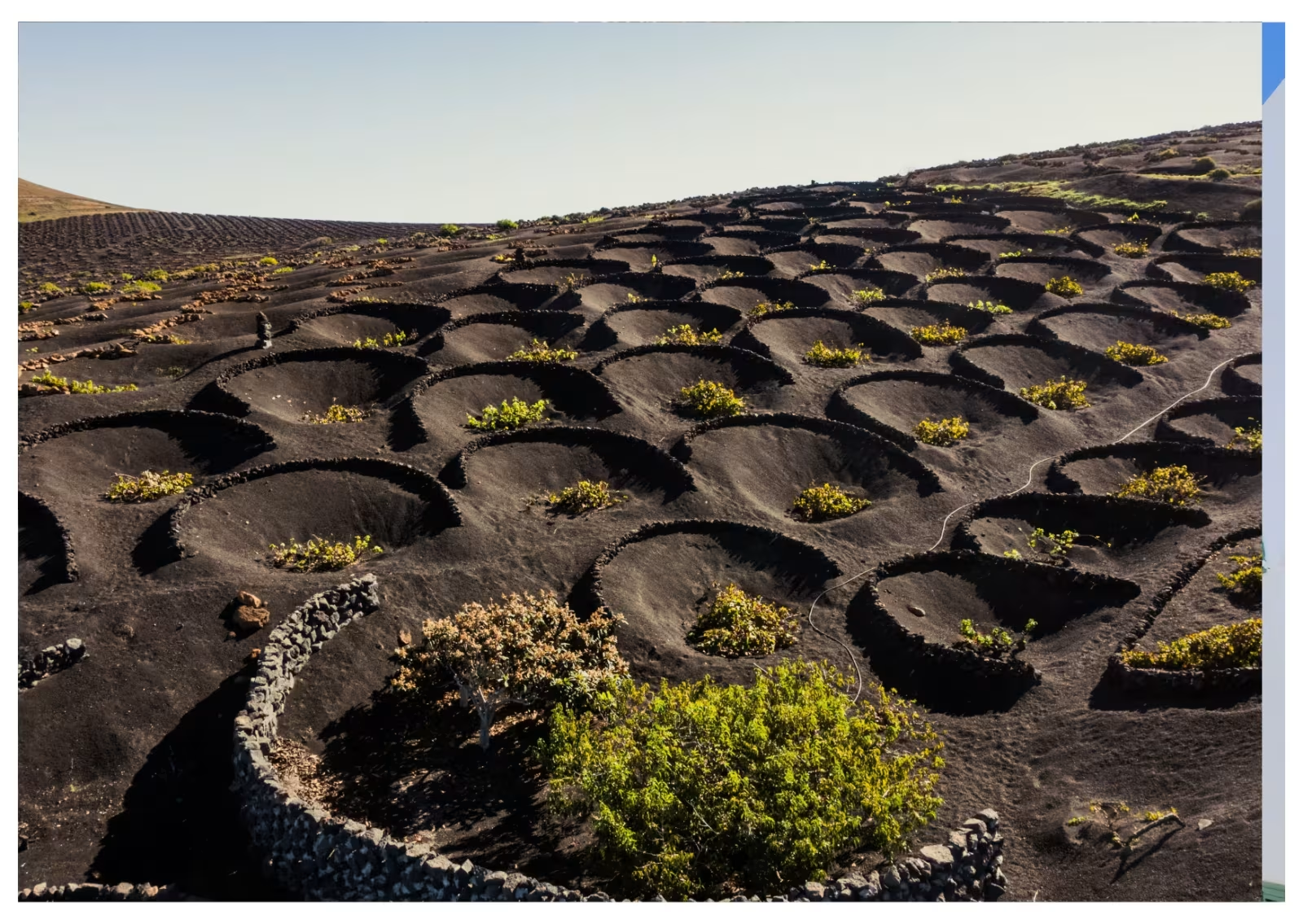
Lanzarote's vineyards look unlike almost anywhere else in Europe. Instead of neat rows of vines on open ground, La Geria is dotted with individual planting hollows dug into dark volcanic gravel, each protected by a low semicircular stone wall.
This is not just a picturesque way to grow grapes. It is part of a wider agricultural system developed to cope with very little rainfall, strong winds and difficult soils. In 2025, the Food and Agriculture Organization of the United Nations recognised Lanzarote's agricultural systems in jable and volcanic sands as a Globally Important Agricultural Heritage System.
What makes the system special?
Farmers make use of two very different materials. In La Geria, vines are planted in pits dug through layers of volcanic lapilli, also called picón or rofe. In other parts of the island, farmers have used jable – pale sand of marine origin carried inland by the wind – to cultivate crops.
The volcanic material helps conserve moisture and reduce evaporation, while the stone walls protect plants from the prevailing winds. Jable farming uses the properties of the sand and the island's terrain in a different way. Both approaches reflect detailed knowledge of local conditions.
More than wine
The heritage recognition is not just about vineyards or Malvasía wine. The FAO describes a wider dryland farming system that also includes crops such as sweet potatoes and legumes. It recognises the knowledge, biodiversity, livelihoods and cultural landscape associated with these methods.
The designation highlights how farmers have adapted to a challenging environment and maintained productive agriculture with very limited irrigation.
A landscape worth looking at more closely
When travelling through La Geria, notice the repeated pattern of dark pits and curved stone walls. Each one is a small piece of agricultural engineering. The system is part of what makes the landscape so distinctive and helps explain why Lanzarote's wine country is as interesting for its farming history as it is for its wine.
Fact check: The FAO designation was awarded in 2025 to the broader agricultural systems in jable and volcanic sands on Lanzarote, not solely to La Geria or to a particular wine. The FAO identifies grapes, sweet potatoes and legumes among the crops associated with the system. The Geopark and Spain's geological inventory explain the volcanic origin and function of the La Geria lapilli and stone windbreaks.
