
Did You Know? Lanzarote's Vineyards Use Volcanic Ash to Catch Moisture
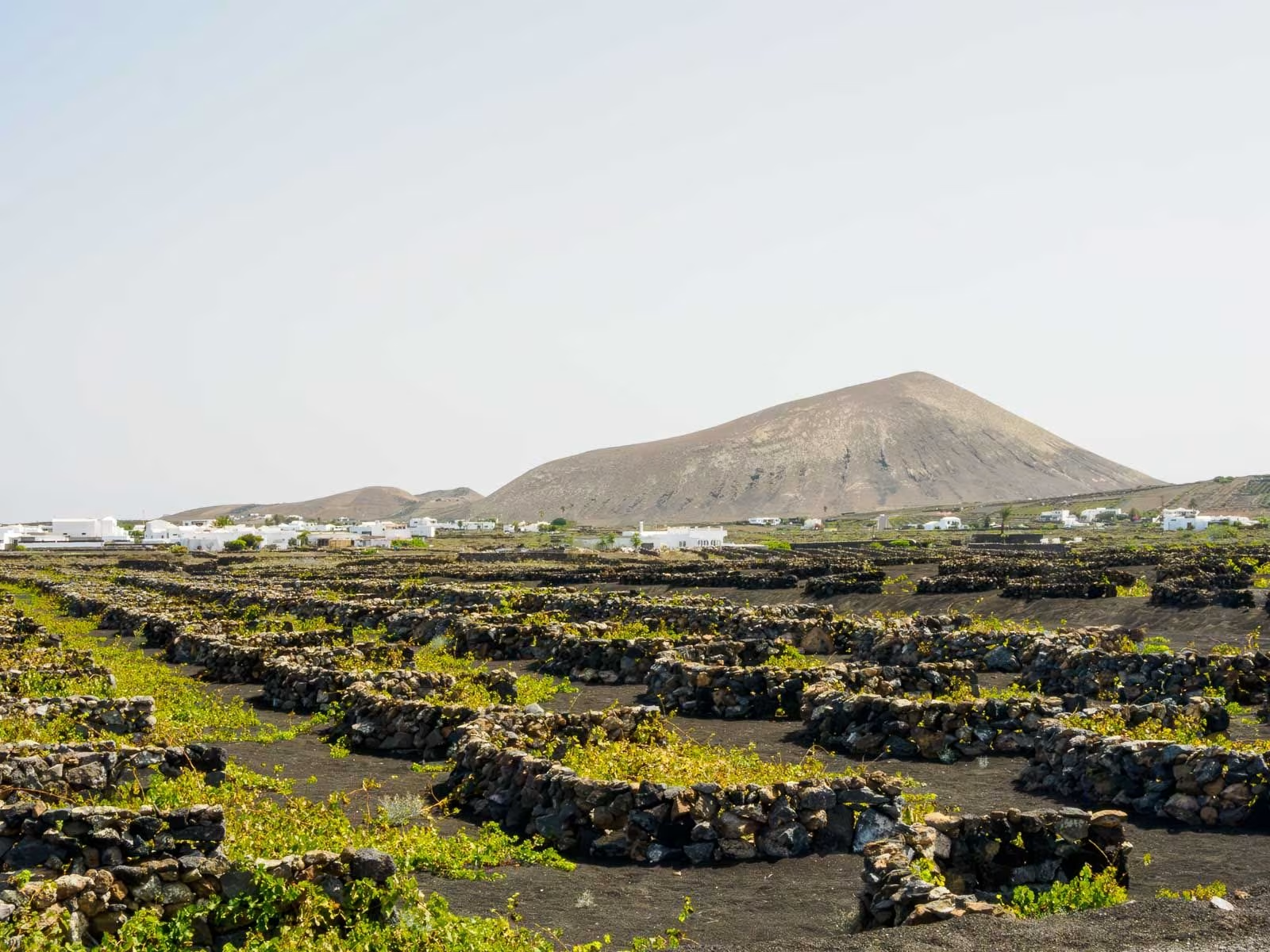
The unusual vineyards of La Geria are among Lanzarote's most recognisable landscapes. From the road, the vines appear as individual green circles set into dark volcanic ground, each protected by a curved stone wall. But this striking pattern is not simply a visual choice. It is an ingenious farming system developed to make the most of very limited water.
The vineyards grow in lapilli, locally known as picón or rofe: small, porous volcanic fragments deposited during the Timanfaya eruptions of 1730–1736. Farmers dig a hollow into this layer and plant a vine in the soil beneath. A semicircular stone wall helps shield each plant from the island's strong winds.
How does the volcanic material help?
The Geopark of Lanzarote explains that the porous pyroclastic material cools quickly at night, encouraging moisture to condense. The pores retain some of that moisture, while the layer also helps reduce evaporation and makes better use of scarce rainfall. This does not mean the ash creates water or guarantees a harvest; it is a way of capturing and conserving the limited moisture available.
Why are the stone walls curved?
The low semicircular walls are designed as windbreaks. Lanzarote's trade winds can damage exposed vines and dry out the ground. The wall reduces the force of the wind around the plant while allowing the vine to grow in its sheltered hollow.
A landscape shaped by necessity
The system developed in response to the island's dry conditions and the extensive volcanic deposits left by Timanfaya. It is a practical example of generations of farmers adapting to the landscape rather than trying to change it completely.
In 2025, the Food and Agriculture Organization of the United Nations recognised Lanzarote's agricultural systems in volcanic sands and jable as a Globally Important Agricultural Heritage System. The designation recognises the ingenuity of traditional farming methods and their cultural and environmental value.
Where can you see it?
The best-known area is La Geria, between the municipalities of Yaiza and Tías. Driving the LZ-30 gives visitors a close look at the distinctive vine pits and protective stone walls. The landscape is especially striking when the vines are green, although the appearance changes with the season and rainfall.
Did you know that these unusual vineyards are not simply planted in volcanic soil? They are carefully engineered around it. The next time you pass through La Geria, look at the shape of each pit and wall!