
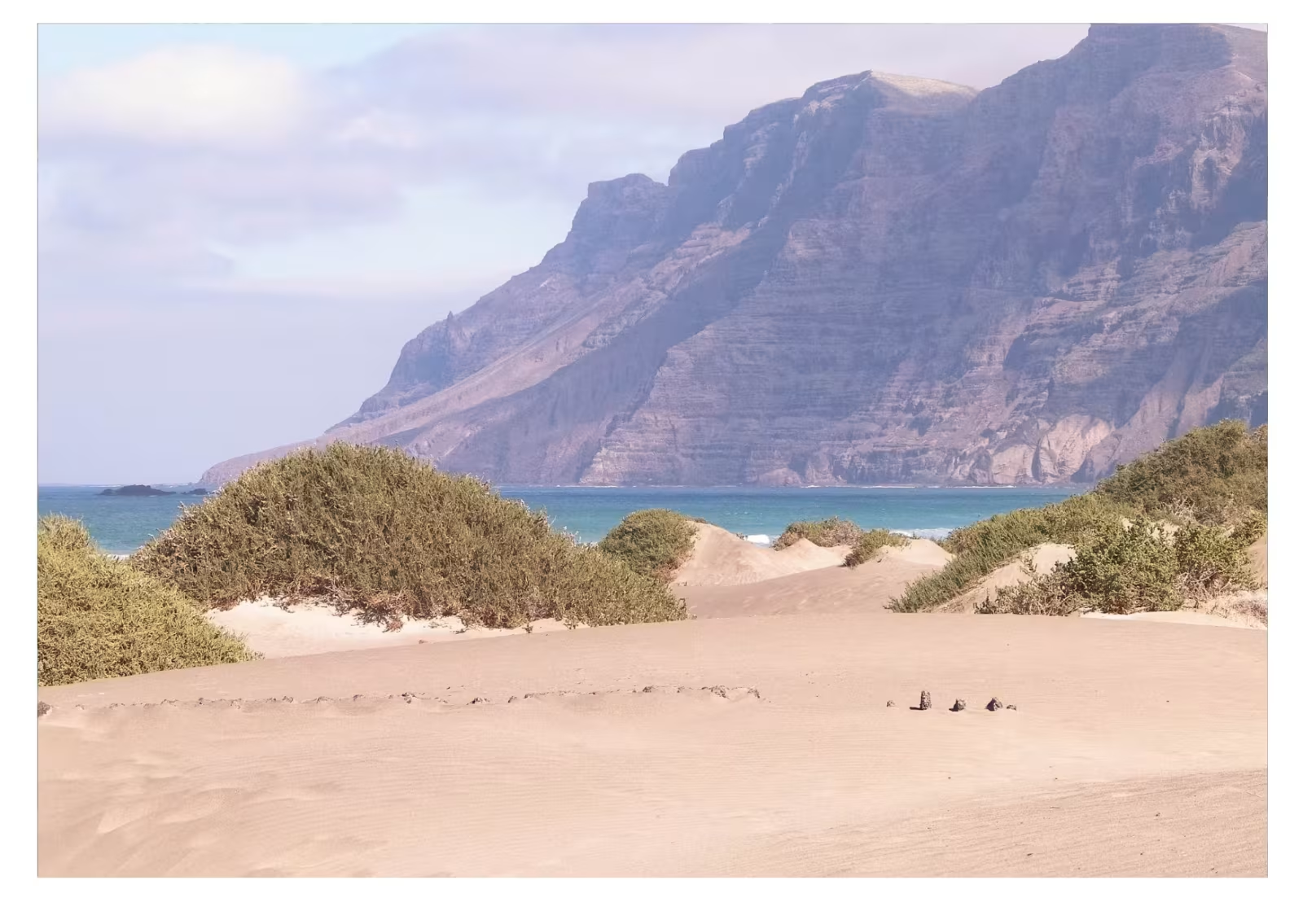

Did You Know? The Sand Crossing Lanzarote Is Made From Ancient Sea Life
When you travel across the pale, sandy landscape between Famara and the centre of Lanzarote, you might think you are looking at an ordinary stretch of desert. But the island's famous El Jable has a rather different story: much of its characteristic sand began life in the sea.
Unlike mineral sand formed mainly by the breakdown of rocks, the sand of El Jable is described by official natural-heritage sources as being of marine, organic origin. It comes from the remains of marine organisms, including fragments of shells and other calcareous material. Over time, waves and currents bring this material towards the coast, and Lanzarote's winds carry the fine grains inland.
The result is a remarkable corridor of wind-blown sand running broadly from Caleta de Famara in the north towards Playa Honda and the Arrecife area in the south-east. Lanzarote Geopark identifies El Jable as an active geological system and one of the island's major geosites.
This unusual sandy landscape has influenced life on Lanzarote as well as its scenery. The fine covering of sand has traditionally been used in agriculture, including the cultivation of sweet potatoes. It also creates a distinctive habitat for wildlife in the open plains between the coast and the island's built-up areas.
So next time you cross El Jable, remember that this pale landscape is not simply a miniature Sahara. It is a moving geological record of marine life, coastal processes and the island's powerful trade winds.
