
FLYING TO OR FROM LANZAROTE? IMPORTANT CHANGES TO THE HIDDEN DISABILITIES SUNFLOWER LANYARD
Travelling through Lanzarote Airport with a hidden disability? There is something important you need to know before your next flight.
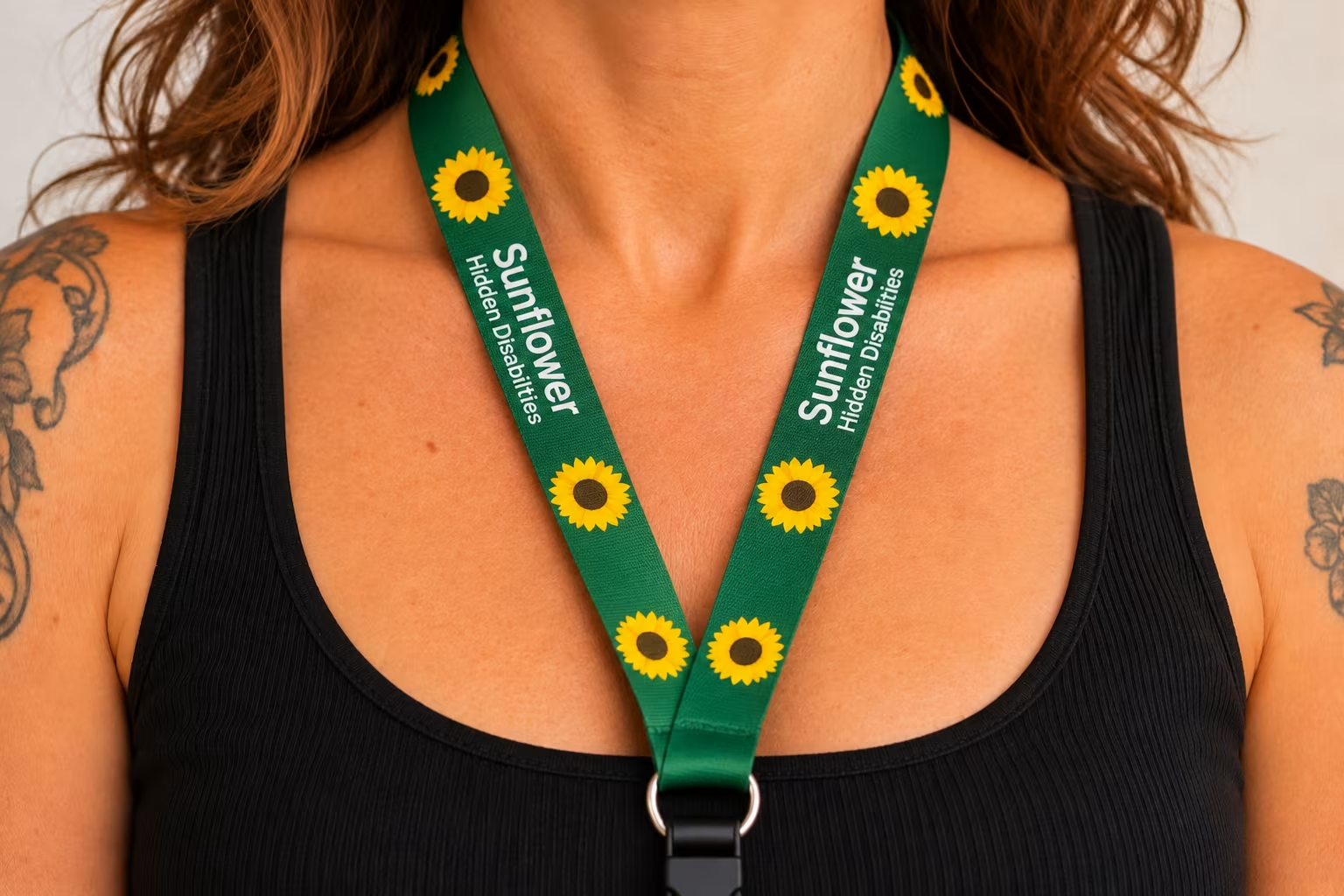
For many years, passengers travelling with a hidden disability have used the familiar green Sunflower Lanyard to discreetly let airport staff know that they might need extra time, patience or understanding.
The lanyard has become particularly familiar among British holidaymakers, including families travelling with children with autism and passengers with other non-visible disabilities.
However, if you are flying into or out of Lanzarote, the arrangements are different from what many UK travellers might expect.
César Manrique-Lanzarote Airport is operated by Aena, which has introduced its own official identification system for passengers with hidden disabilities. The Aena Hidden Disabilities Badge (Distintivo de Discapacidades Invisibles) is the identification passengers should apply for if they wish to benefit from the airport's designated arrangements.
IS THE SUNFLOWER LANYARD STILL ACCEPTED AT LANZAROTE AIRPORT?
Aena recognises the Sunflower Lanyard as an internationally used way of indicating that someone has a hidden disability. However, wearing one alone does not give passengers access to the dedicated family and reduced-mobility security channel.
Instead, Aena encourages passengers to apply for its own official Hidden Disabilities Badge.
This is particularly important for UK travellers who have previously used their Sunflower Lanyard at home and assumed the same arrangements would automatically apply in Spain.
WHAT IS THE AENA HIDDEN DISABILITIES BADGE?
The badge is designed for passengers whose disabilities or conditions are not immediately visible but who may find busy, noisy or stressful airport environments particularly difficult.
This can include people with autism, sensory processing difficulties and other non-visible disabilities.
The badge lets airport staff know that the passenger may need:
- A little extra time to complete airport procedures.
- More understanding and patience from staff.
- Consideration when dealing with stressful or overwhelming situations.
- Access to the dedicated security channel for families and passengers with reduced mobility, where available.
The badge can be shown when needed and can be presented on a mobile phone or as a printed copy.
HOW DO YOU APPLY FOR THE BADGE BEFORE FLYING?
Passengers can request the official badge online through Aena's application system.
1. Visit the official Aena Hidden Disabilities Badge application page.
2. Select the application option and follow the instructions.
3. Enter the passenger's details and relevant flight information.
4. Select the airport: César Manrique-Lanzarote.
5. Complete the application and obtain the badge.
6. Save it to your phone or print a copy to take with you.
The badge is intended for a single use on the day of travel at participating Aena airports. Arrange the appropriate badge for each journey. One member of a travelling family or group needs to carry the badge.
DOES THE BADGE MEAN YOU GET PRIORITY BOARDING OR AIRPORT ASSISTANCE?
No. The Aena Hidden Disabilities Badge helps identify passengers who may need additional understanding and access to the appropriate security arrangements. It does not automatically provide:
- Wheelchair assistance.
- Someone to accompany you through the airport.
- Priority boarding.
- Fast-track security.
- Exemption from normal airport security procedures.
If you or someone travelling with you needs physical assistance, help navigating the airport or support getting onto the aircraft, arrange this separately.
WHAT IF YOU NEED ADDITIONAL ASSISTANCE AT LANZAROTE AIRPORT?
Aena operates a free service called Sin Barreras (Barriers Free) for passengers with reduced mobility or disabilities who need assistance before departure or after arrival.
This service can help passengers from their airport meeting point, through check-in and security, and onwards to their aircraft seat. On arrival, assistance can be provided to the agreed meeting point.
To arrange assistance:
1. Contact your airline or travel agent when booking your flight.
2. Explain exactly what assistance the passenger requires.
3. Ask for the assistance request to be added to the flight booking.
4. Make sure the request is submitted at least 48 hours before departure.
5. Confirm the arrangements with your airline before travelling.
You can also request assistance directly through Aena's Barriers Free service.
If you have booked assistance through Aena, follow the meeting-point and arrival-time instructions in your confirmation. If you have arranged it only through your airline and have not been given a specific appointment, Aena advises arriving at least two and a half hours before departure.
The service is free.
WHAT ABOUT FAMILIES TRAVELLING WITH AUTISTIC CHILDREN?
This information is particularly relevant to families travelling with autistic children or anyone who experiences sensory overload.
Airports can be challenging environments, with announcements, bright lighting, crowds, queues and unfamiliar procedures.
Having the correct identification before arriving can help avoid confusion and make it easier for staff to understand why a passenger might need additional patience or consideration.
Parents should also remember that the Aena badge does not replace any additional assistance their child may require. If physical or personal assistance is needed, this should be arranged separately with the airline and Aena.
WHAT SHOULD LANZAROTE VISITORS REMEMBER?
If you are travelling to or from Lanzarote and you or someone in your party has a hidden disability, it is worth checking the arrangements before you leave home.
The familiar Sunflower Lanyard can still communicate that someone has a hidden disability, but it should not be relied upon for access to Aena's dedicated security arrangements.
Applying for the official Aena Hidden Disabilities Badge in advance is the best way to prepare.
And if you need more than identification, remember to book the free Barriers Free assistance service separately.
A little preparation before travelling can make a considerable difference to someone who finds airports difficult.
USEFUL OFFICIAL LINKS
Aena Hidden Disabilities Badge: