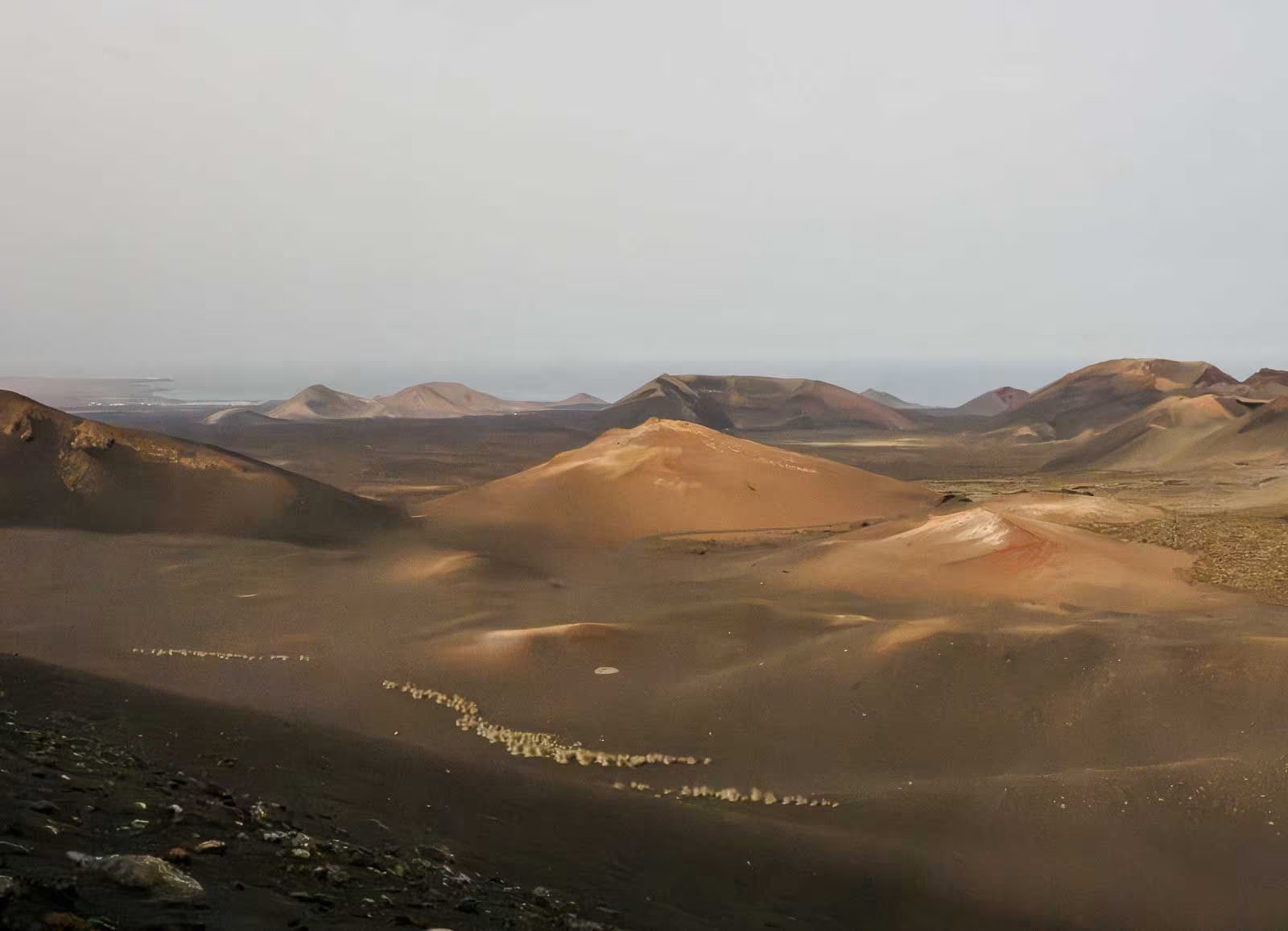

How Many Volcanoes Does Lanzarote Have? How Many Have Erupted and Could They Erupt Again?
Lanzarote is often called the Island of Volcanoes, and for good reason. Its dramatic black lava fields, towering volcanic cones, enormous craters and unusual landscapes are reminders of the powerful natural forces that helped create the island.
But just how many volcanoes does Lanzarote actually have? How many have erupted, when was the last eruption, and are any of them still active?
HOW MANY VOLCANOES ARE THERE IN LANZAROTE?
Lanzarote is home to more than 300 volcanic cones, making it one of the most striking volcanic landscapes in the Canary Islands. These cones formed over millions of years through repeated volcanic activity. The figure refers to volcanic cones, not 300 independently erupting volcanoes; scientists classify formations in different ways, so there is no single universally agreed total.
Well-known formations include Timanfaya and the Montañas del Fuego, Volcán del Cuervo, Montaña Colorada, Caldera Blanca, Montaña Roja, La Corona and Montaña Bermeja.
HOW MANY VOLCANOES HAVE ERUPTED IN LANZAROTE?
Two major eruptive episodes stand out in the island's recorded history: the enormous eruption between 1730 and 1736, and another episode in 1824.
THE 1730–1736 TIMANFAYA ERUPTION
On 1 September 1730, a major eruption began in the area now associated with Timanfaya National Park. It continued for almost six years, making it one of the longest historical volcanic eruptions recorded.
Lava covered large areas, ash and volcanic material transformed the landscape, and settlements were lost beneath the advancing flows. The eruption covered more than 200 square kilometres with volcanic material. Around 30 volcanic cones of varying shapes and sizes were formed during this episode.
THE 1824 ERUPTION
In 1824, another volcanic episode began on 31 July and continued until October. Activity occurred at three formations: Tao, Nuevo del Fuego (also known as Chinero) and Tinguatón.
It was smaller than the eighteenth-century eruption, but remains an important part of Lanzarote's geological history. It was the last confirmed historical eruption on the island.
WHEN WAS THE LAST VOLCANO TO ERUPT IN LANZAROTE?
The last confirmed eruption took place in 1824. That means Lanzarote has had no confirmed historical eruption for more than 200 years. However, volcanoes can remain quiet for long periods before becoming active again. A long period without an eruption does not mean the volcanic system has disappeared.
ARE ANY VOLCANOES IN LANZAROTE STILL ACTIVE?
There is currently no volcano erupting on Lanzarote. However, the island belongs to the volcanically active Canary Islands region. It is more accurate to describe Lanzarote as a dormant volcanic island than to say that all its volcanoes are permanently extinct.
Future activity cannot be ruled out, but there is no reliable way to predict exactly when or where another eruption might happen.
COULD TIMANFAYA ERUPT AGAIN?
Visitors are often surprised to learn that the ground at Timanfaya retains considerable geothermal heat. During demonstrations at the national park, water poured into specially prepared holes quickly turns to steam, while dry vegetation can ignite in other prepared openings.
These demonstrations show residual geothermal heat; they do not mean an eruption is imminent. The possibility of future volcanic activity exists, but there is no reason to assume Timanfaya is about to erupt. Scientists assess possible renewed activity using geological and seismic evidence.
WHY DOES LANZAROTE LOOK SO DIFFERENT FROM OTHER CANARY ISLANDS?
Lanzarote's volcanic history created a landscape of dark lava fields, volcanic cones and solidified rivers of rock. In places, twisted formations and sharp-edged black stone make the lava appear remarkably recent.
Over time, plants and hardy species have gradually reclaimed parts of the landscape. The contrast between black lava, white villages, blue Atlantic waters and green vegetation is part of what makes Lanzarote so distinctive.
The island's volcanic heritage is recognised through its UNESCO Biosphere Reserve status and UNESCO Global Geopark designation.
CAN YOU VISIT LANZAROTE'S VOLCANOES?
Absolutely. Exploring the volcanic landscape is one of the island's great visitor experiences.
TIMANFAYA NATIONAL PARK: The best-known volcanic attraction, with spectacular views of the Montañas del Fuego and demonstrations of geothermal heat.
VOLCÁN DEL CUERVO: A popular walking route where visitors can enter the crater of an old volcano.
MONTAÑA COLORADA: Known for its red colouring and the enormous volcanic bomb nearby.
CALDERA BLANCA: An impressive crater with a walking route and views across surrounding lava fields.
LA CORONA: A large volcanic formation in the north, associated with the volcanic tunnel system that includes Jameos del Agua and Cueva de los Verdes.
Always follow designated paths and respect protected areas. Volcanic landscapes are fragile, and walking on restricted lava formations can cause lasting damage.
LANZAROTE: AN ISLAND BUILT BY VOLCANOES
So, how many volcanoes does Lanzarote have? The simplest answer is more than 300 volcanic cones, although the exact number depends on how individual formations are classified.
The two major documented historical eruptive episodes took place between 1730 and 1736 and in 1824. Around 30 volcanic cones formed during the great Timanfaya eruption alone.
Today, no volcano on Lanzarote is actively erupting. However, the island remains part of a volcanically active region, and scientists cannot rule out future eruptions.
The next time you drive through the centre of Lanzarote, walk across a black lava field or look towards the Montañas del Fuego, remember that you are looking at the remains of an extraordinary geological history. Lanzarote isn't simply an island with a few volcanoes. It is an island whose identity, landscape and history have been shaped by them.