
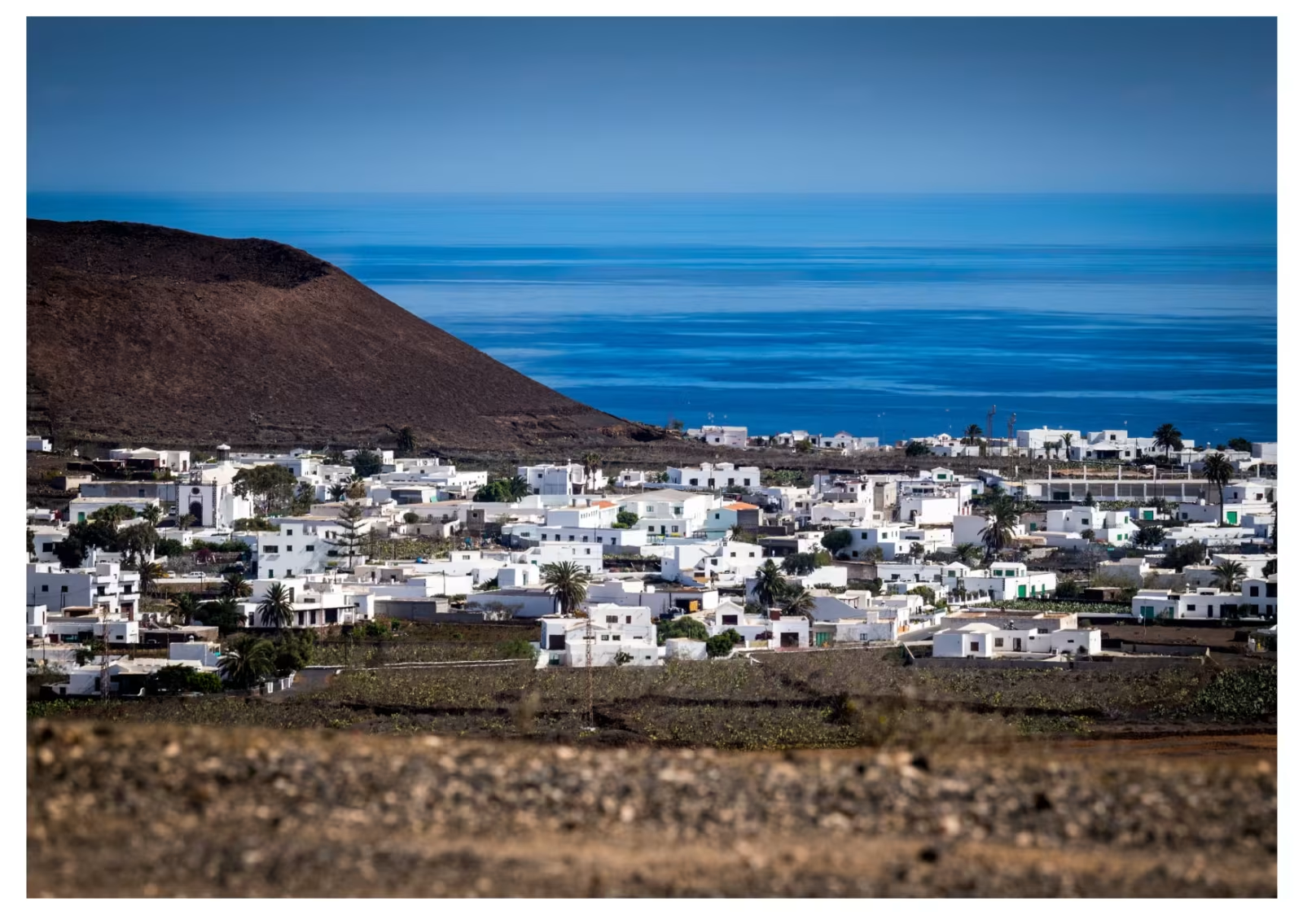

Lanzarote’s 20,000 Empty Homes: Housing Crisis Explained
Lanzarote is famous for its whitewashed villages, volcanic landscapes and thriving tourism industry. But behind the island’s holiday appeal, finding somewhere affordable to live has become a growing concern for local families and workers. New figures have once again raised a difficult question: how can Lanzarote have thousands of homes classified as empty while many people struggle to find a place to rent?
Figures reported on 28 October 2026 put the number of homes classified as empty across Lanzarote at 19,986, out of a total housing stock of 79,092. That is roughly one in every four properties. The figures are based on National Statistics Institute (INE) data using electricity consumption as an indicator of whether a property is occupied. They do not necessarily mean that every home is habitable, available to rent or permanently unused.
Where are the empty homes in Lanzarote?
The figures vary considerably between the island’s seven municipalities. Tías has the highest reported number and proportion, while the picture in the island capital, Arrecife, is quite different.
· Tías: 8,273 homes classified as empty out of 17,243 properties — approximately 48%.
· Yaiza: 3,131 out of 10,360 — around 30%.
· Arrecife: 3,114 out of 25,339 — approximately 12%.
· Teguise: 2,374 homes classified as empty — around 21% of its housing stock.
· San Bartolomé: 1,538 — around 18%.
· Haría: 1,134 — around 29%.
· Tinajo: 422 — around 16%.
These estimates show that the issue is not confined to one part of Lanzarote. Tías and Yaiza, which include popular tourist areas and established residential communities, have particularly high proportions in the reported data. Arrecife has more homes overall, but a smaller share is classified as empty.
Why are so many homes classified as empty?
There is no single explanation. Some properties may be second homes used only for part of the year. Others might need renovation, be tied up in inheritance or legal matters, or be unsuitable for immediate occupation. Some may be used intermittently, while owners may be reluctant to offer a property for a long-term rental because of concerns about costs, maintenance, non-payment or legal uncertainty.
It is important to understand how the figures are calculated. Electricity use is a useful statistical indicator, but it cannot tell the full story of an individual property. A home with very low consumption is not automatically available for a family to move into, and a property without a regular electricity contract may require work before it can be occupied.
The headline figure should therefore be seen as a starting point for investigation, rather than proof that 20,000 ready-to-rent homes are sitting unused.
Why does this matter to Lanzarote residents?
The island relies heavily on tourism, hospitality, construction, retail and other service industries. Those sectors need people who can live within a reasonable distance of their jobs. When rents and purchase prices rise beyond local wages, employers can find it harder to recruit and retain staff, and younger residents may struggle to move out of the family home.
Housing pressure affects more than those looking for a property. It can influence the availability of workers, the stability of local communities and the ability of families to remain in the towns and villages where they have roots.
For visitors, the issue is a reminder that Lanzarote is not just a holiday destination. It is home to a permanent community whose needs must be considered alongside the island’s important tourism economy.
Could empty homes help ease the housing shortage?
Making more existing properties available for long-term residential use could form part of the response, but it would require careful work. Authorities would first need a clearer picture of which homes are genuinely vacant, which are suitable for occupation and what prevents owners from making them available.
Possible approaches include support for renovating properties, clearer guidance for landlords, appropriate safeguards for owners and tenants, and incentives to bring suitable homes into the long-term rental market. Any scheme would need to distinguish between a home that is ready to let and one that needs substantial repairs or has a legitimate reason for being unused.
At the same time, bringing existing properties back into use is not a complete solution on its own. Lanzarote also needs a broader housing strategy that considers affordable rental homes, public housing, planning, infrastructure and the needs of a growing population.
Different figures, different definitions
Readers may see different totals quoted for Lanzarote’s empty homes. This can happen because statistics come from different years, use different definitions or measure occupancy in different ways. Census figures and estimates based on electricity consumption should not automatically be treated as identical. For that reason, the date and methodology behind any figure matter just as much as the headline number.
The latest reported estimate of 19,986 homes gives a useful indication of the scale of the issue, but it should not be interpreted as a list of properties immediately available for residents to rent.
What happens next?
The challenge for Lanzarote is to turn statistics into practical action. Better information about vacant properties, meaningful engagement with owners and a mix of measures to increase affordable housing could help ensure existing homes are used where appropriate.
For residents, the key question is whether these figures will lead to more realistic housing options. For local businesses, access to accommodation is closely linked to the ability to recruit staff. And for the island as a whole, a sustainable future means looking after the people who make Lanzarote a living community, not simply a place to visit.
Lanzarote’s empty-home figures have put the housing debate back in the spotlight. The numbers alone cannot solve the problem, but they underline why the island needs reliable data, practical solutions and a long-term approach to making housing more accessible.
