

Lanzarote's Hidden Underwater Volcano Tunnel Receives Prestigious World Recognition
One of Lanzarote's most extraordinary natural wonders has received international recognition, placing the island's remarkable volcanic history firmly in the global spotlight.
Deep beneath the coastline of northern Lanzarote lies an underwater world that most visitors will never see. The La Corona–La Atlántida volcanic tube system has been included in the third selection of 100 geological heritage sites recognised by the International Union of Geological Sciences (IUGS). Announced on 6 November 2026 in Portugal, the honour recognises places of exceptional importance to understanding Earth's history.
A HIDDEN WORLD BENEATH LANZAROTE
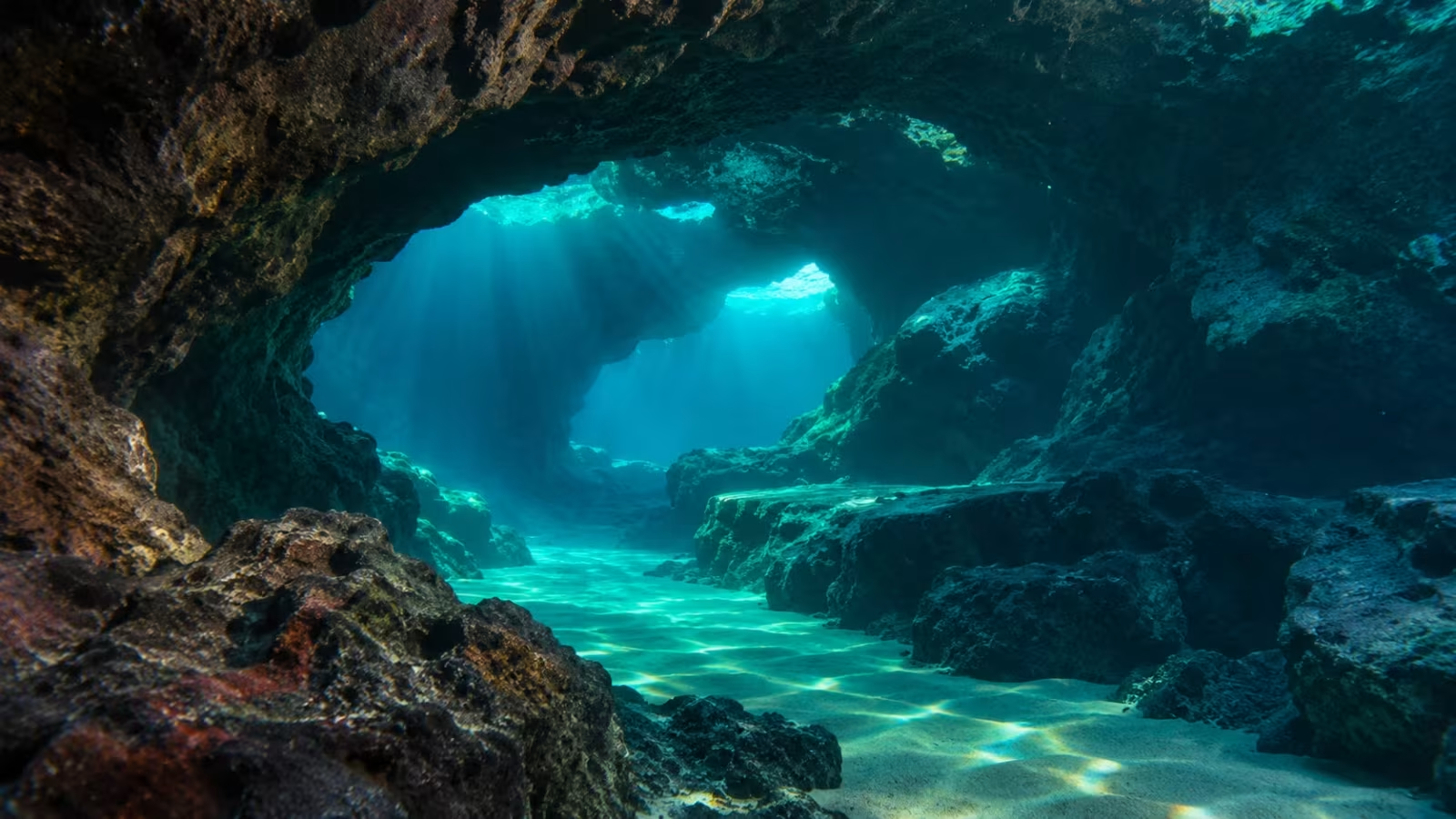
Most holidaymakers know Lanzarote for dramatic lava fields and volcanic mountains, but few realise that beneath its northern coastline lies the world's longest known submerged volcanic lava tube. The Túnel de la Atlántida is part of the much larger La Corona volcanic system. Its underwater section extends approximately 1.6 to 2 kilometres and reaches depths around 64 metres.
It was not originally underwater. During the last Ice Age, sea levels were substantially lower. Flowing lava created tunnels beneath hardened rock. As the climate warmed and oceans rose, seawater flooded the lower passages.
WHY LA ATLÁNTIDA MATTERS
The tunnel provides an extraordinary natural record of volcanic activity, changing sea levels and environmental conditions over thousands of years. Sediments and mineral deposits offer clues to the geological evolution of Lanzarote and the Atlantic. Its unusual underground marine ecosystem also makes it valuable for biological research.
TWO FAMOUS ATTRACTIONS ARE PART OF THE SAME SYSTEM
Cueva de los Verdes allows visitors to walk through part of this ancient volcanic network, seeing its spectacular rock formations and chambers. Nearby Jameos del Agua combines natural volcanic scenery with César Manrique's artistic vision and contains a lagoon known for tiny blind albino crabs. The submerged Túnel de la Atlántida itself is not open to ordinary tourist visits and remains a specialist scientific research environment.
THE RESEARCH BEHIND THE RECOGNITION
The recognition follows extensive work by researchers from Spain's National University of Distance Education (UNED), alongside the Lanzarote and Chinijo Archipelago UNESCO Global Geopark. Professor Javier Lario Gómez led the proposal. Scientific expeditions, underwater exploration and the analysis of preserved geological deposits have contributed to understanding how the coastline changed since the last Ice Age.
WHAT IT MEANS FOR LANZAROTE
For residents, this is another reason to celebrate the island's natural heritage. For tourists, it adds a fascinating new dimension to a destination known for much more than beaches and sunshine. The IUGS honour is distinct from UNESCO World Heritage status: Lanzarote and the Chinijo Archipelago already belong to the UNESCO Global Geopark network.
ANOTHER REASON TO EXPLORE NORTHERN LANZAROTE
A visit to Cueva de los Verdes and Jameos del Agua offers a memorable introduction to the lava tube. Nearby Volcán de La Corona and the dramatic northern coastline reveal the forces that created it. Protecting these delicate underground environments will help preserve their scientific value for future generations.
From Timanfaya's lava landscapes to La Atlántida's hidden underwater passages, Lanzarote continues to reveal remarkable chapters of Earth's history. Beneath this much-loved holiday island lies a world of geological importance that is finally receiving the international attention it deserves.
The Image used in this Artilce is an AI Generated Image for Illustration Purposes Only.
