

Lanzarote’s New Undersea Fibre-Optic Link
What the 553km Atlántica Project Means for the Island
A major telecommunications project has reached an important milestone in Lanzarote, with the marine deployment of the new Atlántica submarine fibre-optic system now completed.
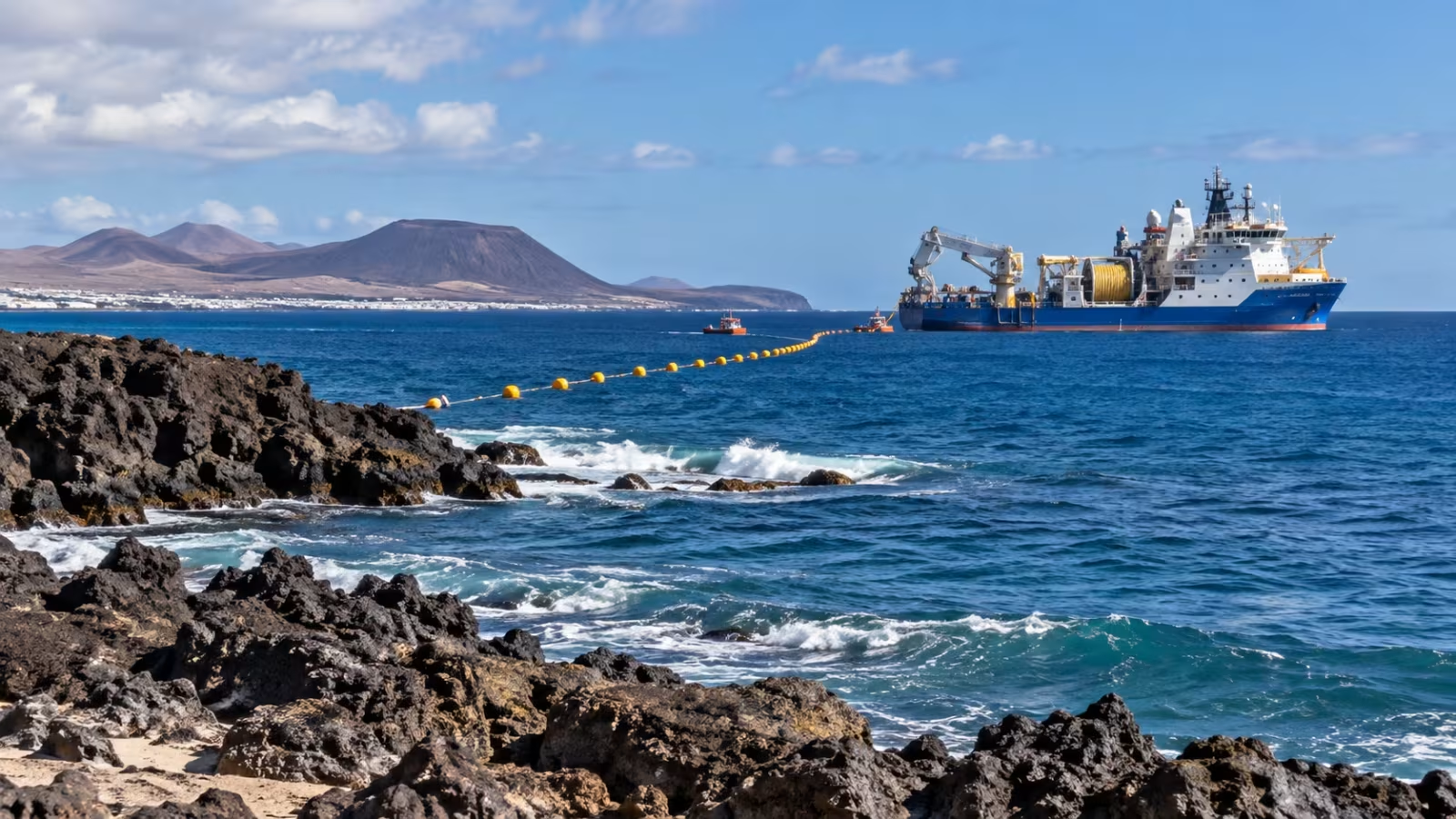
Canalink has finished laying 553 kilometres of submarine telecommunications cable connecting the eastern Canary Islands. The final planned shore-end operation for the marine-laying phase took place at Playa Blanca in Lanzarote, where the cable-laying vessel Teliri completed its work.
What is the Atlántica project?
Atlántica is a new submarine fibre-optic network designed to strengthen digital connectivity between Gran Canaria, Fuerteventura and Lanzarote.
The project uses two complementary routes. One will connect northern Gran Canaria with Corralejo in Fuerteventura and Playa Blanca in Lanzarote. The second route links the eastern side of Gran Canaria with Puerto del Rosario in Fuerteventura and Playa Honda in Lanzarote, with an additional branch towards Costa Calma.
Together, the new routes are intended to create a more resilient network, with additional capacity and alternative connections between the islands.
Why does this matter to Lanzarote?
For people living in Lanzarote, and for the many businesses that depend on reliable internet connections, the project is mainly about strengthening the infrastructure behind everyday digital services.
Tourism is particularly dependent on communications. Hotels, holiday rentals, restaurants, excursion companies, online booking systems and payment services all rely on dependable connectivity. Residents increasingly depend on fast internet for work, education, entertainment and access to public services.
The new submarine cable system is therefore not something visitors will necessarily notice when they arrive in Lanzarote, but it forms part of the infrastructure supporting the island's digital economy.
Will it mean faster internet immediately?
Not necessarily.
Although the 553 kilometres of submarine cable have now been deployed, the project is not yet simply a case of switching on a new internet connection.
Further terrestrial work is required to connect the submarine cables to the wider fibre-optic network. This includes remaining shore-end works, underground ducts and work at the Cable Landing Stations (CLS) at the project's landing points.
Canalink has said the network will move towards completion once these land-based elements are finished, with service planned for the end of 2026.
Where does the cable come ashore in Lanzarote?
The project includes two important landing locations on Lanzarote: Playa Blanca in the municipality of Yaiza and Playa Honda in the municipality of San Bartolomé.
The wider system also includes landing points in Gran Canaria and Fuerteventura, creating the interconnected network between the three eastern islands.
The Playa Blanca connection is particularly notable because the latest marine deployment has now reached this southern Lanzarote location.
A €34 million digital infrastructure project
The Atlántica project has a total budget of around €34 million. More than €23 million is being provided through the European Union's Connecting Europe Facility (CEF Digital), which supports strategic digital infrastructure.
The investment is aimed at replacing or complementing older submarine cable infrastructure and providing greater capacity and redundancy for the islands.
Why submarine cables are important
When people think about internet infrastructure, they often picture mobile phone masts, fibre-optic cabinets or data centres. However, submarine cables are a crucial part of the global communications system.
For an island such as Lanzarote, connections beneath the sea are especially important because they provide links between the islands and onward connections to wider telecommunications networks.
Having alternative routes can also make a network more resilient. If one route experiences a problem, additional routes can help reduce the impact on communications, although no network can be completely immune from outages.
What happens next?
The marine-laying phase carried out by Teliri is now complete, but the wider Atlántica project still has work to finish.
The next stage involves connecting the submarine infrastructure to the land-based network. Canalink's plans include remaining shore-end works, underground ducting, work at the cable landing stations and other technical infrastructure.
The European Commission's project information gives the overall project a completion period running through September 2026, while Canalink has indicated that the new system is expected to enter service towards the end of 2026.
What does this mean for tourists visiting Lanzarote?
There is no need for visitors to do anything differently. The new cable is part of the island's underlying telecommunications infrastructure rather than a tourist attraction.
However, reliable digital connectivity matters to modern tourism. Visitors use internet connections for everything from booking restaurants and excursions to using maps, streaming entertainment, communicating with family and accessing travel information.
For Lanzarote's tourism industry, stronger telecommunications infrastructure can also support businesses that increasingly rely on online bookings, digital payments, cloud services and communication with customers.
For an island that welcomes millions of visitors and has a growing digital economy, this is an important piece of infrastructure — even if most people never realise it is there.
An AI Generated Image has been used in this Article.
