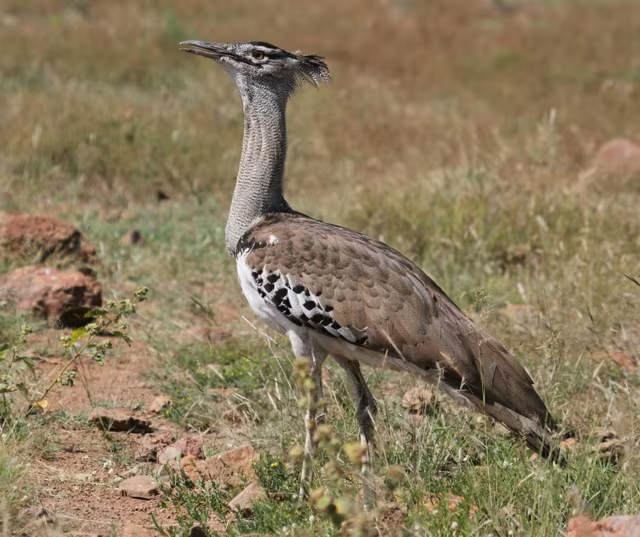

New Study Highlights Threats Facing Lanzarote’s Rare Hubara Bustard as Conservationists Urge Protection
A new scientific study is drawing attention to the challenges facing one of Lanzarote’s most unique and endangered wildlife species — the Canarian Hubara Bustard.
The research, published this week, highlights growing concerns about the survival of the rare bird, which is found only in the eastern Canary Islands and is considered one of the most important species in the archipelago’s natural heritage.
Researchers say predators, habitat disturbance and human activity continue to place pressure on Hubara populations, prompting renewed calls for conservation measures across Lanzarote and neighbouring islands.
What Is the Hubara Bustard?
The Canarian Hubara Bustard is a unique subspecies of the African Houbara Bustard and is found only in Lanzarote, Fuerteventura, La Graciosa and a handful of nearby islets.
Known for its camouflage colouring, long legs and distinctive courtship displays, the bird is perfectly adapted to the arid landscapes that make Lanzarote so distinctive. It inhabits semi-desert plains, sandy areas known locally as jable, and sparsely vegetated countryside away from heavily urbanised zones.
Although many visitors are unaware of its existence, the Hubara is considered one of the most iconic bird species in the Canary Islands and is a major attraction for birdwatchers and wildlife photographers visiting the region.
New Research Raises Concerns
According to the latest study, ravens appear to be one of the main predators affecting newly hatched Hubara chicks. Researchers monitored hundreds of artificial nests across the island and found that a significant number were targeted by ravens. The findings suggest that chick survival may be one of the key challenges facing the species.
Other scientific studies have also identified threats including habitat loss, collisions with power lines, road traffic, illegal hunting and increasing pressure from human activity in sensitive natural areas. Researchers estimate that dozens of Hubaras die each year across the eastern Canary Islands due to human-related causes.
Conservation experts warn that protecting breeding habitats and reducing disturbance will be essential to ensuring the long-term survival of the species.
Why the Species Matters to Lanzarote
Lanzarote is currently considered one of the most important strongholds for the Canarian Hubara population.
Scientific surveys estimate that the island supports one of the largest remaining populations of the species, making Lanzarote a key location for conservation efforts. Experts say the bird’s survival is closely linked to the preservation of the island’s unique volcanic and semi-desert landscapes.
The Hubara also plays an important role in Lanzarote’s growing eco-tourism sector. Wildlife enthusiasts, birdwatchers and photographers travel from across Europe each year hoping to spot the elusive bird in its natural habitat.
Where Can Visitors Responsibly See Hubaras in Lanzarote?
While sightings are never guaranteed, Hubaras are most often associated with open rural landscapes in areas such as the Famara region, the plains around Soo and Muñique, and parts of central and northern Lanzarote where natural habitats remain relatively undisturbed.
Visitors are encouraged to observe wildlife from a distance, remain on designated paths and avoid approaching nesting areas during breeding season. Responsible tourism is considered one of the most effective ways visitors can help protect Lanzarote’s fragile ecosystems while still enjoying the island’s remarkable biodiversity.
Lanzarote’s Natural Heritage Remains a Major Attraction
While Lanzarote is famous for its beaches, volcanoes and year-round sunshine, the island is also home to a surprising variety of rare wildlife found nowhere else on Earth.
Conservation groups hope that studies like this latest research project will help raise awareness of the Hubara Bustard and encourage both residents and visitors to support efforts aimed at protecting one of the Canary Islands’ most extraordinary birds for future generations.