
Pablo Álvarez: Why Lanzarote Is Helping Prepare Spain’s Astronauts for the Moon
Lanzarote’s volcanic landscape has once again become a training ground for future space exploration, with Spanish ESA astronaut Pablo Álvarez Fernández completing an important part of his geological training on the island.
For visitors and residents, it is a fascinating reminder that the extraordinary landscapes we see around Lanzarote are not only important to the island’s tourism and natural heritage. They are also valuable to scientists and astronauts preparing for future missions to the Moon and Mars.
Why are astronauts training in Lanzarote?
The answer lies beneath Lanzarote’s dramatic scenery.
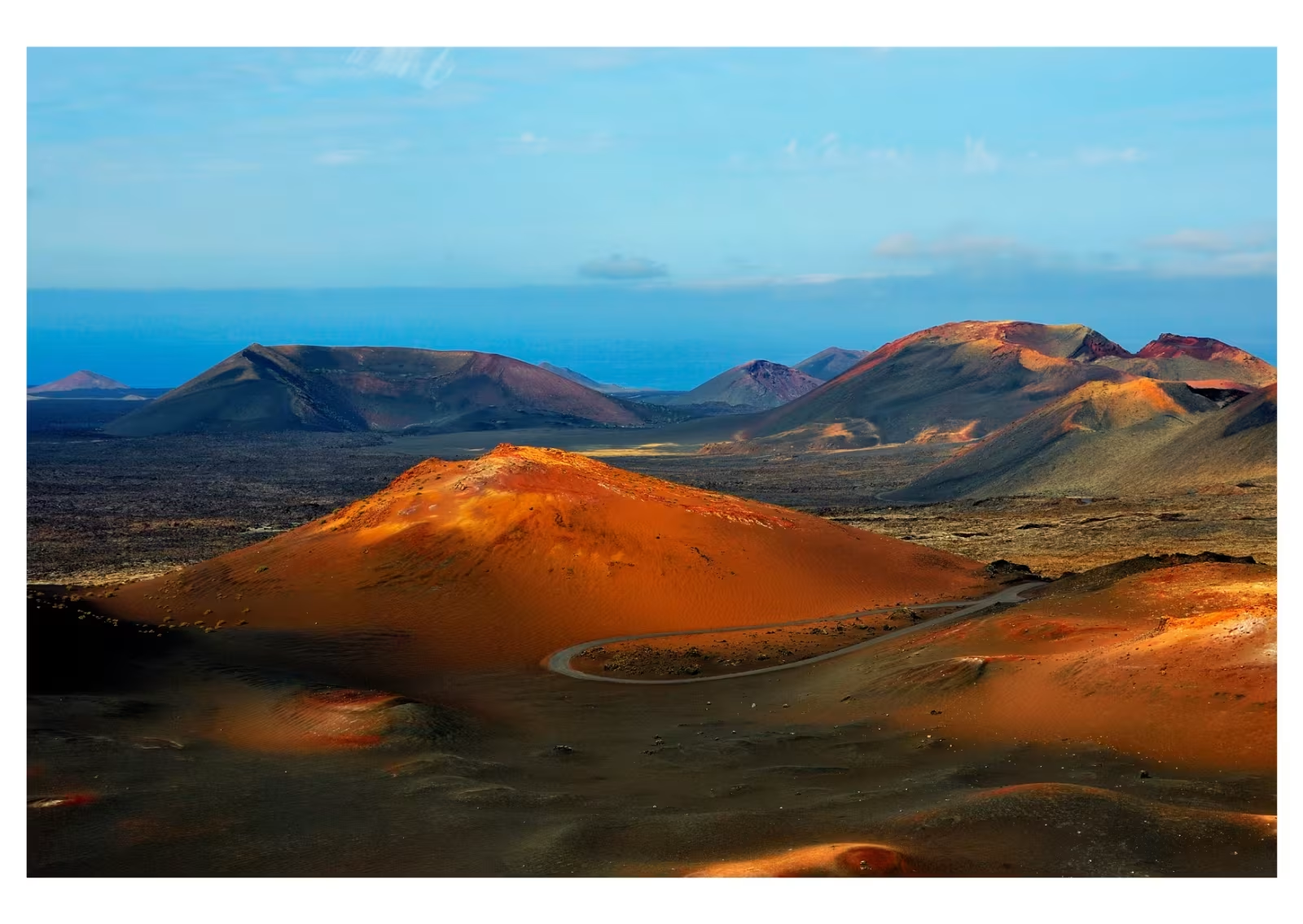
The island is famous for its volcanic terrain, including extensive areas of basaltic rock and relatively young lava formations. These environments provide astronauts with a practical setting in which to learn how to read a planetary landscape.
The European Space Agency’s PANGAEA programme is designed to teach astronauts the geological and scientific skills they may need when exploring another world. Lanzarote formed the final stage of a three-week training programme in 2026, following earlier training in Italy and Germany.
During the Lanzarote phase, astronauts worked in volcanic areas to interpret lava formations, study geological features, identify interesting rocks and practise selecting samples that could have scientific value.
Pablo Álvarez and the Lanzarote connection
Pablo Álvarez Fernández was selected as an ESA astronaut candidate in 2022 and completed his basic astronaut training before receiving astronaut certification in April 2024.
In September 2026, he joined the latest PANGAEA training in Lanzarote alongside NASA astronaut Jasmin Moghbeli and JAXA astronaut Kimiya Yui.
Their work included field exercises around Lanzarote’s volcanic landscapes. At Caldera Blanca, for example, the astronauts studied lava flows and investigated evidence of interactions between water and volcanic activity. These are important geological questions when scientists consider how planetary environments developed and whether conditions may once have been suitable for life.
The training is much more than simply walking across volcanic terrain. Astronauts are taught to observe rocks systematically, describe geological formations, collect suitable samples and communicate their findings with scientists on Earth.
In other words, Lanzarote is being used as a realistic outdoor classroom for planetary exploration.
What makes Lanzarote useful for Moon training?
At first glance, Lanzarote and the Moon may seem worlds apart. However, some of the island’s volcanic terrain provides useful comparisons.
Large areas of dark basaltic rock and extensive lava fields can resemble geological environments that astronauts may encounter during lunar exploration. The lack of dense vegetation across much of Lanzarote also leaves volcanic structures clearly exposed, making it easier to study the relationship between different eruptions and lava flows.
ESA has highlighted the similarities between some Lanzarote lava landscapes and the basaltic plains known as lunar maria.
The comparison does not mean Lanzarote is literally the same as the Moon. Instead, it gives astronauts an accessible Earth-based environment in which they can practise techniques before facing the much more demanding conditions of a space mission.
Could Pablo Álvarez go to the Moon?
That remains uncertain.
Álvarez has said that there is still a great deal of work to be done before a Spanish astronaut reaches the Moon. He hopes to make his first spaceflight to the International Space Station before 2030 and has not suggested that he has been assigned to a lunar mission.
Completing geological training in Lanzarote does not mean that an astronaut has been selected for a particular Moon mission.
Nevertheless, the skills being developed are directly relevant to the future of lunar and planetary exploration. NASA’s Artemis programme is working towards a return of humans to the Moon, while ESA is contributing technology, science and astronaut expertise to international exploration efforts.
Lanzarote has already played a role in this preparation for years.
A decade of astronaut training in Lanzarote
The 2026 PANGAEA programme marked the tenth anniversary of the training programme’s connection with Lanzarote. According to ESA, around 30 astronauts have taken part in training on the island over that period.
That makes Lanzarote an unusual location in the world of space exploration. Tourists may arrive to see volcanic landscapes, beaches and the island’s unique scenery, while scientists and astronauts see something else: a natural laboratory for understanding planetary geology.
The island’s importance also reflects the wider value of Lanzarote’s volcanic heritage. Places such as the Volcanes Natural Park and the surrounding lava fields allow visitors to see geological processes preserved across the landscape.
For Lanzarote residents, there is another interesting side to the story. The same terrain that forms part of everyday island life is being used to help prepare people for one of humanity’s most ambitious scientific challenges.
What can tourists learn from the astronaut training?
You do not need to be an astronaut to appreciate the geology of Lanzarote.
Visitors exploring the island can see lava flows, volcanic cones, craters and different types of volcanic rock across many areas. Guided volcanic walks, visitor centres and official protected landscapes can help explain how Lanzarote was formed.
The astronaut training also offers a useful reminder to look at the island differently. Instead of seeing every black lava field simply as a dramatic photograph, visitors can consider how scientists identify different eruptions, recognise changes in lava, examine rock textures and reconstruct what happened here thousands of years ago.
That scientific perspective can add another dimension to a Lanzarote holiday.
Lanzarote: an island with a role in space exploration
The arrival of astronauts for PANGAEA is another chapter in Lanzarote’s long relationship with volcanic science and planetary exploration.
The island cannot reproduce the Moon’s gravity, vacuum, radiation or extreme temperatures. What it can provide is something equally valuable for training: real volcanic geology on Earth, where astronauts can safely develop observation, fieldwork and scientific decision-making skills.
So, when you stand among Lanzarote’s lava fields, you are looking at much more than an unusual holiday landscape. You are looking at a geological environment that is helping scientists and astronauts prepare for the next generation of exploration beyond Earth.
And while there is no guarantee that Pablo Álvarez will one day walk on the Moon, his recent training in Lanzarote shows just how closely the island’s ancient volcanic landscape is connected to the future of space exploration.