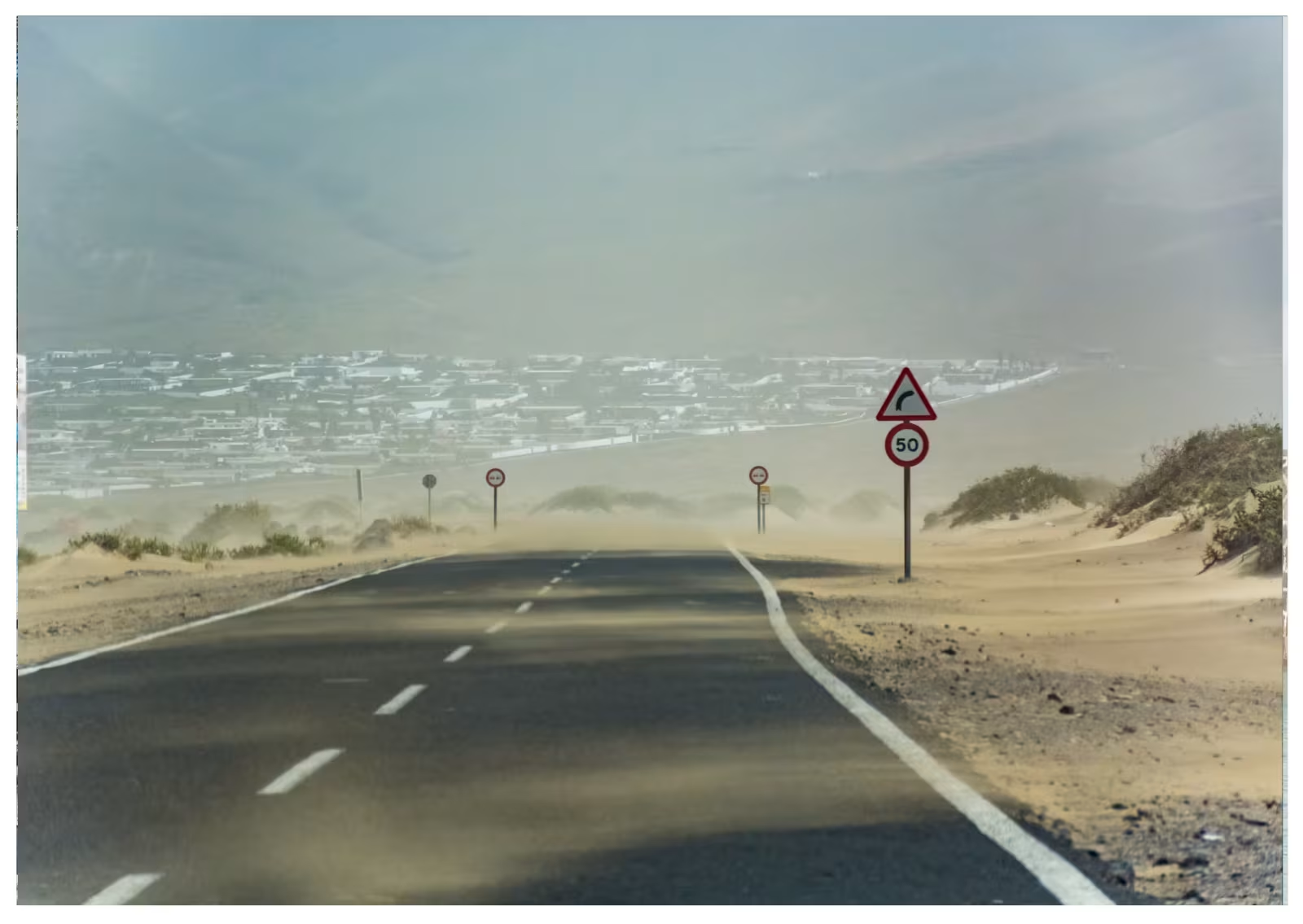

Calima in Lanzarote: Have We Had More Saharan Dust Than Usual in 2026?
Another calima? Why Lanzarote seems to be seeing so much Saharan dust this year
If you live in Lanzarote, or have visited the island regularly over the years, you might have found yourself asking the same question recently: Have we always had this much calima, or does it seem to be happening more often this year?
From hazy skies and dusty cars to reduced visibility and that familiar layer of fine sand settling on balconies, terraces and outdoor furniture, calima has been a recurring feature of Lanzarote’s weather throughout 2026.
And the figures make interesting reading.
According to historical calima data published by Calima Canarias, Lanzarote recorded approximately 102 calima days between 1 January and 25 October 2026. That is a considerable number of days affected by airborne dust, although it does not mean the island has experienced 102 separate episodes. Some periods of calima can last several days before conditions improve.
So, is calima actually becoming more frequent, or are we simply noticing it more? Let’s look at the figures and what they tell us.
How many calima days has Lanzarote had in 2026?
The available historical data provides a month-by-month breakdown of calima days recorded in Lanzarote during 2026.
Month
Calima days
January
6
February
13
March
15
April
13
May
9
June
6
July
4
August
4
September
21
October, to the 25th
11
Total
102
Source: Calima Canarias’ historical Lanzarote data, updated in October 2026.
September stands out particularly strongly, with 21 calima days recorded. February, March and April were also notable, while the summer months of July and August had fewer recorded calima days in this dataset.
These figures refer to days affected by calima, not necessarily days when the dust was thick enough to turn the sky orange or seriously affect visibility. Light and elevated dust can be present without producing the dramatic conditions many people associate with the phenomenon.
The figures also depend on the dataset’s method of identifying calima, so they should be understood as a useful indication of the pattern rather than a definitive count of every visible dust event on the island.
Why does Lanzarote get so much calima?
Calima is a familiar feature of life in the Canary Islands because of their location in the Atlantic, relatively close to the Sahara Desert in North Africa.
When atmospheric conditions are right, winds carry fine mineral dust from Africa across the ocean. This dust can travel considerable distances, reaching Lanzarote and neighbouring Fuerteventura particularly readily.
The effects can vary considerably. Sometimes the dust remains high in the atmosphere, leaving a slightly hazy sky. On other occasions, it reaches lower levels, reducing visibility and leaving a noticeable film of dust on cars, windows, garden furniture and outdoor dining areas.
This is why two calima episodes can feel completely different. One might barely affect a holiday, while another can leave the sky looking yellow or beige and make being outdoors uncomfortable.
Why has calima felt so persistent in 2026?
The figures show that dust has affected Lanzarote across much of the year, rather than being confined to a single season.
February, March and April brought repeated periods of calima, and September was particularly notable. With 21 recorded calima days, it was the most affected month in the January-to-October figures.
There is also a difference between counting separate episodes and counting individual days. Several days of dusty conditions may belong to one prolonged episode, followed by a short break before another arrives.
That can create the impression that calima is constantly returning, especially when the sky has only just cleared and another plume of Saharan dust begins moving towards the islands.
However, one year of figures is not enough to establish that calima is becoming more frequent because of climate change. To determine whether there is a genuine long-term increase, scientists would need to compare consistent measurements across many years, taking account of dust concentrations, duration and weather patterns.
For now, the 2026 figures support the observation that Lanzarote has had a substantial number of calima-affected days this year. They do not, by themselves, prove that the long-term frequency is increasing.
Is calima dangerous for residents and tourists?
For many people, calima is mainly an inconvenience. It can spoil the view, make outdoor furniture dirty and leave the atmosphere feeling unpleasant.
However, airborne dust contains fine particles that can irritate the eyes, nose and throat. Higher concentrations can affect air quality and may cause or worsen respiratory symptoms.
People with asthma or other respiratory conditions, older people, children and those with existing health problems should take particular care when dust levels are elevated.
During a significant calima episode in Lanzarote, sensible precautions include:
- Avoiding strenuous outdoor exercise when air quality is poor.
- Keeping windows and doors closed when dust levels are high, where practical.
- Drinking enough water and taking breaks indoors.
- Following official Canary Islands Government and AEMET alerts.
- Seeking medical advice if breathing difficulties or other concerning symptoms develop.
Visitors should not automatically assume their holiday will be ruined by a calima forecast. Conditions can change, and the intensity of the dust varies from one episode to another.
Does calima mean hot weather in Lanzarote?
Calima is often associated with warmer weather, but the two are not exactly the same thing.
Certain atmospheric conditions can bring hot air and Saharan dust towards the Canary Islands together. This is why a calima forecast sometimes arrives alongside rising temperatures and warnings about heat.
However, calima does not always produce extreme heat, and hot weather does not always mean calima is present. The temperature, wind direction, dust concentration and visibility all depend on the weather system involved.
For anyone planning a holiday in Lanzarote, it is worth checking both the temperature forecast and any air-quality or calima warnings rather than relying on one forecast alone.
Is calima becoming more common in Lanzarote?
This is the question many long-term residents will be asking.
The available data for 2026 certainly makes it understandable why people feel they have seen an awful lot of dust this year. With approximately 102 calima days recorded by 25 October, the phenomenon has affected a substantial part of the calendar.
But there is an important distinction between having a dust-heavy year and proving that calima is becoming more frequent over the long term.
Lanzarote has experienced major calima events in previous years, too. The February 2020 supercalima, for example, was an exceptionally severe event affecting the Canary Islands, demonstrating that dramatic episodes are not exclusive to 2026.
To establish whether the island is experiencing a genuine upward trend, we would need to compare equivalent annual records using the same measurement methods. Changes in how dust is monitored and reported can also influence the figures.
For the moment, the most accurate conclusion is that 2026 has brought repeated calima conditions to Lanzarote, with September particularly affected, but the available figures alone cannot confirm a long-term increase.
How does 2026 compare with previous years?
Although many Lanzarote residents feel that calima has been particularly persistent in 2026, the historical figures suggest the picture is more complicated. Data from Calima Canarias recorded approximately 102 calima days between January and 25 October, compared with around 106 days expected by that point based on its historical pattern. Its estimated annual average for 2023–2026 is approximately 143 calima days. Looking at the wider Canary Islands, the 2025–2026 calima season recorded 71 dust-affected episode-days, fewer than the 81–87 days recorded in the three preceding seasons. However, the number of days alone does not tell the whole story, as some episodes can be considerably more intense than others. While 2026 has certainly brought repeated dusty spells to Lanzarote, the available evidence does not yet establish that it has been an exceptionally bad year compared with the past, or that calima is becoming more frequent over the long term.
Living with Lanzarote’s calima
For those who live in Lanzarote, calima is nothing new. It is part of the island’s climate and a consequence of its geographical position close to North Africa.
Nevertheless, when it seems to arrive again and again, it is natural to wonder whether something has changed.
The 2026 figures provide an interesting answer: Lanzarote has recorded around 102 calima days by late October, with particularly frequent dust conditions in September and repeated episodes earlier in the year.
Whether this represents a lasting change in the island’s weather remains a question for longer-term research. But there is little doubt that calima has been a noticeable part of Lanzarote life this year.
For residents cleaning the dust from their terraces and holidaymakers hoping for clear blue skies, the best advice remains the same: keep an eye on the forecast, take extra care when air quality deteriorates and remember that a calima episode does not necessarily last.
Does it feel as though we’ve had more calima than usual in 2026, or do you remember other years when the dust seemed just as persistent?