
Canalink Begins Work on Major Submarine Fibre-Optic Cable Linking Lanzarote, Fuerteventura and Gran Canaria
Lanzarote is taking another important step towards a more connected future, as work has officially begun on a new submarine fibre-optic cable system that will strengthen digital links between Lanzarote, Fuerteventura and Gran Canaria.
The project, led by Canalink, represents a €34 million investment, with €23 million provided through the European Union’s Connecting Europe Facility (CEF Digital) programme. The aim is to create a faster, more resilient communications network for the eastern Canary Islands that will support businesses, public services and the growing tourism industry.
What Is Being Built?
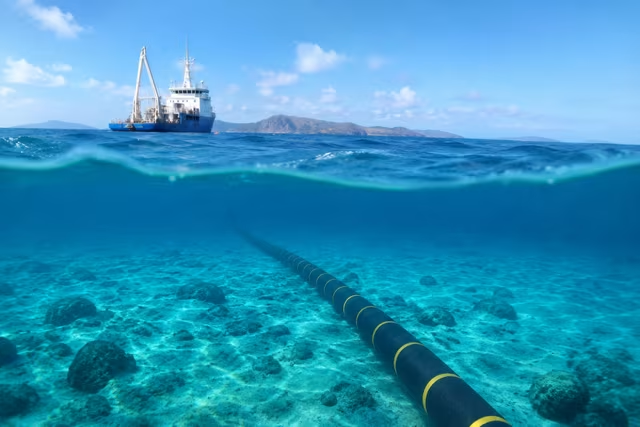
Rather than relying on a single connection between the islands, engineers are installing 553 kilometres of submarine fibre-optic cable across the Atlantic seabed.
The network has been designed with two separate cable routes, creating a ring that allows internet and communications services to continue operating even if one cable is damaged or requires maintenance.
The planned routes include:
- A connection from Ojos de Garza (Gran Canaria) to Puerto del Rosario (Fuerteventura) before continuing to Playa Honda (Lanzarote).
- A second route linking Barranco de Tenoya (Gran Canaria) with Corralejo (Fuerteventura) and Playa Blanca (Lanzarote).
This dual-route design significantly improves reliability and reduces the risk of widespread outages.
Why It Matters for Lanzarote
Although most residents and visitors will never see the cable, it could have a noticeable impact over the coming years.
Improved digital infrastructure means:
- More reliable internet connections.
- Greater capacity for businesses and remote workers.
- Better support for cloud computing and digital services.
- Increased resilience if one communications route experiences problems.
- Stronger infrastructure for government, healthcare and education services.
For a destination like Lanzarote, where thousands of visitors rely on internet access while on holiday and an increasing number of people work remotely from the island, dependable connectivity is becoming just as important as roads, ports and airports.
Protecting the Marine Environment
Canalink says the installation work is being carried out under strict environmental guidelines.
Before construction began, marine surveys were completed to determine the safest routes for the cables, and installation is taking place under regional, national and European environmental regulations designed to minimise disruption to marine habitats.
Looking Ahead
The new cable forms part of Canalink’s wider “Ring” project, which is intended to modernise communications across the eastern Canary Islands.
As demand for faster internet, cloud services, artificial intelligence and digital business continues to grow, projects like this are designed to ensure that Lanzarote has the infrastructure needed for decades to come.
For both residents and tourists, it is another example of the island investing not only in transport and tourism, but also in the technology that increasingly underpins everyday life.
An AI Generated Image has been used for this Article
