
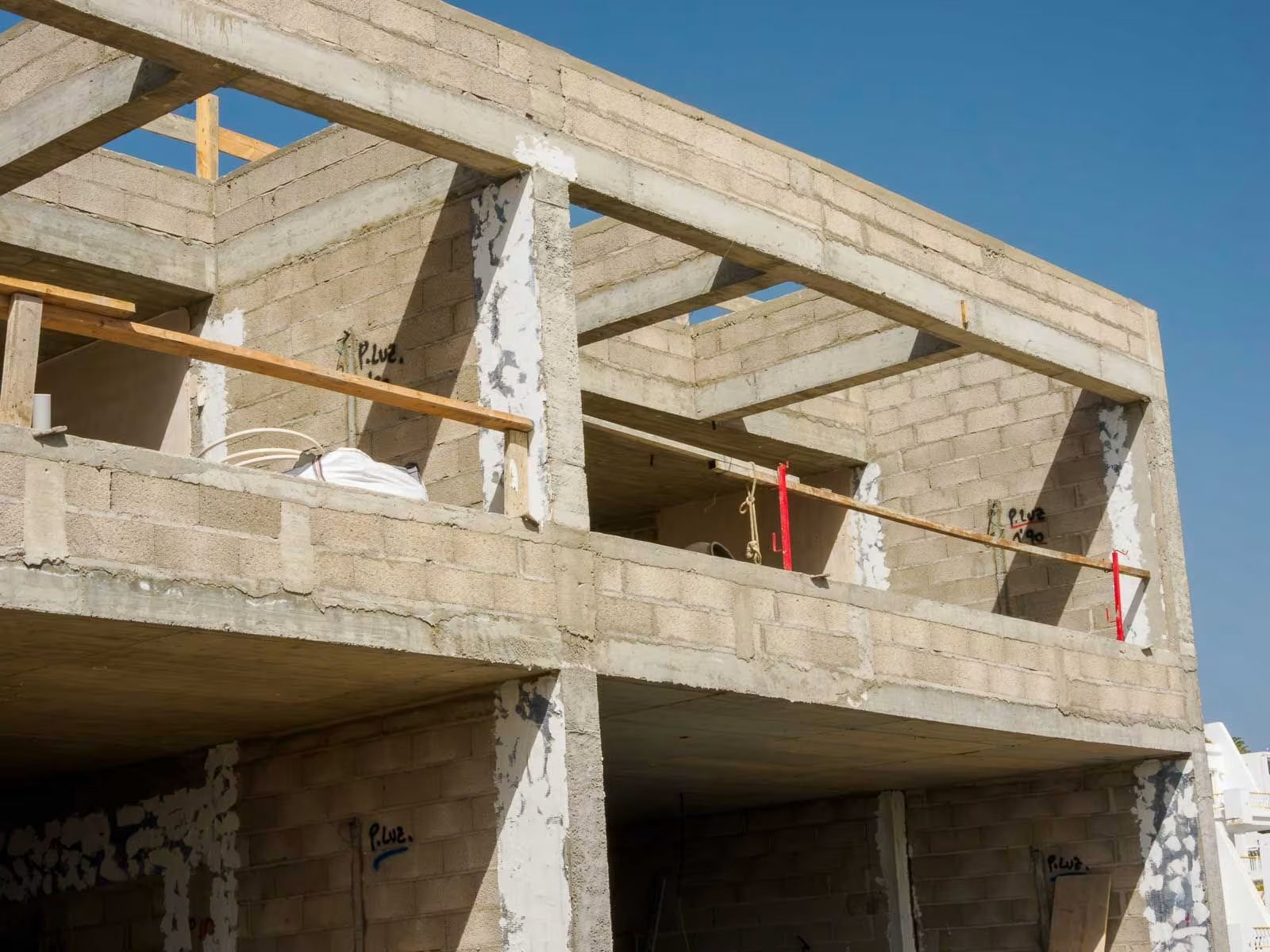

Canary Islands Housing Construction Surges in 2026 – What Could It Mean for Lanzarote?
The Canary Islands are seeing a significant increase in new residential construction, with the latest official figures showing that the number of homes covered by building-work visas rose sharply during the first four months of 2026.
For people living in Lanzarote, or anyone considering buying, renting or investing in property on the island, the figures are worth watching. They do not mean that thousands of new homes are about to appear overnight, but they do point to a stronger pipeline of residential projects moving towards construction.
What are the latest figures?
According to data from Spain’s Ministry of Transport and Sustainable Mobility, 2,287 homes were covered by building-work visas in the Canary Islands between January and April 2026. That compares with 1,710 during the same period in 2025 – an increase of 577 homes, or 33.7%.
The increase is even more pronounced when looking specifically at new-build housing. New construction accounted for 2,087 homes in the first four months of 2026, compared with 1,528 a year earlier. That represents growth of 36.6%.
The biggest change has been in apartment blocks and other forms of collective housing. A total of 1,796 homes in collective developments were covered by visas between January and April, compared with 1,162 in the same period of 2025. That is 634 additional homes and a year-on-year increase of 54.6%.
Why does this matter?
A building-work visa is an important indicator of future construction activity, but it should not be confused with a finished property or a home that is already available to buy or rent.
In simple terms, these figures show that more residential projects are progressing through the technical and administrative stages needed before construction. Some will take considerable time to complete.
That means the rise is best viewed as a sign of increased housing supply in the pipeline rather than an immediate solution to the Canary Islands' housing shortage.
The figures also follow a strong 2025. The Canary Islands recorded 5,604 homes covered by building-work visas last year, up 34% from 4,176 in 2024.
Could more homes be built in the Canary Islands this year?
The Canary Islands Government says that, if the pace seen during the first four months continues, the archipelago could finish 2026 with around 7,500 homes covered by building-work visas.
That would be roughly 1,900 more than in 2025.
It is a projection rather than a guaranteed outcome, so the final number will depend on how construction projects progress during the rest of the year.
What about Lanzarote?
The regional figures cover all eight Canary Islands, so they do not mean that 54.6% more homes are being built in Lanzarote specifically.
However, Lanzarote is already seeing major activity around public and affordable housing.
Earlier this year, the Canary Islands Government outlined plans involving around 700 public homes on Lanzarote, including homes already under construction, planned developments and properties acquired for the public housing stock.
In Arrecife, the Los Geranios development is particularly significant. Three blocks containing 201 protected homes are being developed, while a further 200 homes are planned for a later phase. There are also plans for 46 affordable-rental homes in Triana and a further 136 homes in Yaiza.
For Lanzarote residents struggling with high rents or limited availability, increasing the supply of homes will be an important part of addressing the island's housing pressures.
Could this affect the Lanzarote property market?
It is too early to say that the increase in construction will lead to lower property prices or rents.
Lanzarote has its own property market, influenced by tourism, population growth, second-home demand, available land, planning restrictions, construction costs and the amount of housing available for long-term residents.
More new homes could eventually give buyers and renters more choice. However, there is normally a considerable time gap between a project receiving the necessary approvals and completed homes reaching the market.
The type of homes being built also matters. A large increase in new apartments does not automatically mean that all of those properties will become affordable long-term rental homes.
For anyone looking at buying property in Lanzarote, the figures are therefore encouraging as an indication that residential construction is becoming more active, but they are not a reason to expect a sudden change in the market.
What is the Canary Islands Government doing?
Housing has become one of the major issues facing the Canary Islands, and the regional government has been working on measures intended to increase supply and speed up the process of getting homes built.
A new Canary Islands law approved in 2026 is designed to simplify some planning and licensing procedures, make better use of available land and encourage the development of protected and affordable housing.
The legislation includes measures intended to reduce administrative delays and make it easier to bring suitable land and unfinished developments into residential use, while retaining planning, safety and habitability controls.
For residents, the hope is straightforward: more homes, delivered more quickly, should eventually mean greater choice and less pressure on the existing housing stock.
For visitors to Lanzarote, does this change anything?
For most tourists, the immediate impact will be limited. The new-build figures are primarily about residential housing rather than hotel capacity or holiday accommodation.
Lanzarote remains a destination where tourism and residential life exist side by side, and housing availability is an issue that affects the people who live and work here as well as those who visit.
For anyone considering moving to Lanzarote, buying a home, becoming a long-term resident or looking at the Lanzarote property market, however, the construction figures are another important development to keep an eye on.
The bigger picture
The latest figures suggest that the Canary Islands are moving into a period of stronger residential construction after years in which housing supply has struggled to keep pace with demand.
The key question now is not simply how many homes receive building-work visas, but how many are actually completed, how quickly they reach the market and how many are accessible to local families and workers.
For Lanzarote, where housing affordability and availability are already major concerns, increasing the supply of homes could make a real difference – but it will take time.
For now, the message from the latest figures is that more residential projects are moving forward. Whether that eventually translates into noticeably more affordable homes on Lanzarote is something residents will be watching closely.
