
CANARY ISLANDS VOLCANIC ERUPTION RISK: WHAT THE NEW 77.69% FIGURE REALLY MEANS
A striking new figure in Spain’s volcanic-risk planning has put the Canary Islands back in the headlines. A new national civil-protection guideline gives the archipelago a 77.69% probability of experiencing at least one volcanic eruption over a 50-year period.
For people living in Lanzarote, or planning a holiday here, the important question is what that number actually tells us — and what it does not.
THE 77.69% FIGURE EXPLAINED
The estimate appears in Spain’s updated Basic Guideline for Civil Protection Planning for Volcanic Risk, approved by the Council of Ministers on 6 October 2026 and published in Spain’s Official State Gazette (Boletín Oficial del Estado) on 10 October. The new guidance replaces the previous framework dating from 1996 and sets out a national basis for planning for volcanic emergencies.
The 77.69% figure refers to the chance of at least one eruption somewhere in the Canary Islands during a 50-year period. It is a long-term statistical estimate used to help identify areas that need formal volcanic emergency planning. It is not a forecast that an eruption is about to happen.
It also does not mean every island has a 77.69% chance of erupting. The figure applies to the archipelago as a whole, and volcanic conditions differ between islands.
DOES THIS MEAN A VOLCANO WILL ERUPT SOON?
No. A probability covering half a century cannot tell scientists the date, location or size of a future eruption. It should not be read as a countdown, nor does it mean an eruption is inevitable within a particular year.
Volcano monitoring looks at several kinds of evidence, including seismic activity, ground deformation and volcanic gases. Scientists assess these signals together to understand whether a volcano’s behaviour is changing. The long-term risk figure in the new national guidance is a planning measure, not an alert that an eruption is imminent.
WHY THE CANARY ISLANDS HAVE VOLCANIC RISK
The Canary Islands were formed by volcanic processes and remain an active volcanic region. Recent eruptions include the 1971 eruption of Teneguía on La Palma, the underwater eruption near El Hierro in 2011, and the Cumbre Vieja eruption on La Palma in 2021, which continued for around three months.
These events are reminders that volcanic activity is part of the islands’ geology. They are also why monitoring, clear public information and well-practised emergency plans matter.
WHAT DOES IT MEAN FOR LANZAROTE?
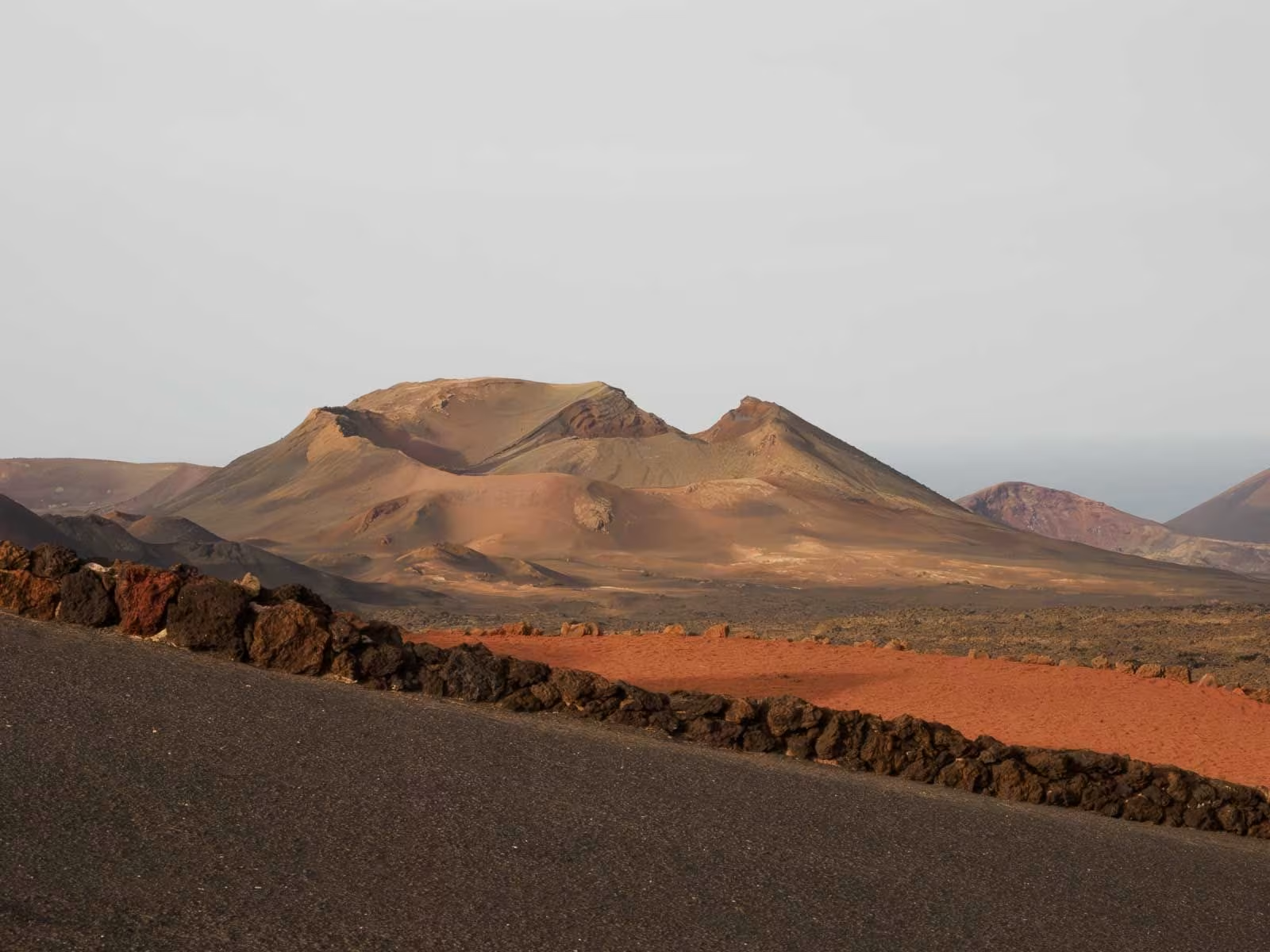
Lanzarote’s landscape is one of its defining attractions, from the lava fields and volcanic cones of Timanfaya National Park to the dramatic terrain around La Geria. The island’s best-known historic eruptions took place during the 18th century, particularly between 1730 and 1736, with another major episode in 1824.
However, the new 77.69% estimate does not identify Lanzarote as the location of a future eruption, and it should not be interpreted as an island-specific prediction. Risk varies across the archipelago and must be assessed using local geological evidence and monitoring.
HOW ARE AUTHORITIES PREPARING?
The purpose of volcanic-risk planning is to make sure that public bodies know how to coordinate if an emergency develops. Plans can cover monitoring and alert procedures, communication with the public, evacuation arrangements, access controls and coordination between local, island, regional and national services.
The updated national guidance provides a framework for that preparation. The practical response to any specific volcanic situation would depend on scientific assessment and the circumstances at the time.
THE BOTTOM LINE
The new 77.69% figure is an important long-term planning statistic, not a prediction of an imminent eruption in Lanzarote. It reflects the volcanic nature of the Canary Islands and the need for careful preparation across the archipelago. For residents and visitors, the sensible approach is to stay informed through official channels while continuing to enjoy Lanzarote responsibly.
For anyone searching for information about Canary Islands volcano risk, Lanzarote volcanic activity or whether it is safe to visit Lanzarote, the key distinction is between long-term geological risk and a current emergency alert. They are not the same thing.