
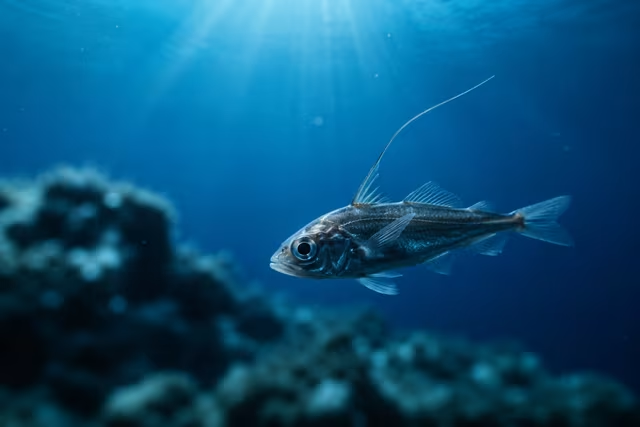

First-Ever Discovery of Rare Antenna Cod in Canary Islands Waters Expands Marine Science Knowledge
The waters surrounding the Canary Islands continue to surprise scientists. Researchers have confirmed the first recorded presence of the rare antenna codlet (Bregmaceros atlanticus) in Spanish waters after studying three specimens found around the archipelago. The discovery is providing valuable new insights into the biodiversity of the Atlantic Ocean and could even reshape what scientists know about where this elusive species lives.
A Significant Discovery for the Canary Islands
The research was led by the Spanish Institute of Oceanography (IEO-CSIC) in collaboration with the University of Vigo and the University of La Laguna. Their findings have now been published in the scientific journal Marine Biodiversity.
The study focused on three antenna codlet specimens discovered in Canary Islands waters:
- Two were collected during an oceanographic research expedition off the coast of El Hierro in 2012.
- A third specimen was found washed ashore on a beach in southern Tenerife in 2024, marking the first documented stranding of this species anywhere in the world.
What Is an Antenna Codlet?
Despite its name, the antenna codlet is not the same as the Atlantic cod commonly found in northern European waters.
It is a small deep-water pelagic fish that lives in the mesopelagic zone—the twilight region of the ocean that extends from around 200 to 1,000 metres below the surface. These depths receive very little sunlight, making them one of the least explored habitats on Earth.
The fish gets its common name from its distinctive elongated dorsal fin ray, which resembles a slender antenna.
Why This Matters
Until now, scientists believed the antenna codlet inhabited tropical waters across the Atlantic, Indian and Pacific Oceans.
However, after examining the Canary Islands specimens using both traditional anatomy and modern DNA sequencing, researchers now believe the species may actually be restricted to the Atlantic Ocean. If further studies confirm this, it would represent an important change in our understanding of the fish’s global distribution.
The genetic analysis also revealed several distinct genetic groups within the Bregmaceros genus, suggesting there may be additional species yet to be formally identified by scientists.
Why the Canary Islands Are So Important
The Canary Islands sit where warm and cool ocean currents meet, creating one of Europe’s richest marine ecosystems. These unique conditions support an incredible variety of marine life, from whales and dolphins to deep-sea fish rarely encountered elsewhere.
Researchers believe the 2024 Tenerife stranding may have been caused by oceanographic processes unique to the islands, where currents and rotating ocean eddies can occasionally carry deep-water species towards the coast.
What It Means for Lanzarote
Although the discovered specimens came from El Hierro and Tenerife rather than Lanzarote, the finding highlights the remarkable biodiversity found throughout the Canary Islands’ surrounding Atlantic waters.
For residents, divers, anglers and visitors exploring Lanzarote’s coastline, it serves as another reminder that the islands’ marine environment still holds many mysteries waiting to be uncovered. Every new scientific discovery helps researchers better understand and protect the delicate ecosystems that make the Canary Islands one of Europe’s most fascinating marine destinations.
