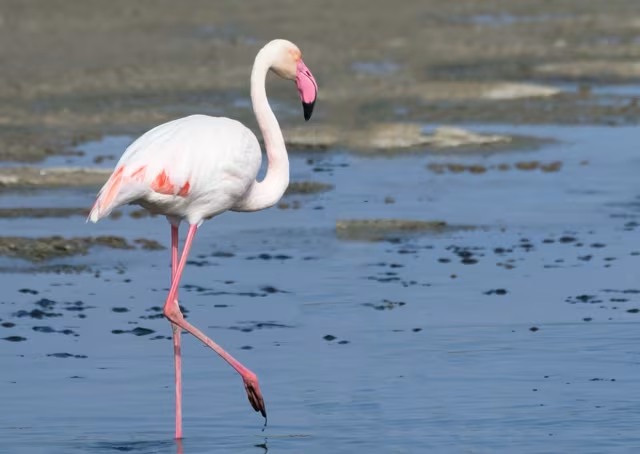

Flamingos Return to Janubio: A Rare and Beautiful Visitor to Lanzarote
Visitors and residents at Salinas de Janubio have recently been treated to a special sight: three flamingos, including two juveniles and one adult, have been spotted enjoying the shallow waters of Lanzarote’s most famous salt flats.
The sighting, shared by Salinas de Janubio on social media, has generated excitement among birdwatchers, photographers and nature lovers across the island. While flamingos are not completely unknown in Lanzarote, their appearance is still considered a rare and special event.
Why Are Flamingos Visiting Janubio?
The birds spotted are believed to be Greater Flamingos (Phoenicopterus roseus), the largest flamingo species found in Europe, Africa and parts of Asia.
Flamingos are attracted to shallow saltwater lagoons and wetlands where they can feed on tiny crustaceans, algae and microorganisms. Janubio provides the perfect habitat, with its mix of saline waters, rich food sources and relatively undisturbed environment.
The famous pink colour of flamingos comes from pigments found in the food they eat, particularly small crustaceans such as brine shrimp that thrive in salty environments like Janubio.
Is This a Rare Sighting?
Yes, although perhaps not as rare as many people think.
Flamingos are not resident birds in Lanzarote and they do not breed on the island. Unlike species that can be seen throughout the year, flamingos usually appear only as occasional visitors.
However, Janubio has become known as one of the most likely places in the Canary Islands to attract wandering flamingos. The lagoon’s unique conditions make it an ideal stopover point for birds travelling between Europe and Africa.
Over the past decade, there have been several recorded sightings of flamingos at Janubio.
Are They Lost or Off Course?
Probably not.
One of the most common questions people ask when flamingos appear in Lanzarote is whether they have become lost. In most cases, the answer is no.
Young flamingos are known for travelling widely and exploring new areas. Juvenile birds can wander hundreds or even thousands of kilometres from their usual routes while searching for suitable feeding grounds.
The presence of two young birds alongside an adult suggests this may simply be a small group taking advantage of Janubio’s excellent feeding conditions.
The Canary Islands sit on an important migratory route between Europe and Africa, making occasional visits from species such as flamingos a natural part of the islands’ ecology.
Rather than being lost, these birds are more likely making a planned stopover before continuing their journey.
Why Janubio Is So Important
Most visitors know Salinas de Janubio for its striking salt pans, colourful lagoons and spectacular volcanic scenery. However, it is also one of Lanzarote’s most important wildlife habitats.
The area regularly attracts migratory birds including herons, stilts, sandpipers, plovers, ducks and other wetland species. Its ecological importance has made it one of the island’s key birdwatching locations.
Every flamingo visit highlights the value of preserving this unique environment, which provides a vital refuge for wildlife in the middle of the Atlantic Ocean.
A Special Moment for Lanzarote
Whether the three flamingos remain at Janubio for a few days or several weeks is impossible to predict.
What is certain is that their arrival offers a wonderful reminder that Lanzarote’s natural treasures extend far beyond its beaches and volcanoes.
For residents, it is a rare opportunity to witness one of the world’s most iconic birds close to home. For visitors, it is another reason to explore one of Lanzarote’s most beautiful and environmentally important locations.
If you’re planning a visit to Salinas de Janubio in the coming days, keep your binoculars handy. You may be lucky enough to catch a glimpse of these elegant pink visitors before they continue their Atlantic adventure.