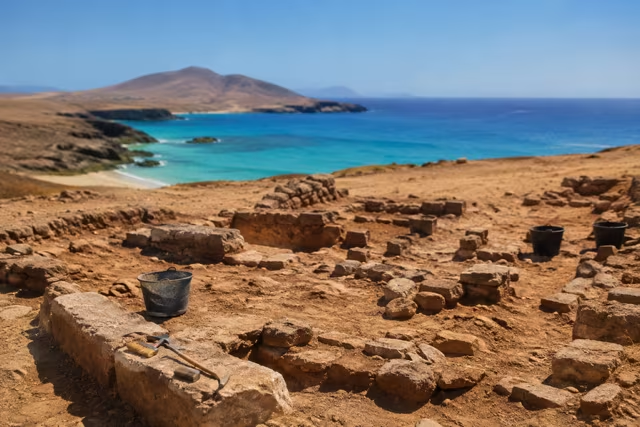

Historic Rubicón Excavation to Continue After Discovery of 17 Human Skeletons
Archaeological work at one of Lanzarote’s most important historical sites is set to continue later this year following the remarkable discovery of 17 human skeletons at the ancient settlement of San Marcial del Rubicón, near Papagayo in the municipality of Yaiza.
The excavation, which has already transformed historians’ understanding of the island’s early colonial history, has secured €200,000 in funding from the Canary Islands Government, ensuring that research will continue for at least another two years. The next excavation campaign is expected to begin on 21 September.
A Window into Lanzarote’s Earliest European Settlement
Located close to the stunning beaches of Papagayo, the archaeological site of San Marcial del Rubicón is widely recognised as the first European settlement in the Canary Islands.
The settlement was established in 1402 by the Norman explorers Jean de Béthencourt and Gadifer de La Salle, marking the beginning of European colonisation in the archipelago. The area also became home to the Canary Islands’ first cathedral, making it one of the most historically significant locations on the island.
17 Skeletons Reveal Life in the 15th Century
Archaeologists have now uncovered the remains of 17 individuals, all believed to date back to the 15th century.
Previous scientific studies carried out on the remains have revealed valuable information about the people who once lived at Rubicón, including:
- Their approximate age and sex.
- Their health and lifestyle.
- Evidence of physically demanding daily work.
- Their genetic origins, showing a mix of European and North African ancestry.
- Rare medical conditions preserved within the skeletons.
Researchers say every new discovery helps build a clearer picture of what life was like during the earliest years of European settlement in Lanzarote.
Plans for a Future Archaeological Park
The long-term ambition is not only to continue excavating the site but also to develop it into an archaeological park where both residents and visitors can learn about this fascinating chapter of Lanzarote’s history.
Officials from the Canary Islands Government, Yaiza Town Hall and the universities involved in the project believe the discoveries are of international historical importance and will continue supporting the research.
Why It Matters to Visitors
While many people visit Papagayo for its crystal-clear waters and beautiful beaches, few realise they are just a short distance from one of the Canary Islands’ most important archaeological sites.
Although the excavation itself is not generally open as a tourist attraction, the ongoing research is helping to preserve Lanzarote’s rich cultural heritage for future generations. As the project progresses, it could become an even more significant attraction for visitors interested in history, archaeology and the origins of the Canary Islands.