
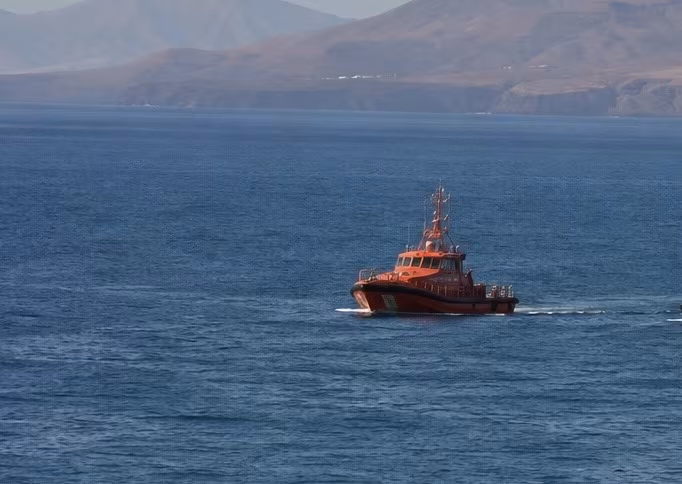

Hundreds Arrive in Lanzarote as Multiple Boat Operations Take Place
Lanzarote has once again seen a significant number of arrivals by sea, with rescue teams assisting hundreds of people in a series of boat operations around the island.
According to reports from Spanish news agencies and maritime rescue services, 185 people were rescued from three boats during the early hours of Thursday, September 24, with the Guardamar Urania involved in bringing those rescued safely to Arrecife.
The three boats were located approximately 98 kilometres northeast of Arrecife before the people on board were taken to the port in Lanzarote.
A Busy Period for Lanzarote
The three rescue operations formed part of a much larger period of arrivals.
Local reports said that eight boats reached Lanzarote in less than 24 hours, with more than 450 people involved across the arrivals. Four boats arrived during Wednesday and another four during the early hours of Thursday.
The concentration of arrivals created additional pressure at Lanzarote's Centro de Atención Temporal de Extranjeros (CATE) in Arrecife.
Emergency Services Respond
The operations require coordination between Salvamento Marítimo, Guardia Civil, Policía Nacional, emergency services and humanitarian organisations.
The maritime rescue teams' primary role is to locate boats in distress and bring those on board to safety. Once people reach Lanzarote, further procedures take place, including medical assessment where required, identification and arrangements for reception and onward transfer.
What Happens When Boats Reach Lanzarote?
People rescued at sea may require medical attention following what can be a long and difficult Atlantic crossing. Those who are well enough to travel are subsequently processed by the relevant authorities.
Following the initial procedures, people may enter Spain’s humanitarian reception system or another immigration or asylum procedure, depending on their circumstances.
Receiving humanitarian assistance does not mean that someone has automatically been granted asylum or permanent residency in Spain. Emergency assistance and legal immigration status are two separate matters.
People who enter the state reception system are generally transferred to other accommodation within the Canary Islands or to mainland Spain. Spain’s Ministry of Inclusion reported that its state reception system transferred around 20,500 people from the Canary Islands to mainland Spain during 2025, illustrating the role that transfers can play in managing reception capacity.
The situation continues to be monitored despite a decrease in numbers
The latest arrivals are another reminder of the important role played by Salvamento Marítimo and Lanzarote's emergency services in responding to people found at sea, arrival numbers have decreased by 55% in 2026 but the Atlantic Route is still active and closely monitored.
