
Lanzarote´s Hidden Water World: Why Scientist Are Watching Underground Ecosystems
Lanzarote is famous for its volcanic landscapes, beaches and spectacular coastline, but beneath the island lies another world that is far less visible to visitors and residents: a network of groundwater habitats connected to lava tubes, wells, caves, coastal pools and other underground environments.
A new scientific study is drawing attention to these ecosystems and to the way human activity can influence the microscopic life living in Lanzarote’s groundwater. The research does not mean that tourists should be worried about the island’s normal drinking-water supply. Instead, it highlights an important environmental issue: protecting Lanzarote’s groundwater is also essential for protecting the island’s remarkable biodiversity.
What did the scientists discover?
Researchers studied bacterial communities in 19 different groundwater-related locations around Lanzarote. The sites included volcanic caves, wells, coastal anchialine pools, saltworks and other groundwater environments.
The research, published in Microbial Ecology, examined the communities of microorganisms living in these contrasting habitats. Scientists found that the bacterial communities differed considerably depending on the environment, with factors such as salinity, hydrology and local conditions helping to shape which organisms were present.
Some bacteria associated in scientific literature with human activity or potential pathogenicity were also detected. The researchers identified 43 bacterial genera that included potentially pathogenic groups, with Legionella, Vibrio, Psychrobacter and Brevundimonas among the more abundant genera reported.
Importantly, the study does NOT provide a health assessment of Lanzarote’s drinking water and does not establish that the detected bacteria are causing illness. It also cannot identify a specific source of contamination. The findings are better understood as an environmental warning and a reason for more detailed monitoring.
Why are Lanzarote’s underground waters so important?
Groundwater has played an important role in Lanzarote for generations. It has been used for water supply and agriculture and remains connected to a variety of ecosystems across the island.
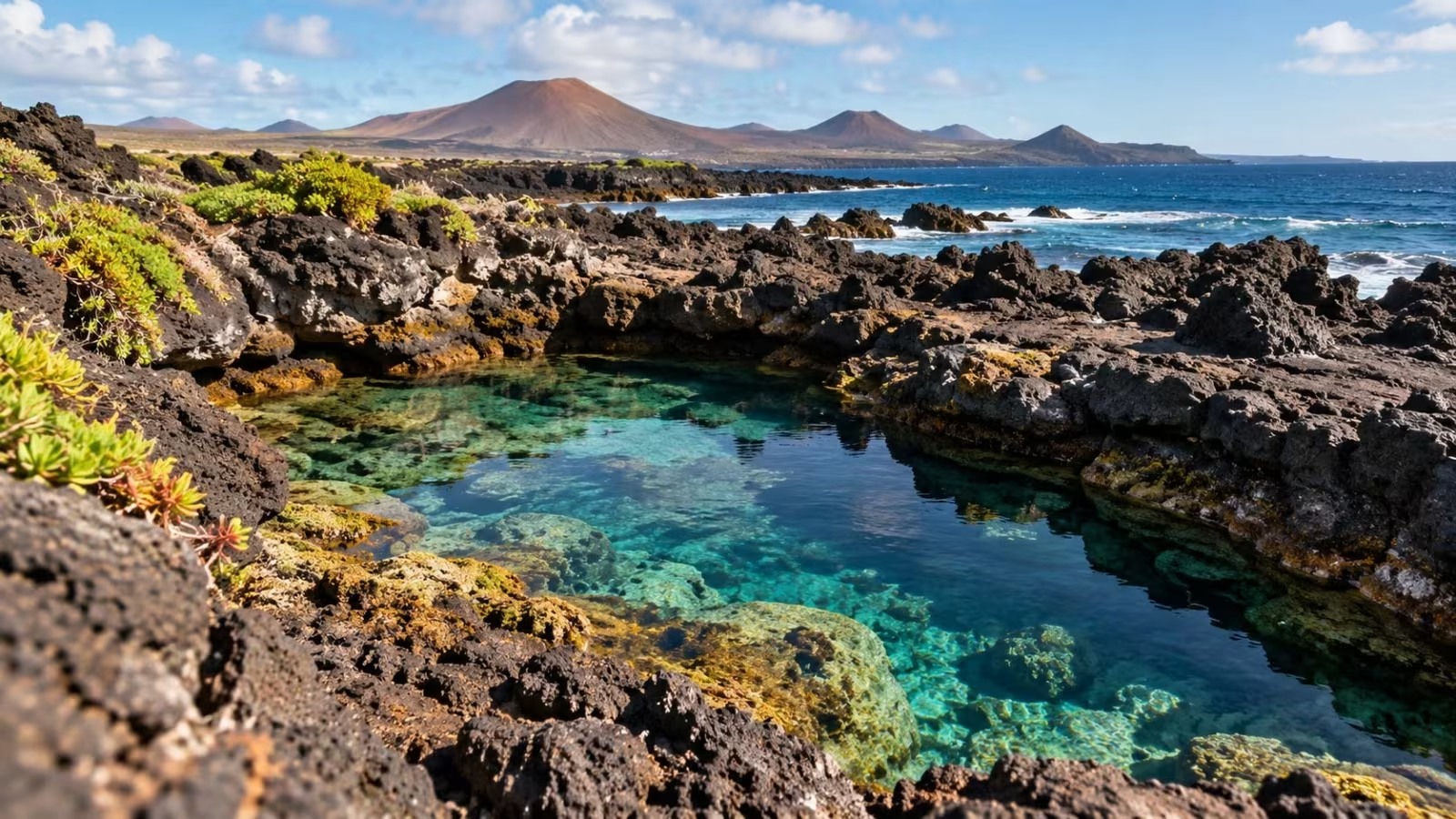
The relationship between groundwater and the coast is particularly fascinating. Underground water can emerge through volcanic tubes and coastal formations, helping to support anchialine pools, salinas, wetlands and other habitats.
These environments can contain highly specialised wildlife. Lanzarote’s underground systems are particularly significant because they provide habitat for endemic species, including the famous blind albino cave crab known as the jameíto.
Places such as Jameos del Agua and the Túnel de la Atlántida are part of this remarkable subterranean landscape. Although visitors may see only a small part of the system, the water and volcanic tunnels below the surface form an interconnected ecological environment.
How can human activity affect groundwater?
Lanzarote is an island with a growing population, a major tourism industry and limited natural freshwater resources. That combination makes groundwater protection especially important.
The scientific study found patterns consistent with human-associated inputs in some groundwater environments. Bacteria linked in previous research with human activity were more evident in certain caves and wells, although the scientists stress that their study cannot identify exactly where those organisms came from.
The researchers point to several pressures that can affect groundwater ecosystems, including urban expansion, increased demand for water, contamination and changes to hydrology.
Because some volcanic tunnels and underground environments have limited water renewal, unwanted substances may potentially remain in the system for longer periods.
Why scientists want an early-warning system
One of the most interesting aspects of the research is the proposal to use microorganisms as environmental indicators.
The idea is relatively simple: if scientists regularly monitor the biological communities living in groundwater, changes in those communities could provide an early indication that an ecosystem is under pressure.
At present, groundwater monitoring often focuses heavily on quantities and chemical measurements. The researchers argue that biological information should also have a stronger role.
Combining hydrological, chemical and biological monitoring could provide a much more complete picture of the health of Lanzarote’s groundwater ecosystems.
Lanzarote could become an important example
The researchers suggest that better monitoring could help Lanzarote develop a more integrated approach to groundwater management.
This is particularly relevant to an island where water resources are limited and where underground habitats are closely connected to coastal ecosystems.
The study also highlights the need for baseline information. Scientists need to know what a healthy microbial community normally looks like before they can reliably recognise significant changes.
Future monitoring involving the Canary Islands authorities and island councils is expected to help researchers compare conditions and consider further management strategies.
What does this mean for tourists visiting Lanzarote?
The study concerns natural groundwater ecosystems and microbial communities rather than declaring Lanzarote’s public drinking water unsafe.
Official Spanish drinking-water information currently lists the public water networks supplying areas including Puerto del Carmen and Tías as suitable for human consumption, with routine microbiological and chemical testing carried out.
The message for visitors is therefore a positive one: Lanzarote has an extraordinary hidden natural environment, and scientists are working to understand it better and protect it for the future.
Visitors can help simply by treating the island’s natural spaces with care. Avoid leaving rubbish, never pour chemicals or other pollutants into drains or natural pools, follow access rules at protected sites and respect caves, volcanic formations and coastal habitats.
A hidden side of Lanzarote worth protecting
Lanzarote’s underground water systems are easy to overlook because most of them are invisible. Yet they form part of the island’s natural infrastructure, support unusual ecosystems and connect the volcanic interior with the coastline.
The latest research gives scientists a valuable new way of looking at these environments: not just as sources or pathways of water, but as living ecosystems containing complex communities of microorganisms and highly specialised wildlife.
For residents and tourists alike, it is another reminder that protecting Lanzarote means looking beyond the beaches and volcanic scenery. Much of the island’s natural story is happening beneath our feet.
An AI Generated Image has been used in this Article.