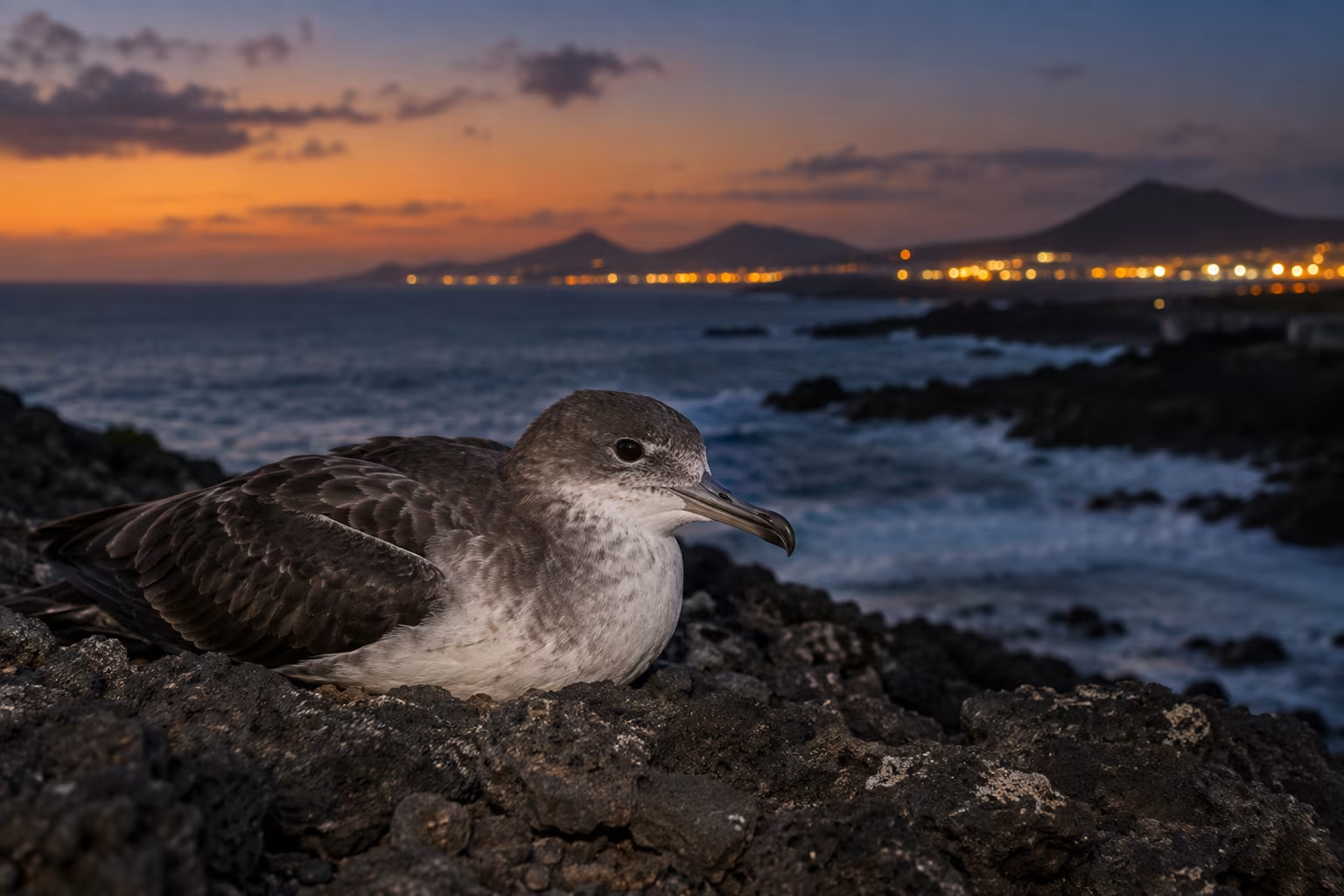

Lanzarote’s Young Seabirds Are Taking to the Skies – Here’s How You Can Help This Autumn
Lanzarote’s Seabirds Need a Little Help This Autumn
If you are visiting Lanzarote or living on the island, you may notice some unusual wildlife activity over the coming weeks. From September through November, young seabirds begin making some of their first night-time journeys from their nesting areas towards the sea.
It is a fascinating part of Lanzarote’s natural cycle, but it can also be a dangerous time for birds such as the Atlantic shearwater, known locally as the pardela cenicienta, and Bulwer’s petrel.
The Cabildo de Lanzarote and La Graciosa has now coordinated its 2026 ‘Aleteo’ campaign, bringing together local councils, police, Protección Civil, emergency services and the tourism sector to help deal with seabirds that become disorientated and end up on land.
Why do young seabirds get lost?
The problem is largely connected to artificial light.
Young seabirds normally head towards the sea during their first nocturnal flights. Bright lights from buildings, streets, hotels, apartments, businesses, gardens and other developed areas can interfere with their natural orientation.
Instead of continuing towards the darkness over the ocean, a bird can become attracted to artificial lighting, lose its bearings and eventually land on roads, pavements, terraces, car parks or other areas where it should not be.
Once grounded, the bird can be vulnerable to traffic, dogs and cats, predators, dehydration and injuries.
Lanzarote’s 2026 seabird protection campaign
The campaign is expected to be particularly important during October and November, although the period of risk extends from September into November.
The aim is not simply to rescue birds after they have landed. Prevention is an important part of the campaign too.
The Cabildo is asking homes, businesses, tourist accommodation and public bodies to reduce unnecessary outdoor lighting during the period when young seabirds are making their first flights.
Where lighting is required, directing lights down towards the ground rather than outwards or upwards can also help reduce the amount of light spilling into the night sky.
The figures show why the campaign matters. During 2025, the island’s injured wildlife collection service dealt with 184 Atlantic shearwaters, with most of the affected birds being juveniles involved in incidents associated with artificial lighting.
What should you do if you find a seabird in Lanzarote?
If you come across a grounded seabird, it is important not to assume that it can simply fly away again.
The current advice is:
• Keep people and pets away from the bird.
• Cover it gently with a cloth or towel.
• Place it carefully inside a suitable cardboard box with ventilation.
• Keep the box somewhere dark, quiet and protected.
• Make a note of where and when you found the bird.
• Contact 112 or the Environmental Agents on 928 598 548 and follow their instructions.
There are also several things you should NOT do.
Do not give the bird food or water. Do not use a camera flash. Do not throw the bird into the air to see whether it can fly, and do not release it yourself simply because it appears uninjured.
These birds may look calm when they are grounded, but professional assessment is important before they are returned to the wild.
A simple thing tourists can do
Visitors to Lanzarote can make a difference without changing their holiday plans.
If you are staying in a villa or apartment, switch off outdoor lights that are not needed overnight and avoid leaving bright lights shining directly into the sky.
If you are staying in a hotel or holiday complex, simply being aware of the issue can help. You may spot a grounded bird before anybody else does, particularly around car parks, gardens, terraces and quieter areas.
And if you find one, reporting it rather than walking past could make all the difference.
Why Lanzarote is important for seabirds
Lanzarote and the surrounding Chinijo Archipelago form an important area for several species of seabirds. The marine waters around the northern islands and islets are recognised as important habitat for breeding seabirds, including shearwaters and Bulwer’s petrels.
For an island that attracts millions of visitors, protecting wildlife alongside tourism is an important part of caring for Lanzarote’s natural environment.
Enjoy Lanzarote – and look out for its wildlife
Lanzarote is famous for its volcanic landscapes, beaches, sunshine and ocean views, but the island also has a remarkable range of wildlife that can be easy to overlook.
This autumn, if you see a young seabird on the ground, remember that it may not simply be a bird taking a rest. It could be a juvenile that has become disorientated during one of the most important journeys of its life.
A little less unnecessary light, a quick check around your property and a phone call to the right people can all help protect Lanzarote’s seabirds.
So whether you are a Lanzarote resident or here on holiday, keep an eye out this autumn. You might just be able to help one of the island’s young seabirds make it safely back to the ocean.