

Lanzarote Sea Safety Warning: Health Officials Urge Caution Over Pier and Breakwater Jumps
Tourists and residents in Lanzarote are being reminded to take extra care when swimming or jumping into the sea from piers, breakwaters and rocky coastal areas.
The warning comes from the Servicio de Urgencias Canario (SUC), which has highlighted the potentially serious consequences of jumping into the sea from elevated positions, particularly when the jump involves flips, twists or other acrobatics.
While jumping into the Atlantic can look like harmless summer fun, emergency medical professionals warn that an apparently safe-looking jump can quickly turn into a serious accident.
Why jumping from a pier can be dangerous
According to the SUC, one of the biggest dangers is what cannot easily be seen beneath the surface.
Water depth can vary depending on tides and local conditions, while the seabed may contain rocks or other hazards. A person jumping from a height can also misjudge their position and strike the bottom or the edge of the structure.
The higher the jump, the greater the speed when entering the water, increasing the force of the impact.
For anyone enjoying Lanzarote beaches and coastal swimming areas, this is particularly important because conditions beneath the surface are not always obvious from above.
Acrobatic jumps increase the risk
The SUC’s latest summer safety campaign specifically highlights jumps involving flips, spins and changes of body position.
These include movements such as backflips, sideflips and frontflips, as well as other named manoeuvres involving twists, running starts or changing position immediately before entering the water.
A mistake during one of these manoeuvres can result in a person landing awkwardly or hitting the water with considerable force.
Possible injuries include:
- Bruising and painful impact injuries
- Dislocations
- Muscle and ligament injuries
- Broken bones
- Head and neck injuries
- Serious spinal injuries
In the most severe cases, a badly executed dive or jump can result in an irreversible spinal cord injury.
The Canary Islands’ spinal injury specialists have previously highlighted the dangers of diving and jumping into water, describing zambullidas as one of the causes of traumatic spinal injuries treated in the islands. (Gobierno de Canarias)
Never assume the water is deep enough
One of the most important messages for Lanzarote sea safety is not to assume that an area is safe simply because other people have jumped there before.
The SUC recommends checking the depth and taking account of the tides before entering the water.
It is also sensible to ask people who know the area about the seabed and whether it consists of sand, rocks or other hazards.
Even if a particular location appears deep enough at one time of day, conditions can change.
Check what’s around you
There is another obvious but sometimes overlooked danger: other people.
Before anyone enters the water, they should make sure there is nobody underneath or directly in the landing area.
A crowded swimming spot can make an otherwise controlled jump considerably more dangerous.
People should also be aware of boats, ropes, ladders, rocks and the structure of the pier or breakwater itself.
Lanzarote’s coastline demands respect
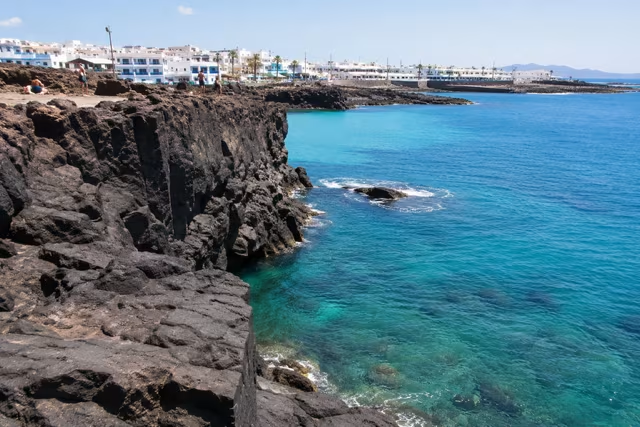
Lanzarote is famous for its spectacular coastline, natural swimming areas and crystal-clear Atlantic waters, making the sea one of the island’s biggest attractions for both visitors and residents.
However, Lanzarote holiday safety should always include respecting the sea and understanding that coastal conditions can change quickly.
The Canary Islands Government also advises people not to position themselves at the ends of piers or breakwaters, particularly when there is unusual wave activity, and recommends avoiding swimming in red-flag conditions, strong surf or areas without appropriate lifesaving services.
That advice is especially relevant around exposed coastal areas where waves, currents and changing tides can create hazards that are difficult to judge from land.
What should you do if someone is injured?
If a person is hurt after jumping into the sea, the SUC advises not moving the injured person while waiting for emergency assistance.
The person helping should check whether the casualty is conscious and breathing and follow the instructions given by the emergency medical coordinator.
For serious emergencies in Lanzarote, call 112, the emergency number used throughout the Canary Islands.
The SUC has also stressed in its wider summer safety advice that injuries following falls or impacts can involve damage to the spine, meaning unnecessary movement of an injured person should be avoided.
A simple message for anyone enjoying Lanzarote
There is nothing wrong with enjoying the sea during a Lanzarote holiday, but a few seconds of excitement are not worth risking a life-changing injury.
Before jumping from a pier, breakwater or rocky area, think about the depth, tides, seabed, height and surrounding area. If you are unsure about any of these factors, don’t jump.
For tourists visiting Lanzarote, the same advice applies as it does to local residents: enjoy the Atlantic, but respect it.
The latest warning forms part of the SUC’s summer campaign, Cuando lo necesitas, el SUC actúa, which aims to remind people how to avoid accidents and respond appropriately when emergencies occur.
