
Molina Orosa Hospital in Lanzarote marks first year of robotic surgery with 165 procedures
Lanzarote's main public hospital has reached an important milestone in the development of advanced surgical care, with the Hospital Universitario Doctor José Molina Orosa in Arrecife now reporting 165 robotic procedures during its first year using robotic-assisted surgery.
The development is significant for both residents and visitors who may need medical treatment on the island. Until recently, some highly specialised procedures required patients to be referred to hospitals elsewhere in the Canary Islands. The introduction of robotic surgery at Molina Orosa adds another layer of specialist treatment that can be delivered locally.
The hospital's robotic surgery programme began in September 2025, when the centre started using a Da Vinci Xi surgical system. The equipment represented an investment of around €1.7 million and made Lanzarote the first of the Canary Islands' non-capital islands to introduce this type of robotic surgery into its public hospital.
A year of robotic surgery in Lanzarote
According to the first-year figures reported by the hospital, 165 robotic procedures have now been carried out. The programme has also expanded into Urology, which was accredited in May for the use of the technology.
One of the milestones highlighted is the completion of 20 robotic prostatectomies for patients being treated for prostate cancer. Robotic-assisted prostatectomy is a minimally invasive procedure in which the surgeon removes the prostate using instruments controlled from a surgical console.
The move into urological surgery represents an important expansion of the robotic surgery service at Molina Orosa. When the Da Vinci system was first introduced in 2025, the hospital said its initial work was being carried out by the General and Digestive Surgery team, with other specialties planned to follow progressively.
What is robotic surgery?
Despite the name, robotic surgery does not mean that a robot independently performs an operation.
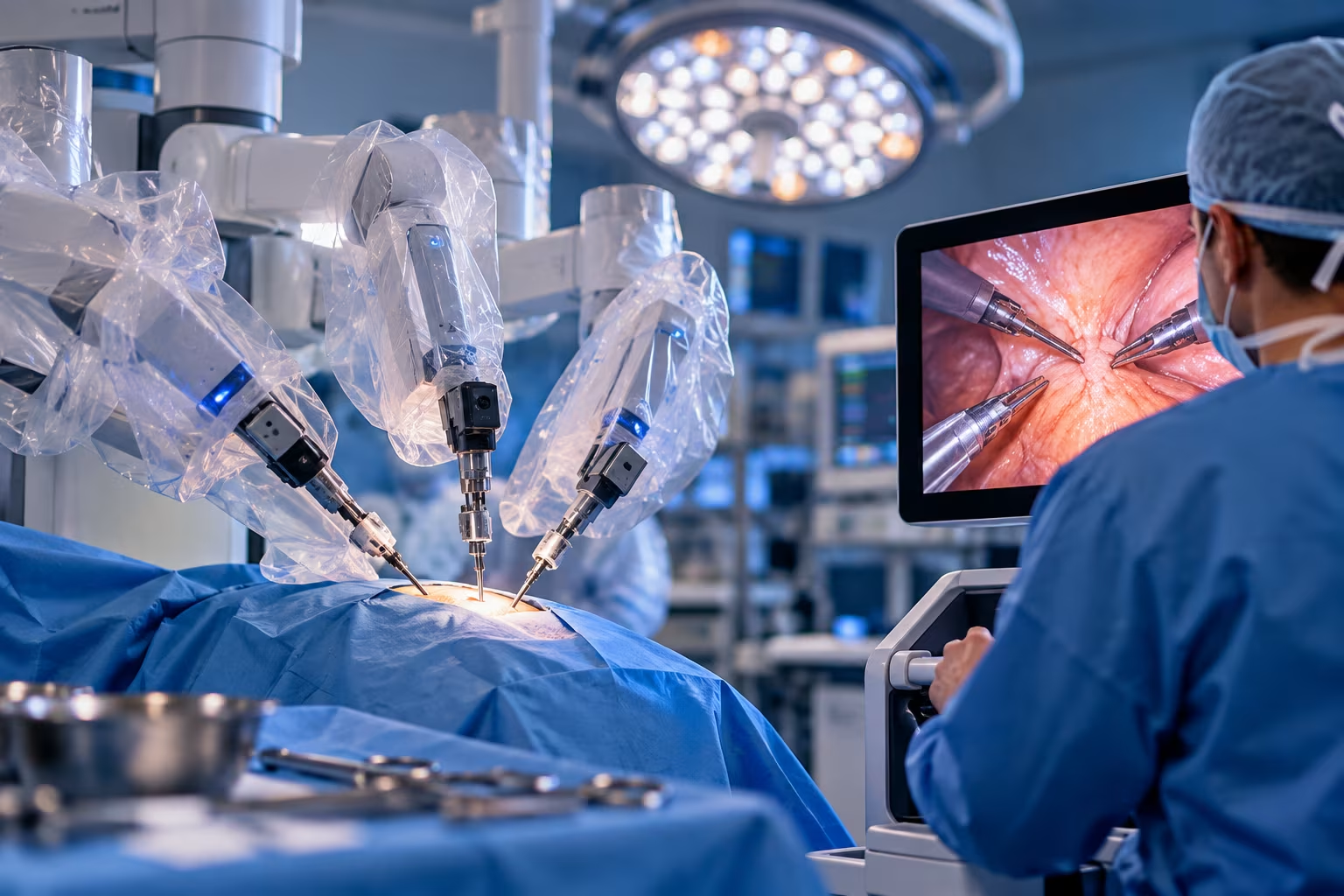
The surgeon remains in control throughout the procedure. With the Da Vinci system, the surgeon sits at a console and controls specialised instruments attached to several robotic arms. A high-definition three-dimensional view of the operating area helps the surgical team work with considerable visual detail.
The system is designed to translate the surgeon's movements into precise movements of the instruments. It can also filter out natural hand tremor and provide a greater range of movement than conventional surgical instruments.
For patients, the potential advantages of robotic-assisted surgery can include smaller incisions, less blood loss in some procedures, less postoperative pain and a shorter recovery or hospital stay. However, the benefits vary according to the type of operation, the patient's individual circumstances and the surgical team, so robotic surgery is not automatically the best option for every patient.
More than just a machine
The arrival of robotic surgery at Hospital Molina Orosa is part of a wider expansion of healthcare services in Lanzarote.
Official figures show that the hospital carried out 13,047 surgical procedures during 2025, an increase of more than 15% compared with the previous year. The hospital also recorded 311,005 specialist consultations and 68,391 diagnostic tests during the year.
The centre has also been expanding its training and specialist capabilities. In February 2026, the Ministry of Health accredited the hospital's General and Digestive Surgery service for training medical residents. The accreditation required the service to demonstrate appropriate staffing, infrastructure, equipment and clinical, teaching and research activity.
The combination of new technology, specialist training and increased surgical activity is helping to develop the hospital's role as a major healthcare centre for Lanzarote.
What does this mean for residents?
For people who live in Lanzarote, the most obvious benefit is access to increasingly specialised treatment without automatically having to travel to another island.
That can be particularly important for patients who require complex surgery and for their families, as treatment away from Lanzarote can involve flights, accommodation, transport and additional time away from home.
It is also worth remembering that having robotic surgery available does not mean every patient will be offered a robotic procedure. Doctors decide which surgical technique is appropriate based on the condition being treated, the patient's circumstances and the clinical assessment.
What about tourists visiting Lanzarote?
For the millions of people who visit Lanzarote each year, developments at the island's main hospital are another part of the wider picture of healthcare provision.
Tourists should still make sure they have appropriate travel insurance and, where applicable, a valid European Health Insurance Card or other entitlement to healthcare. Travel insurance can be particularly important for situations involving treatment, repatriation or other costs that are not covered by standard public healthcare arrangements.
The arrival of robotic surgery does not change the normal advice for visitors: seek urgent medical attention when necessary and contact your insurer as soon as possible if you require significant treatment.
A new chapter for healthcare in Lanzarote
Just one year after robotic surgery was introduced, the Molina Orosa programme has moved from its launch phase into a more established service, with 165 procedures reported and Urology now using the technology as well.
The original investment in the Da Vinci Xi was intended to broaden the surgical options available on the island. The first year suggests that the programme is becoming an established part of Lanzarote's hospital services, while further development of the technology and specialist teams could allow the range of procedures performed locally to continue expanding.
For residents, it means another specialist service is now available closer to home. For visitors, it is another reminder that Lanzarote's healthcare infrastructure extends well beyond the island's tourist facilities.
An AI Generated Image has been used in this Article.