
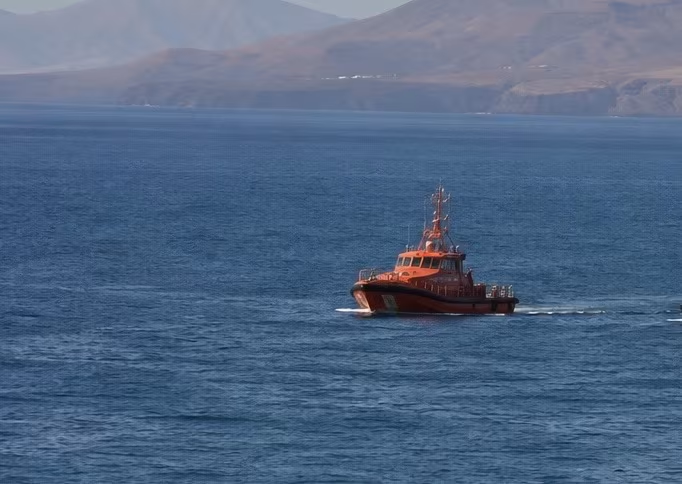

Nearly 100 People Rescued from Overcrowded Boat 50 Miles off Lanzarote
Nearly 100 people have been rescued from an overcrowded inflatable boat in the Atlantic, around 50 nautical miles (92 kilometres) east of Lanzarote, in the latest incident along the Canary Islands’ migration route.
The rescue took place late on Saturday, 10 October, when Spain’s Maritime Rescue service vessel Guardamar Urania located the boat in international waters. The rescue team brought the occupants aboard and headed for Arrecife, where the vessel arrived shortly before 1am on Sunday, 11 October.
Reports from the emergency response said 96 people were brought ashore. The group included women and children, including young people reported to be travelling without their parents. Three people were taken to hospital for medical assessment following the crossing.
The people on board were reported to have come from a number of African countries, including Burkina Faso, Comoros, Ghana, Guinea-Conakry, Ivory Coast, Liberia, Mali, Morocco, Senegal, The Gambia and the Democratic Republic of the Congo.
WHAT HAPPENS AFTER ARRIVING IN LANZAROTE?
For residents and visitors wondering what happens after a migrant boat reaches Lanzarote, the arrival at Arrecife is only the first stage of a formal process.
Emergency teams and medical staff, including the Canary Islands Emergency Service and the Red Cross, provide an initial assessment. Anyone who needs urgent treatment can be taken to hospital. Authorities then carry out identification and registration procedures, and people may be accommodated temporarily at the Temporary Foreigners’ Assistance Centre (CATE) in Arrecife while their circumstances are assessed.
Lanzarote is often an initial point of arrival rather than the place where people remain for the longer term. In recent weeks, local reporting has described people who arrived by boat being transferred from Lanzarote to temporary reception facilities on larger islands, particularly Gran Canaria and Tenerife, and later mainland Spain.
Arrangements depend on individual circumstances, available accommodation, legal procedures and safeguarding needs. Children travelling without a parent or guardian require particular protection and appropriate procedures.
WHAT DOES THIS MEAN FOR LANZAROTE?
The arrival of a rescue vessel can involve a coordinated response from Maritime Rescue, emergency services, health professionals, the Red Cross and police. The priority at the port is to bring people safely ashore, identify anyone needing medical care and ensure that the necessary procedures are followed.
For Lanzarote, these incidents also highlight the island’s position on the Atlantic migration route to the Canary Islands. The crossings can be extremely dangerous, particularly when boats are overcrowded or people spend long periods at sea. Rescue operations are therefore an important part of the emergency response around the island.
The latest incident is a reminder that the migration route affects the Canary Islands as a whole, while the immediate reception and longer-term accommodation arrangements are managed through a wider regional and national system.
