

WHEN DID LANZAROTE LAST HAVE A VOLCANIC ERUPTION? THE SURPRISING HISTORY BEHIND THE ISLAND’S FIRE MOUNTAINS
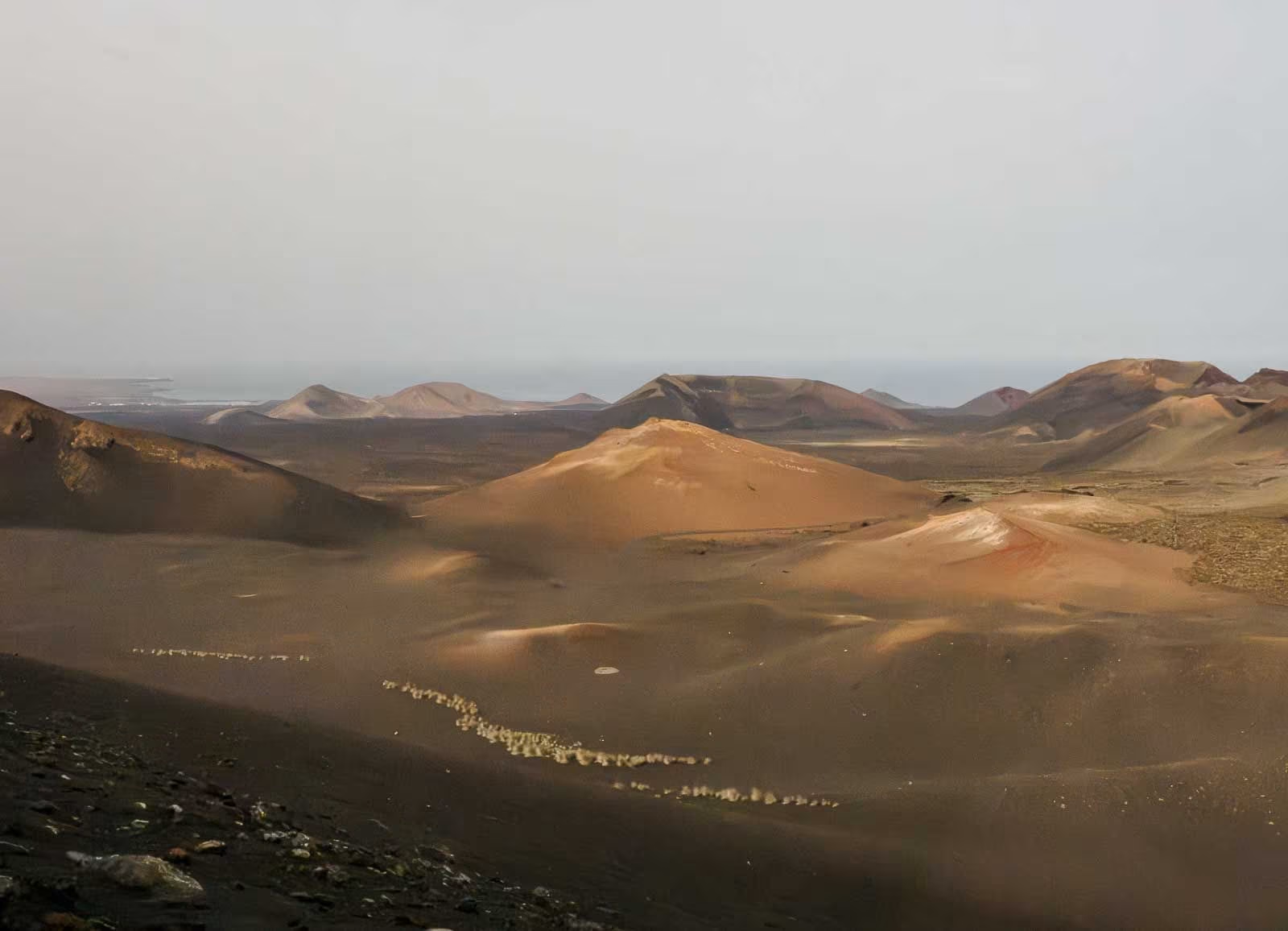
If you have ever stood among Lanzarote’s vast black lava fields, explored the Fire Mountains of Timanfaya or driven through the volcanic landscapes of Yaiza, you might have wondered one thing: when did Lanzarote last have a volcanic eruption?
The answer may surprise you. Lanzarote’s last recorded volcanic eruption took place in 1824 — more than 200 years ago.
Although the island is famous for its volcanoes, its most recent eruption happened long before modern tourism transformed Lanzarote into one of Europe’s favourite holiday destinations.
LANZAROTE’S LAST ERUPTION HAPPENED IN 1824
The last historical volcanic episode on Lanzarote began on 31 July 1824, when the Tao volcano erupted. Further eruptions followed later that year, creating two additional volcanic formations: Nuevo del Fuego, also known as El Chinero, and Tinguatón.
The activity continued for approximately three months, finally ending around 25 October 1824.
Unlike the enormous eruptions of the previous century, this episode was comparatively limited in its overall impact. Nevertheless, it added three more volcanic landmarks to Lanzarote’s extraordinary landscape.
The remains of these eruptions can still be found in the island’s volcanic interior today.
THE ERUPTION THAT CHANGED LANZAROTE FOREVER
To understand why Lanzarote looks the way it does, we need to go back almost a century earlier.
In 1730, a major volcanic eruption began in the area now associated with Timanfaya National Park. What followed was one of the most significant volcanic episodes in the Canary Islands’ recorded history.
The eruptions continued until 1736, transforming enormous areas of the island.
Lava engulfed farmland and settlements, forcing residents to abandon their homes and seek safety elsewhere. Villages disappeared beneath volcanic material, and the island’s geography was changed dramatically.
The resulting lava fields, volcanic cones and rugged terrain created much of the landscape that visitors travel thousands of kilometres to see today.
Spain’s National Parks authorities describe the 1730–1736 eruptions as covering approximately 174 square kilometres with volcanic material.
It is difficult to imagine what those six years must have been like for the people living on Lanzarote at the time.
COULD LANZAROTE ERUPT AGAIN?
This is a natural question for visitors, particularly those who have never been to a volcanic island before.
Lanzarote is of volcanic origin, and the fact that its last recorded eruption was in 1824 does not mean volcanic activity is impossible in the future.
However, the historical record alone cannot tell us when, or whether, another eruption will occur in the foreseeable future.
Volcanoes do not operate on a predictable timetable. A long period without an eruption does not automatically mean an eruption is imminent, nor does it guarantee that one will never happen again.
Scientists monitor volcanic and seismic activity across the Canary Islands. Any assessment of current volcanic risk should be based on up-to-date monitoring and information from the relevant authorities, rather than speculation.
For holidaymakers, the important distinction is between Lanzarote’s volcanic history and evidence of a current volcanic emergency. The island’s fascinating geological past is not, by itself, a reason to cancel a holiday.
WHY IS THE GROUND STILL HOT AT TIMANFAYA?
One of the most fascinating experiences at Timanfaya National Park is seeing demonstrations of the heat that remains beneath the surface.
At Islote de Hilario, visitors can witness water poured into a borehole producing a dramatic burst of steam, while dry vegetation can ignite when exposed to intense heat in demonstration areas.
These displays illustrate Lanzarote’s geothermal activity.
Temperatures beneath parts of the park can remain extremely high at relatively shallow depths. This is a reminder that Lanzarote is a geologically remarkable island, even though its last recorded eruption was more than two centuries ago.
The heat demonstrations do not mean that a new eruption is about to happen. Geothermal heat and an active volcanic eruption are different things.
FROM VOLCANIC DESTRUCTION TO A WORLD-FAMOUS HOLIDAY DESTINATION
Perhaps the most remarkable part of Lanzarote’s story is how its inhabitants adapted to the landscape left behind by the volcanoes.
The volcanic terrain that once devastated farmland eventually became part of the island’s identity.
In La Geria, growers developed distinctive methods of cultivating vines in volcanic ash and small hollows protected by stone walls. Across the island, the dark lava fields, dramatic cliffs and unusual rock formations became defining features of Lanzarote.
Today, visitors can explore Timanfaya National Park, admire the volcanic coastline at Los Hervideros and discover the island’s geological heritage through its museums, viewpoints and visitor centres.
The same landscape that once threatened communities is now one of Lanzarote’s greatest natural attractions.
CAN YOU VISIT LANZAROTE’S VOLCANOES?
Absolutely. Lanzarote offers several ways to discover its volcanic history.
• Timanfaya National Park: Experience the Fire Mountains and see the landscape created by the great eruptions of 1730–1736.
• Montañas del Fuego: Discover spectacular volcanic scenery on the official park route.
• La Geria: Explore the island’s unusual vineyards and learn how local growers adapted to volcanic soil.
• Los Hervideros: See a rugged coastline shaped by lava and the power of the Atlantic Ocean.
• Mancha Blanca Visitor and Interpretation Centre: Learn more about the eruptions and how they transformed the island.
Visitors should follow official access arrangements, especially within protected areas, as some volcanic terrain is fragile or unsafe to cross.
THE LAST ERUPTIONS.
During 1824, when the Tao, Nuevo del Fuego and Tinguatón volcanic formations emerged during the island’s last recorded historical eruptive episode.
The much larger eruptions of 1730–1736 created much of the volcanic scenery that makes Lanzarote so distinctive today.
More than 200 years later, those events remain central to the island’s history, culture and tourism.
The next time you admire the black lava fields or stand among the Fire Mountains, remember that you are looking at the legacy of powerful natural forces that shaped Lanzarote — and helped make it the extraordinary destination it is today.
Planning a holiday to Lanzarote? Explore more guides, travel advice and local stories on Lanzarote Waits For You
