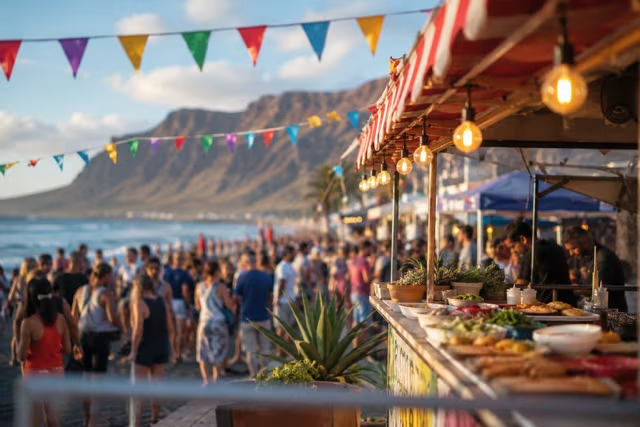

Why Festival Food Stall Costs in Famara Are Sparking Debate Across Lanzarote
Businesses hoping to secure a food and drink stall at this year’s Caleta de Famara fiestas have faced dramatically higher costs than those applying for similar opportunities at the San Ginés celebrations in Arrecife, highlighting two very different approaches to awarding public festival concessions.
The difference has attracted attention across Lanzarote, with successful bids in Famara reaching thousands of euros, while comparable concessions in Arrecife are awarded using a completely different scoring system.
How the Famara Tender Process Works
The Teguise Town Hall allocates stalls for the Caleta de Famara festivities using a points-based tender in which the financial offer carries the greatest weight.
According to the published tender process:
- 75% of the total score is based on the amount offered by applicants.
- The remaining 25% is awarded for factors including local association links and participation in organising the festivities.
- The minimum bid started at €250, but competition pushed winning offers significantly higher.
Reports indicate that the average successful offer was around €6,000, with the highest bid approaching €7,900 for a relatively small 6m x 2m festival stall. Even several unsuccessful applicants reportedly offered €5,000 or more, demonstrating the strong demand for trading during the popular seaside event.
Arrecife Takes a Different Approach
For the San Ginés fiestas, Arrecife City Council does not award stalls to the highest bidder.
Instead, applications are judged on:
- The quality of the gastronomic proposal.
- Traditional presentation and decoration.
- Overall suitability, as assessed by a technical evaluation panel.
Businesses awarded a stall generally pay only the standard municipal fees, along with costs such as electrical certification and public liability insurance, rather than making competitive financial bids.
Why the Difference Matters
The contrasting systems have prompted discussion among local business owners and residents.
Supporters of the Teguise model argue that competitive bidding can maximise revenue for public events and reflects the high commercial value of trading during busy festivals.
Others believe that placing such a strong emphasis on the financial offer could make it more difficult for smaller local businesses to compete, as only those able to submit the highest bids are likely to secure a pitch.
Meanwhile, Arrecife’s approach focuses more heavily on the visitor experience, encouraging quality food, traditional presentation and atmosphere rather than financial competition.
What It Means for Visitors
For tourists visiting Lanzarote, the debate is unlikely to affect the festival experience directly. Both the Caleta de Famara fiestas and the San Ginés celebrations remain among the island’s most popular annual events, offering live music, traditional food, family entertainment and a vibrant local atmosphere.
However, the differing concession systems provide an interesting insight into how municipalities across Lanzarote manage public events and support local businesses.