
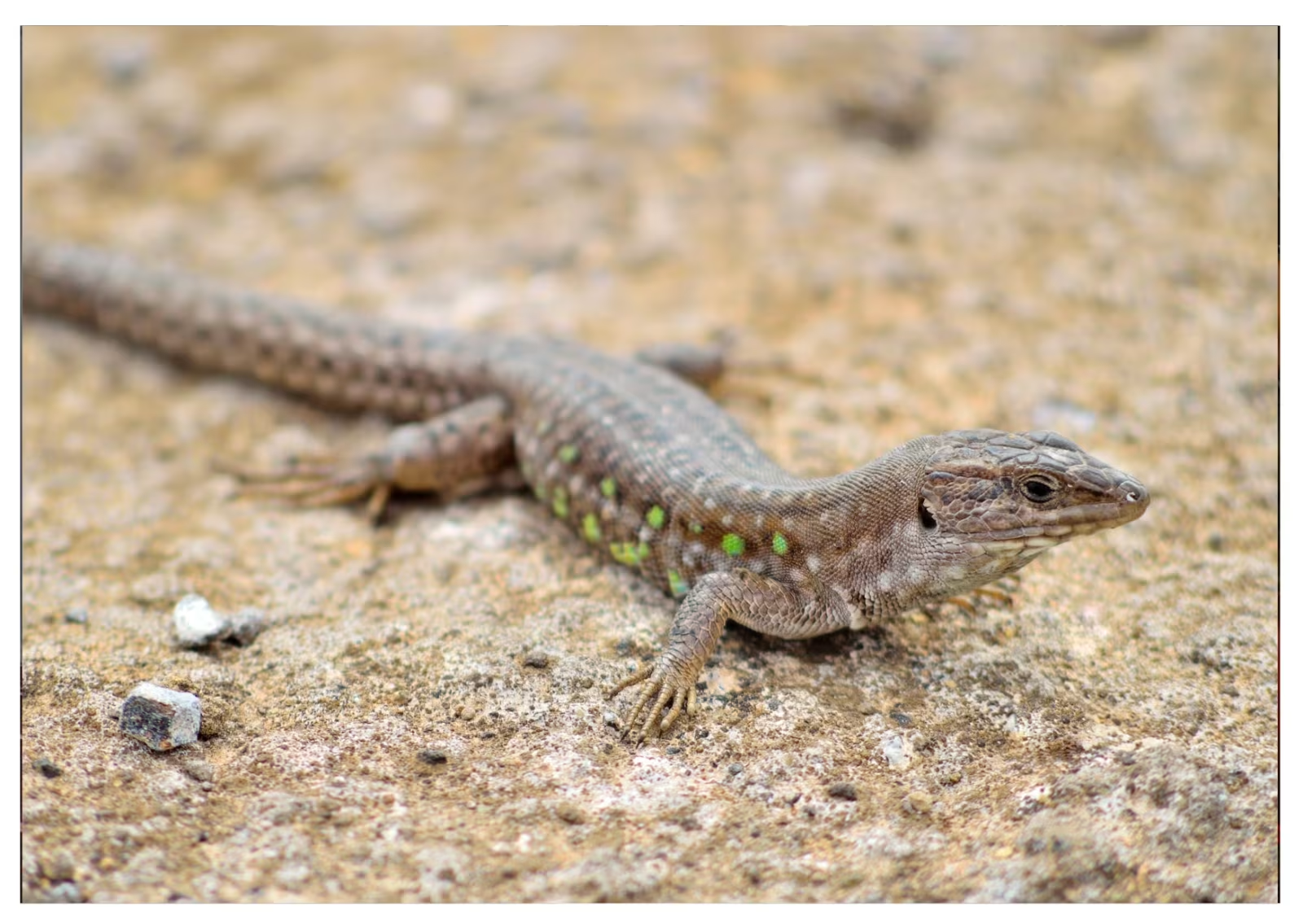

DID YOU KNOW? LANZAROTE HAS ITS OWN LITTLE ATLANTIC LIZARD
Look closely at the sun-warmed walls, rocky paths and scrubby ground around Lanzarote and you may spot a tiny reptile darting for cover. It is the Atlantic lizard, known locally in Spanish as the lagarto atlántico — one of the characteristic animals of the island.
Its scientific name is Gallotia atlantica, and it belongs to a group of lizards found naturally in the Canary Islands. The subspecies recorded across Lanzarote and the nearby Chinijo islets is recognised as endemic to the Canaries. In other words, its natural home is this Atlantic archipelago rather than mainland Europe.
WHERE CAN YOU FIND IT?
The official Canary Islands biodiversity database records the Atlantic lizard on Lanzarote and several islands and islets in the Chinijo Archipelago, including La Graciosa, Montaña Clara, Alegranza and Roque del Este.
It is well suited to the island's dry conditions. It can live in a range of habitats, including sandy coastal areas, stony ground, scrubland and cultivated places. It is generally absent from the newest, bare lava fields where there is little or no vegetation.
That means you do not have to visit a remote nature reserve to have a chance of seeing one. They can turn up in gardens, along rural paths and around the edges of settlements, although they are quick and easily disturbed.
WHAT DOES THIS LITTLE LIZARD EAT?
The Atlantic lizard feeds on small invertebrates such as insects and other tiny arthropods. It also eats plant material, including flowers and young shoots. This varied diet helps it make use of the resources available in Lanzarote's dry landscapes.
Like other reptiles, it relies on warmth from its surroundings to regulate its body temperature. You may see one basking in the sunshine before it suddenly disappears into a crack or beneath a stone.
A SMALL ANIMAL WITH A BIG PLACE IN THE ECOSYSTEM
Lizards are an important part of island food webs. The Atlantic lizard is itself prey for animals such as kestrels, and it also feeds on small invertebrates. Its presence is one of the details that makes Lanzarote's apparently harsh volcanic environment full of life.
The next time you are walking through the countryside or sitting quietly in a sunny garden, keep an eye on the stones and walls. That quick movement in the corner of your eye might be one of Lanzarote's own little reptiles.
A gentle reminder: enjoy watching wildlife without catching or handling it. Give the lizard space and let it carry on about its day.
