
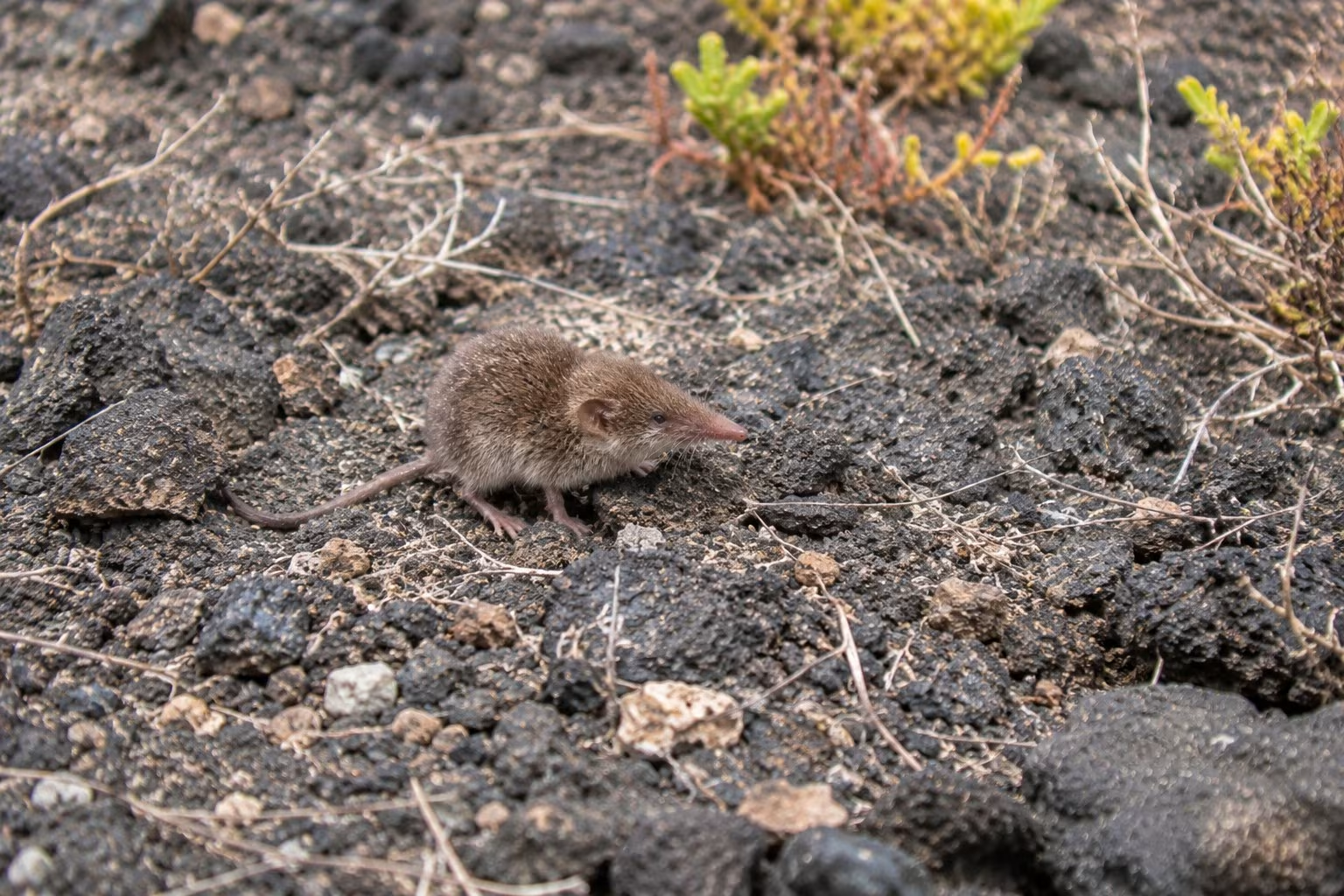

DID YOU KNOW? LANZAROTE IS HOME TO A TINY MAMMAL FOUND NOWHERE ELSE IN THE WORLD
Lanzarote’s wildlife is full of surprises. Among the island’s most unusual residents is a small insect-eating mammal that many visitors will never see: the Canary shrew, known in Spanish as the musaraña canaria.
Its scientific name is Crocidura canariensis, and it is an endemic species — meaning it is naturally found only in the Canary Islands. It is a very different kind of island wildlife from the lizards and geckos that are more easily spotted basking in the sunshine.
A SECRETIVE LITTLE HUNTER
The Canary shrew is a small, ground-dwelling mammal that feeds on invertebrates. It is not a mouse, despite the superficial resemblance that its size and quick movements might suggest. Shrews belong to a separate group of mammals and are adapted to a diet of small animal prey.
Because it is secretive and mostly active out of sight, it is not an animal most holidaymakers are likely to encounter while walking around resorts or on busy beaches.
WHERE DOES IT LIVE?
The Government of the Canary Islands’ planning and conservation assessment for the Chinijo Archipelago and Famara identifies the shrew in northern Lanzarote, particularly around the Malpaís de La Corona. The report also identifies Montaña Clara as an important area for the species, with smaller populations recorded on La Graciosa and Alegranza.
That makes the volcanic landscapes of northern Lanzarote and the nearby islets important not just for their dramatic scenery, but also for wildlife that is easily overlooked.
WHY IS IT IMPORTANT?
The same government report lists the Canary shrew as Vulnerable in both the national and Canary Islands threatened-species catalogues. Its restricted distribution means that changes to habitat and other pressures can matter greatly.
Lanzarote is often celebrated for its volcanic geology, beaches and marine life, but its smaller land animals are part of the island’s natural heritage too. The Canary shrew is a reminder that even a seemingly barren landscape can support wildlife with a very particular story.
So next time you explore the north of the island, remember that the landscape around places such as La Corona is more than a spectacular volcanic backdrop. It is also home to one of the Canary Islands’ most distinctive little mammals.
