

Did You Know? Lanzarote’s Vineyards Grow in Volcanic Craters
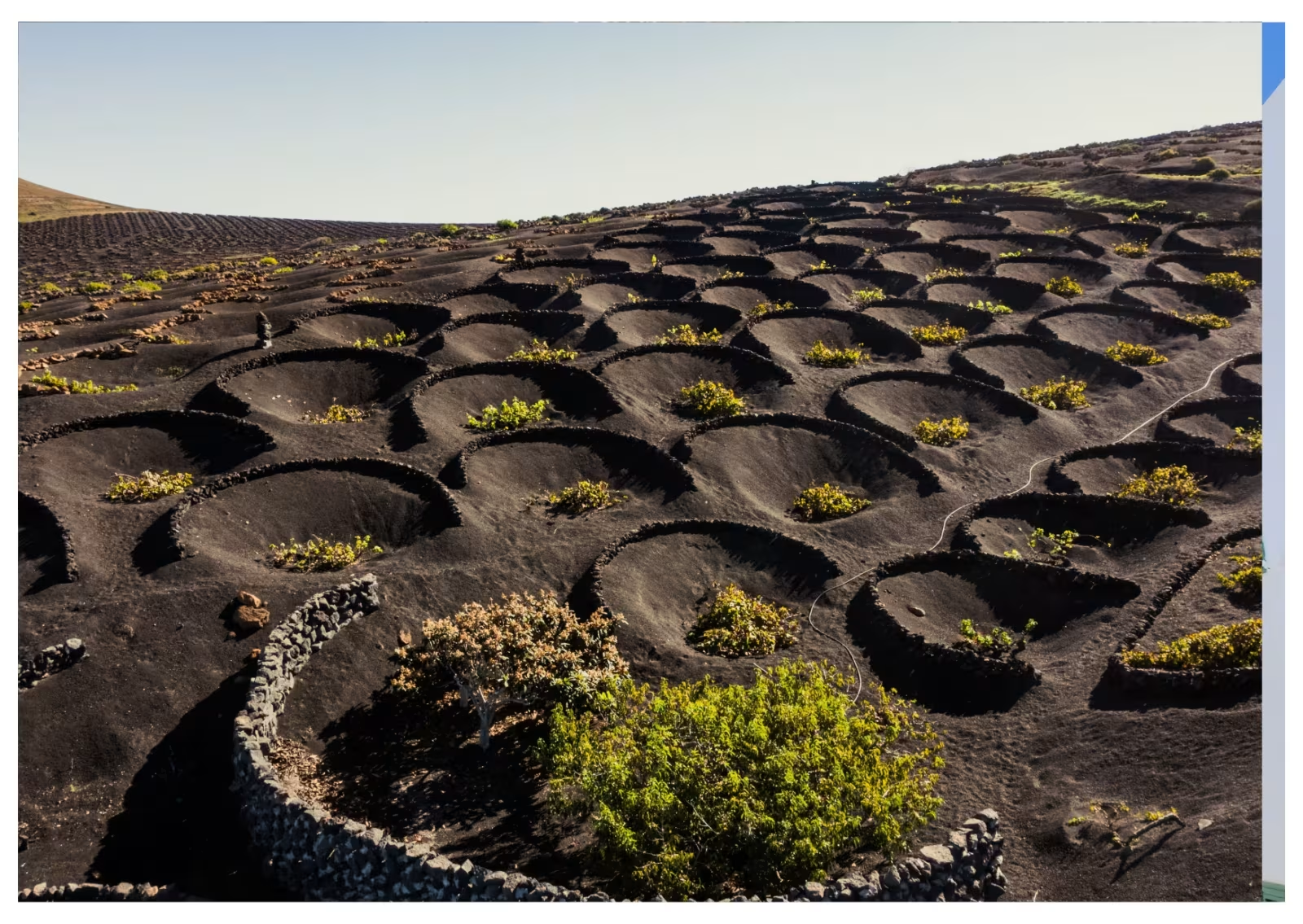
At first glance, the landscape of La Geria can look almost otherworldly. Instead of neat green rows of vines, the hillsides are covered in dark volcanic gravel, with thousands of individual hollows and small curved stone walls. Yet this unusual landscape is one of Lanzarote’s most recognisable agricultural scenes — and it produces some of the island’s best-known wines.
The story begins with the volcanic eruptions that transformed large parts of Lanzarote during the eighteenth century. Ash and lapilli, locally known as picón or rofe, covered farmland and changed the way people could work the land. Rather than abandon cultivation, local farmers developed techniques that made use of the new volcanic surface. In La Geria, they dug deep pits through the layer of picón to reach the soil beneath, then planted a vine in each hollow.
Each vine is often protected by a low semicircular wall of volcanic stones called a zoco. These walls are not simply decorative. They help shield the young plant from Lanzarote’s persistent trade winds, while the hollow gives the vine a more sheltered growing environment. The result is the distinctive pattern of dark circles and stone crescents that visitors see when travelling through the wine region.
The volcanic gravel has another important role. Its porous structure helps capture and retain moisture, including humidity from the air, and reduces the rate at which water evaporates from the ground. This is particularly valuable on an island where rainfall is limited and drought can be a serious challenge. The traditional system allows growers to produce crops in difficult conditions, often with little or no irrigation.
One of the grape varieties closely associated with Lanzarote is Malvasía Volcánica. It is used to make a range of wines, including fresh, aromatic whites that have become a favourite with visitors and wine enthusiasts. The island’s volcanic soils, climate and traditional growing methods all contribute to the distinctive character of the local wine. The best way to appreciate the landscape is to visit one of the bodegas, learn how the vines are cultivated and, if you wish, enjoy a tasting.
La Geria is more than a pretty photo stop. It is a living example of generations of local knowledge, patience and adaptation. In 2025, the Food and Agriculture Organization of the United Nations recognised Lanzarote’s traditional agricultural systems in jable and volcanic sands as a Globally Important Agricultural Heritage System. The recognition highlights the ingenuity behind farming in such an arid environment and the importance of keeping these practices alive.
If you are exploring Lanzarote by car, allow time to slow down and take in the scenery. Please use signed stopping places, respect vineyard boundaries and avoid walking into planted pits. The vineyards are working farms, not just a landscape attraction.
DID YOU KNOW? The strange-looking hollows and stone crescents of La Geria are part of a carefully designed farming system. What appears to be a harsh volcanic wasteland is, in fact, one of Lanzarote’s most remarkable examples of human ingenuity.